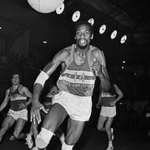
Victor Wembanyama is compared to legendary big men primarily through a physical and visual lens, often described as a “Mirror of Time” where his image transcends both the past and future of the game,.
According to the sources, Wembanyama compares to these legends in the following ways:
  • Physical Resemblance and Stature: Wembanyama is noted for physically resembling many legends of basketball,. He is grouped with elite NBA Champions and “Center position players” who are 7’0″ and taller,.
  • Age-Based Comparison: The sources suggest comparing Wembanyama, who is 22 years old as of 2026, side-by-side with photos of legendary players when they were also in their early twenties to see the resemblance and potential future,,.
  • Specific Legendary Peers: The “Magical Mirror of Legends” lists several historical greats as points of comparison, including:
    • Kareem Abdul-Jabbar (also listed as Lew Alcindor),
    • Wilt Chamberlain,
    • Bill Russell,
    • Shaquille O’Neal,
    • Yao Ming,
    • Bill Walton,
    • Artis Gilmore,
    • Mark Eaton,
    • Sam Bowie,
    • Ralph Sampson (referred to as “The Quiet Farmer Giant”),
    • George Mikan (noted as the “1st ‘Big Man’ of Basketball”),
    • Moses Malone,
The sources emphasize that this comparison is best understood by using your “sense of sight” to observe these players’ movements and physical forms, characterizing the comparison as “Art in Motion”,. Rather than detailed statistical breakdowns, the comparison focuses on how Wembanyama’s youth and physical profile reflect the foundations set by these “bygone” stars who established the game’s history
The “Art in Motion” concept is a visual and artistic framework used to understand Victor Wembanyama’s place in basketball history by comparing him to the sport’s greatest legends.
Key elements of this concept include:
  • Visual Observation over Discussion: The sources emphasize that “Art in Motion” is something to be experienced through the “sense of sight” rather than just talked about. It suggests that the comparison between Wembanyama and past legends is self-evident when one simply looks “into the mirror”.
  • A “Mirror of Time”: This concept views Wembanyama as a transcendental figure whose image connects the past and the future. By looking at Wembanyama in his youth (age 22 in 2026) alongside photos of legendary centers like Kareem Abdul-Jabbar, Wilt Chamberlain, and Bill Russell when they were also in their early twenties, observers are meant to see his potential future reflected in their storied careers.
  • Bridging Eras: “Art in Motion” highlights the connection between the “youth who have usurped the game” (represented by Wembanyama) and the “bygone who set the foundation” for basketball. This visual juxtaposition serves as a bridge between the sport’s origins and its modern evolution.
  • Artistic Presentation: The concept is presented through various artistic media, including the Wemby Art Gallery, murals, posters, and the Wemby Photo Gallery. It operates on the principle that “a picture can say a thousand words,” using visual storytelling to capture the physical resemblance and shared stature of these 7’0″ and taller “Center position players”.
Ultimately, the phrase “WEMBY IS ART IN MOTION” summarizes the idea that his physical form and movements on the court are themselves a form of art that echoes the greatness of the legends who came before him

This website serves as a comprehensive digital hub dedicated to basketball star Victor Wembanyama and the broader history of the sport. The featured article examines the psychology of physical encouragement, specifically the “butt slap” technique famously used by coach Bobby Knight to motivate elite athletes. The author, writing as Doctor Dunkenstein, suggests that this tradition should be applied to young Spurs talent Carter Bryant to improve his performance in the upcoming 2026 NBA Finals. Beyond these scouting reports, the site provides a deep archive of legendary player profiles, historical coaching rivalries, and specific game statistics. Additionally, it functions as a commercial marketplace offering fans access to specialized collectibles, apparel, and books related to professional basketball.

 
Today • 8:35 PM

What is the unique history behind Bobby Knight’s butt-slapping tradition?

Bobby Knight’s butt-slapping tradition was a renowned aspect of his coaching style, regarded by his players as a “badge of courage” and an honor reserved only for those who deserved it. The tradition is characterized by several unique historical elements:
Symbol of Appreciation and Effort
For Knight, a slap on the “gluteus maximus” was a physical manifestation of his appreciation for a player’s performance. The intensity of the slap was directly correlated to the level of effort: the harder Coach Knight slapped a player’s butt, the more the player knew Knight valued their work on the court. Players, including “Doctor Dunkenstein,” accepted these slaps with pleasure as a “badge of acknowledgement” for playing hard and “busting [their] butt” during games or grueling coaching sessions.
Fan Engagement at Assembly Hall
The tradition eventually became a spectator event at Indiana University’s Assembly Hall. During the end of games, as starters were substituted for reserves, fans would watch for these slaps with pleasure. The fans would explode in cheering and clapping, with the crowd reportedly cheering louder the harder the slap was delivered. The most famously celebrated slaps occurred during the 1976 undefeated season, when the Hoosiers achieved a perfect 32-0 record and won the NCAA Championship.
The “Thoroughbred” Metaphor
The sources compare Knight’s slapping tradition to the way a jockey treats a thoroughbred racehorse. Just as a jockey slaps a horse to signal it to “kick it into gear” and run faster without causing pain, Knight used the slap as a motivational signal to his players. This comparison is being revisited in 2026 as a strategy to motivate San Antonio Spurs player Carter Bryant, with the suggestion that his teammates should “swat” him rather than hug him to encourage his performance in the NBA Finals.
The Joe B. Hall Incident: Slapping as Theater
A related and infamous incident in Knight’s history involved a slap to the back of the head of Kentucky coach Joe B. Hall on December 7, 1974. While this physical altercation heavily fueled the rivalry between Indiana and Kentucky, the sources reveal it was largely “theater” and gamesmanship. Despite the public animosity, Knight and Hall were “secret friends” and lifelong fishing buddies who used the press and such “pranks” to stir up fan interest and increase ticket revenue for their programs.
Broader Coaching Context
Knight was part of a generation of coaches who utilized this physical form of acknowledgement. Other notable “ass slappers” mentioned in the sources include:
  • Rick Majerus: Described as a “great ASS slapper”.
  • Dean Smith: Known for a “light quick” slap.
  • Don Haskins: Delivered the “big ‘BEAR’ ass slap”.
  • Jimmy Valvano: Famous for the “road to the championship” slap, which often included pulling a player up from the floor after they dived for a loose ball.


Carter Bryant

Carter Bryant is a 20-year-old basketball phenom playing for the San Antonio Spurs. Described as possessing “unbelievable size and talent,” he is considered a pivotal player for the Spurs as they head into the 2026 NBA Finals against the New York Knicks.
Performance and Role
Bryant is viewed as a “key horse” in the Spurs’ championship pursuit, with the potential to upset the match-up balance against a “big, strong, and QUICK” Knicks team.
  • Playoff Struggles: During the high-pressure 2026 Western Conference Finals, Bryant uncharacteristically struggled, making “STUPID” mistakes that led to an intense bench instruction session where Coach Mitch Johnson chewed him out.
  • The “Normal” Goal: Analysts, including “Doctor Dunkenstein,” suggest that for the Finals, Bryant simply needs to return to his “good and solid” regular-season form—providing productive minutes, strong defense, and rebounding—rather than trying to achieve spectacular stats.
The “Thoroughbred” Motivational Strategy
A unique aspect of Bryant’s current narrative involves the application of Bobby Knight’s butt-slapping tradition as a motivational tool.
  • Thoroughbred Comparison: Bryant is frequently compared to a thoroughbred racehorse. Just as a jockey slaps a horse to signal it to “kick it into gear” without causing pain, it is suggested that Bryant requires physical encouragement to perform at his best.
  • Slapping vs. Hugging: After Bryant was reprimanded by Coach Johnson, teammates were seen hugging him on the bench. However, the sources argue this is a “big mistake” and that teammates should instead “swat” or “butt slap” him in practice, on the bus, and in the hotel to provide the necessary “thoroughbred treatment” for the Finals.
Statistical Profile (May 2026)
Bryant’s performance during the 2026 playoffs has been inconsistent leading up to the Finals:
Date
Opponent
Minutes
Points
Rebounds
+/-
May 30
@ Thunder
3
2
1
+2
May 28
vs Thunder
8
2
4
+2
May 26
@ Thunder
5
7
1
-4
May 24
vs Thunder
7
0
1
-10
May 20
@ Thunder
10
0
1
-10
May 15
@ Timberwolves
13
3
6
+16
Sources:.
During the regular season, Bryant averaged 11.5 minutes and 4.2 points per game, with a field goal percentage of 40.8%.


Tell me more about other famous basketball ‘ass slappers’.

While Bobby Knight is perhaps the most famous for this tradition, the sources identify several other legendary basketball coaches known for acknowledging their players with an “ass slap.” According to “Doctor Dunkenstein,” who claims to have been slapped hundreds of times by the best in the game, these slaps were always accepted as a “badge of acknowledgement” for playing hard,.
Notable “ass slappers” and their specific styles include:
  • Jimmy Valvano: He is credited with the most famous version: the “road to the championship, don’t ever give up” slap,. His technique often involved pulling a player up from the floor after they had dived for a loose ball before delivering the slap,.
  • Don Haskins: Known for delivering the “big ‘BEAR’” slap,.
  • Dean Smith: His style was described as a “light quick” slap,.
  • Rick Majerus: Regarded by Dunkenstein as a “great ASS slapper”,.
  • Mitch Johnson: The current San Antonio Spurs coach has continued this tradition into 2026,. He was recently seen slapping Carter Bryant’s ass following an “intense bench instruction episode” during the Western Conference Finals,.
Other “great” coaches mentioned as participants in this tradition include Johnny Orr, Larry Piety, Jerry Pimm, and Lynn Archibold,. The sources suggest that this physical form of motivation is akin to a jockey signaling a thoroughbred racehorse to “kick it into gear,” which is why it is currently being recommended for Bryant as he prepares for the 2026 NBA Finals,,,.


What was the secret relationship between Bobby Knight and Joe Hall?

Despite the intense public rivalry between Indiana and Kentucky, the relationship between Bobby Knight and Joe B. Hall was actually a deep, lifelong secret friendship. While fans believed they hated each other, their public animosity was largely “theater” and gamesmanship designed to stir interest in their programs.
The secret bond between the two coaches involved several key elements:
  • Secret Outings: Knight and Hall were fishing and hunting buddies who met dozens of times throughout their coaching careers. They would have private “rendezvous” on secluded lakes or in woods near cornfields to hunt pheasants, intentionally keeping these trips hidden from the press.
  • Manufactured Conflict: The coaches engaged in a “press war of words” and “inside pranks” to create a sense of animosity. This strategy was highly effective at firing up players and fans, which in turn sold more tickets and increased revenue for both basketball programs.
  • The 1974 Slap: Even the infamous 1974 incident—where Knight slapped Hall on the back of the head during a game—was part of this theatrical gamesmanship. While it fueled decades of fan hatred, it was a “prank” between friends.
  • Public Reveal: Their secret friendship was only uncovered decades after they both retired. Once the secret was out, it was revealed that they frequently spoke at ballroom dinners to honor one another, with Knight even speaking at events for Hall.
The sources describe their bond as a “secret affair” of friendship that allowed them to be rivals on the court while remaining close confidants off of it.


Why should Carter Bryant be slapped in his butt by his teammates

Based on the sources, teammates should slap Carter Bryant on the butt because he is considered a “Thoroughbred racehorse” who requires a specific type of motivational signal to perform at his best.
According to “Doctor Dunkenstein,” the reasons for this “thoroughbred treatment” include:
  • Signal to “Kick it into Gear”: Just as a jockey slaps a racehorse to tell it to run faster without causing pain, the butt slap serves as a physical signal for Bryant to “kick it into gear” as he prepares for the 2026 NBA Finals.
  • Encouragement Over Comfort: While teammates were seen hugging Bryant after he was reprimanded by Coach Mitch Johnson, the sources describe this as a “big mistake”. Instead of hugging him, teammates should “swat” him in practice, on the bus, and in the hotel to provide the necessary encouragement to play “good and solid”.
  • Correcting “Stupid” Mistakes: Bryant, a 20-year-old phenom, uncharacteristically made “STUPID” mistakes during the Western Conference Finals. The slapping tradition, rooted in the styles of legendary coaches like Bobby Knight, is seen as a way to acknowledge hard work and refocus a player who is playing badly despite their immense talent.
  • Bypassing Media Scrutiny: It is suggested that while Coach Johnson knows the value of the slap—having delivered one to Bryant himself—he cannot do it frequently because the “media will go nuts”. However, if teammates deliver the slaps, “nobody will say a word”.
  • Upsetting the Match-up Balance: Bryant is viewed as the “key horse” in the series against the New York Knicks. The goal of the slapping is to ensure he “runs a great race” in the Finals, providing the defense and rebounding needed to upset the match-up balance against a “big, strong, and QUICK” Knicks team.
Ultimately, the butt slap is regarded as a “badge of courage” and an honor reserved for deserving players to show appreciation for their effort and to motivate them toward a championship
5 sources·May 27, 2026

These documents detail the extensive career of Gregg Popovich, the legendary architect of the San Antonio Spurs dynasty. The narrative traces his journey from a disciplined Air Force Academy graduate to a rigorous Division III coach at Pomona-Pitzer, where he developed his signature leadership style. After refining his craft under mentors like Larry Brown, he eventually ascended to the NBA, securing five championships through a military-inspired approach to excellence. Beyond his historic win record, the texts explore his personal recovery from a 2024 stroke and his continued influence as a mentor during the 2026 playoffs. Ultimately, the collection portrays a man of deep intellectual curiosity and unwavering standards who remains a central figure in basketball history.

 
Today • 2:29 PM

What was Coach Greg Popovich’s early playing and coaching career

Gregg Popovich’s basketball journey began in Indiana, where he graduated from Merrillville High School in 1966 before attending the United States Air Force Academy. During his college playing career, he was a standout for the Air Force Falcons, serving as team captain and leading scorer in his senior year before graduating in 1970 with a degree in Soviet studies.
Military Service and Competitive Play
Following graduation, Popovich served five years of active duty, which included:
  • Intelligence Training: He underwent specialized training and briefly considered a career with the CIA.
  • Armed Forces Basketball: He toured Eastern Europe and the Soviet Union with the U.S. Armed Forces team.
  • AAU Success: In 1972, as captain, he led the Armed Forces Team to an Amateur Athletic Union (AAU) championship.
  • Olympic and Professional Trials: Despite his success, the 6-foot-2 guard was cut from the 1972 U.S. Olympic trials and later from the Denver Nuggets in 1975; both coaching staffs included his future mentor, Larry Brown.
Early Coaching Career
Popovich’s coaching career began at his alma mater, the Air Force Academy, where he served as an assistant coach for six years starting in 1973. During this tenure, he also earned a master’s degree in physical education and sports sciences from the University of Denver.
In 1979, at age 30, he was hired as the head coach for Pomona-Pitzer, a Division III program. His early years there were difficult; his first team went 2-22, and he famously made every player from that squad try out again for the following season, with only two making the cut. Over nine seasons, he transformed the program using innovative tactics, such as a “four-out” offense to compensate for a lack of size. This work culminated in the 1985-86 season, when the Sagehens won their first outright league title in 68 years and qualified for the NCAA Tournament.
Sabbatical and NBA Entry
Following his success at Pomona-Pitzer, Popovich took a sabbatical during the 1986-87 season to further his basketball education. He spent two months at North Carolina learning under Dean Smith before spending the rest of the season as a volunteer assistant under Larry Brown at Kansas.
He returned to Pomona-Pitzer for one final season (1987-88) before joining Larry Brown’s staff as the lead assistant coach for the San Antonio Spurs in 1988. After the staff was fired in 1992, he spent two years as an assistant under Don Nelson with the Golden State Warriors before returning to San Antonio in 1994 as the front office leader.
Would you like me to create a timeline of Coach Popovich’s career milestones based on these sources?


How did Coach Popovich connect to Michael Jordan’s college coach Dean Smith

Gregg Popovich’s connection to Dean Smith, the legendary coach who mentored Michael Jordan at the University of North Carolina, is established through both institutional history at the Air Force Academy and a pivotal sabbatical Popovich took in the mid-1980s.
The Air Force Academy Connection
The earliest link between the two coaches is rooted in the “basketball tree” of the United States Air Force Academy. Popovich played for the Air Force Falcons under head coach Bob Spears. Years earlier, Spears had been the coach who hired Dean Smith as an assistant basketball coach at the Academy. This shared institutional background laid the foundation for their later professional relationship.
The 1986-87 Sabbatical
The most direct connection occurred during the 1986-87 season when Popovich took a sabbatical from his head coaching position at Division III Pomona-Pitzer. Encouraged by his mentor Larry Brown—who was a former player for Dean Smith at North Carolina—Popovich spent October and November 1986 at UNC, studying Smith’s program and coaching techniques firsthand.
Popovich described his time learning under Smith as a transformative experience that provided him with a “computer bank of knowledge” regarding teaching techniques and developing Division I caliber players. He famously remarked that he had been “spoiled” by the high level of play and coaching at North Carolina.
The Larry Brown Bridge
Larry Brown served as the primary intermediary for this connection. Brown and Popovich had a relationship dating back to the early 1970s, and because Brown was an alumnus of Smith’s program, he was able to facilitate Popovich’s entry into the North Carolina inner circle. Following his two months with Smith, Popovich spent the remainder of that season as a volunteer assistant under Brown at Kansas.
Would you like me to create an infographic showing the “coaching tree” connections between Popovich, Dean Smith, and Larry Brown?


Did Popovich draft Victor Wembanyama?

While the provided sources discuss Victor Wembanyama extensively as a central figure for the San Antonio Spurs during the 2026 season, they do not explicitly state that Gregg Popovich drafted him or provide the details of his draft year.
The sources do provide the following relevant context regarding their relationship and the Spurs’ draft history:
  • Current Team Leadership: In 2026, Wembanyama is a star player for the Spurs, and Popovich—referred to as “The General” or “El Jefe”—remains a powerful figure in the organization. Although Popovich stepped down as head coach in 2025, he transitioned into the role of President of Basketball Operations, continuing to advise the team and its players, including Wembanyama, during their 2026 playoff run.
  • Draft Comparisons: The sources specifically detail the 1997 NBA Draft, noting that the Spurs’ “disastrous” 20-62 season allowed them to use the first overall pick to draft Tim Duncan. This move is cited as a cornerstone of the Spurs’ five-championship dynasty under Popovich.
  • International Connection: Popovich and Wembanyama faced each other on the international stage during the 2020 Summer Olympics in Tokyo, where Popovich led the U.S. national team to a gold medal by defeating Wembanyama’s French team 87–82 in the final.
  • Coaching Legacy: The sources highlight a “basketball tree” connection between the two, noting that Popovich’s coaching style was heavily influenced by Dean Smith and Larry Brown—the same lineage that links various basketball legends to the current Spurs era.
Would you like me to find sources that specifically detail the 2023 NBA Draft or Wembanyama’s rookie season with the Spurs?


How did Popovich address the San Antonio Spurs after game four of the 2026 NBA Western Conference Finals

Based on the sources provided, there is no specific information detailing an address given by Gregg Popovich after Game 4 of the 2026 Western Conference Finals. However, the sources provide extensive detail on a pivotal, “Old School” lecture he delivered to the team after their Game 3 loss to Oklahoma City, which directly influenced their performance in Game 4.
Following the disappointing Game 3 loss, Popovich addressed the team in the following manner:
  • Honest and Brutal Assessment: For the first time since his 2024 stroke, Popovich entered the sealed locker room to “cut loose” with a verbally brutal and honest assessment of the players’ effort and performance.
  • The “Old School” Lecture: He delivered a “forthright direct honest truthful verbal lecture” described as “Old School,” where correctness and perfection were the only objectives.
  • The Air Force Philosophy: He drilled a message into the team based on his military background: while losing a game is possible, it is unacceptable to suffer a loss without being “absolutely 100% certain you ‘GAVE EVERYTHING YOU CAN POSSIBLY GIVE’ to avoid losing”.
  • Impact on Game 4: This “pressure of truth” resulted in a visible change in behavior and performance for Game 4.
While the sources note that Popovich and Tim Duncan attended Game 4 in San Antonio on May 24, 2026, they focus on the “critical but factual words” he spoke prior to that game as the primary motivator for the team’s turnaround.
Would you like me to find more information about the results of Game 4 or the outcome of the 2026 series against Oklahoma City?


How is Popovich like Coach Bobby Knight

Gregg Popovich’s coaching style and philosophy are explicitly compared to the legendary Indiana University coach Robert (Bob) Knight in the sources, primarily through their shared military influences and direct, disciplined methods.
The similarities between the two coaches include:
  • Military Academy Backgrounds: Popovich’s methods were “strongly influenced” by his time as both a player and assistant coach at the United States Air Force Academy. Similarly, the sources note that Bobby Knight coached at West Point, another premier military academy.
  • Direct and Disciplined Methods: Both coaches are characterized by a “disciplined, direct and military style method of coaching”. Popovich is known for never withholding his assessment of a player’s performance, seldomly telling players they were doing something correctly if he believed it should be done otherwise.
  • “Old School” Verbal Lectures: Popovich has a reputation for “confronting players verbally and mentally,” sometimes pushing them to the point where they argue back. This is described as an “Old School” approach where correctness and perfection are the only objectives. The sources suggest Knight employed similar “style and techniques,” though many doubted whether such a collegiate style would translate to the professional level until Popovich proved it could work in the NBA.
  • Exclusivity and High Standards: Just as the Air Force Academy is “not a path suitable for most,” playing for Popovich is described as not being suitable for all professional players. The sources state that while Popovich’s players respect him, they often did not love him “all the time” because of his rigorous demands.
  • Legacy of Success: Both used these demanding styles to achieve historic results. Knight won three NCAA championships and numerous Big Ten titles, while Popovich’s “military style” resulted in five NBA championship trophies for San Antonio.
Would you like me to create a side-by-side report comparing the career achievements of Popovich and Knight?
The history of the New York Knickerbockers is deeply intertwined with the origins of professional basketball and the heritage of New York City, often referred to as the “Capitol of Basketball.”
Origins of the Name and Franchise
The organization was founded in 1946 as one of the original pillar organizations of the National Basketball Association (NBA). The name “Knickerbockers” is derived from the loose-fitting pants rolled up just below the knee worn by the Dutch settlers who colonized New Amsterdam (now New York) in the 1600s. Interestingly, the first basketball players of the early 1900s also wore knickerbockers as their uniforms.
While the team officially shortened its name to the “New York Knicks” before the start of the 1949–1950 season, fans and the media had been using “Knicks” as a shorthand nickname since the franchise’s inception in 1946.
Early Success: The 1949–50 Season
One of the most notable early teams was the 1949 squad coached by Joe Lapchick. They finished the 1949–50 season with a 40-28 record, placing second in the Eastern Division and reaching the Eastern Division finals. Key players from this era included:
  • Carl Braun
  • Harry Gallatin
  • Dick McGuire
New York City’s Basketball Heritage
The Knicks are part of a broader history of New York City basketball that predates the NBA. While the Knicks are the city’s iconic NBA team, the first professional team in NYC was actually the 1918 New York Celtics (later the “Original Celtics”). These Celtics were a famous “barnstorming” team that traveled up to 150,000 miles a year, once finishing a season with a 193–11–1 record. Despite the shared name, they have no organizational relationship to the current Boston Celtics.
NYC is also world-famous for its amateur and street basketball culture, with legendary locations like Rucker Park and the Greenwich Village Chain Court. This environment produced globally famous players such as Kareem Abdul-Jabbar and Julius Erving.
The 2026 Milestone
In the most recent chapter of their history, the Knicks have reached a major milestone by advancing to the 2026 NBA Finals. This achievement comes after a 27-year hiatus from the Finals. The team secured their spot by sweeping the Cleveland Cavaliers in the Eastern Conference Finals, with Game 1 of the NBA Finals set to begin on June 3, 2026.
Would you like more details on the Knicks’ performance in the 1949–50 season or their path through the 2026 playoffs?
 
 
Yes, the San Antonio Spurs are currently competing in the 2026 Western Conference Finals. They are facing off against the Oklahoma City Thunder in a best-of-seven series.
As of late May 2026, the series is deadlocked at two games apiece. The Spurs tied the series by winning Game 4 on May 24th with a score of 103–82 in San Antonio. This victory followed a motivational locker room visit from former coach Gregg Popovich, who challenged the team’s effort after their Game 3 loss.
The upcoming schedule for the series is as follows:
  • Game 5: May 26, 2026, in Oklahoma City.
  • Game 6: May 28, 2026, in San Antonio.
  • Game 7 (if necessary): May 30, 2026, in Oklahoma City.
Because the series is tied 2–2, it has effectively become a best-of-three series to determine who will advance to face the New York Knicks in the NBA Finals.
Would you like me to create a timeline of the 2026 Western Conference Finals series results so far?
The provided text originates from Wembanyama Online Central, a comprehensive digital hub dedicated to Victor Wembanyama and the San Antonio Spurs. The source primarily documents the fictional or projected 2026 NBA Playoffs, detailing a Western Conference Finals matchup between the Spurs and the Oklahoma City Thunder. Key highlights include the New York Knicks advancing to the finals and legendary coach Gregg Popovich delivering a stern locker room lecture to motivate his team. Beyond current game coverage, the site offers a deep look at basketball history, ranging from the original New York Celtics to the sport’s global expansion into France. Additionally, the platform serves as a commercial marketplace for sports memorabilia, featuring high-end trading cards, apparel, and artistic posters of basketball icons.
 
 
Wembanyama Online Central (WembanyamaOnline.com) is a comprehensive digital platform that bridges the gap between the storied history of basketball and the meteoric rise of NBA star Victor Wembanyama. It is designed as an inclusive space for fans of all ages to explore the sport’s evolution while tracking Wembanyama’s career through unique narratives and multimedia content.
Based on the sources, here is a deeper look into the specific features and insights offered by the platform:
Exploring Basketball History and French Roots
The site places a heavy emphasis on the historical foundations of the game, connecting Wembanyama’s contemporary success to the pioneers who came before him.
European Beginnings: The platform explores the beginning of basketball in Europe and specifically highlights the history of basketball in France. For instance, it features articles on Melvin Rideout, who took basketball to Paris, and names from the French Basketball Hall of Fame.
Lineage and Impact: There are “deep dives” into the athlete’s “Basketball Blood Lines,” examining his lineage and questioning if he is fundamentally changing the history of the sport.
Historical Profiles: The archive includes profiles on legends like James Naismith, George Mikan (the first “Big Man”), and John B. McClendon (the “Father of the Fastbreak”), alongside modern stars like Nikola Jokic and Luka Dončić.
The Creative Narrative: “Victor & The Crickets”
A unique aspect of the site is its use of a creative narrative featuring animated cricket characters to provide commentary and educational insights.
The Cricket Crew: Led by “Doctor Cricket Dunkenstein,” the crew includes characters like Nonga, Jumpy Cricket, and Midnight.
New Commentators: The site recently introduced a dynamic group of commentators—Curly Barkley, Larry Smith, and Moe O’Neal—who provide “deep introspective” takes on San Antonio Spurs games, blending professional basketball knowledge with “voluminous educations”.
Educational Outreach: These characters even facilitate language learning through the “Learn French with Victor & The Crickets” section.
Multimedia Archive and Podcasts
The site functions as a multimedia archive, offering a variety of formats beyond written articles.
Podcasts: The “Wembanyama Online Central Synopsis Podcast” is part of a larger series that includes titles like “The Century That Built Wembanyama,” “The Skyhook Shot,” and post-game remarks from Wembanyama.
Video Centers: Visitors can access the Spurs History Video Center and the “Spurs NBA Flow Video Box” for game highlights and analysis.
Merchandise and Memorabilia
Through Fat Hat Collectibles, the site offers a diverse merchandise shop featuring unique items.
Trading Cards: A vast selection of cards is available, including Wembanyama rookie cards (such as the Panini Mosaic Green Rookie RC) and various Topps NOW editions.
Wemby Art: The site features artistic posters such as “The Minimalist” and a “Picasso Style” piece titled “The Stretch,” alongside autographed photos of legends like Michael Jordan and Magic Johnson.
Apparel and Books: Fans can purchase replica jerseys, vintage-style graphic tees, and books like “The Story of Wemby’s Meteoric Rise” or Tony Parker’s “Beyond All of My Dreams”.
Current Engagement: The “Texas Road Trip”
The platform actively tracks the current NBA season, specifically following the San Antonio Spurs.
Season Tracking: As of February 2026, the site notes the Spurs’ 32-16 record, placing them second in the Western Conference.
Narrative Journeys: The site features a narrative called “A Texas Road Trip,” where Willie Nelson and Doctor Cricket Dunkenstein “join” the team on their travels. Doctor Dunkenstein even provides “top secret” advice to Victor, suggesting a Texas cowboy hat with a “perfect bend” as a secret weapon for the road
The phrase “It ain’t over till the fat lady sings” is a classic proverb meaning that you should never presume the final outcome of an event until it is completely finished,. It serves as a caution against prematurely giving up hope or jumping to conclusions before a situation has reached its definitive conclusion,.
Origins in Opera
The idiom stems from an old stereotype in opera where productions were often presumed to be over before the final act was actually complete,. Specifically, it refers to Richard Wagner’s epic opera Der Ring des Nibelungen (also known as Das Rheingold), which concludes with a lengthy closing aria sung by a heavyset soprano, typically portraying the character Brünnhilde,. Only once she finishes the last note of this final song does the audience know for certain that the performance is definitively over,.
Popularization in Sports
While rooted in opera, the phrase became a staple of American sports journalism:
  • Philadelphia Flyers: The idiom is often associated with singer Kate Smith, who began singing “God Bless America” before Flyers games in 1969,. Her performances became synonymous with the team’s relentless fighting spirit, signaling that the team would not face defeat until the very end,.
  • NBA History: Broadcaster Dan Cook famously introduced the reference to basketball fans during the 1978 NBA playoffs to remind them that a trailing team could still make a comeback,.
Current Context: 2026 NBA Playoffs
In the sources, the phrase is applied to the 2026 NBA Western Conference Playoff Finals between the San Antonio Spurs and the Oklahoma City Thunder,. Following a Game 3 defeat where the Thunder took a 2-1 series lead, Spurs fans used the proclamation to show they still believe in their 22-year-old star, Victor Wembanyama, and that the series is not yet decided,.
There is also a playful reference in the sources wondering if the “Fat Lady” will soon sing “Oklahoma!”—referencing the 1943 Rodgers and Hammerstein musical—which would signify a series victory for the OKC Thunder,,.
Would you like me to create a quiz to test your knowledge of the Spurs’ current playoff run and these historical references?


what was game 3 of 2026 NBA Western Conference Finals like in the city San Antonio, TX

Game 3 of the 2026 NBA Western Conference Finals transformed San Antonio into a city of extremes, moving from a manic “Fiesta” atmosphere to a somber realization of the challenge posed by the defending champion Oklahoma City Thunder.
Pre-Game and Early Atmosphere
  • City-Wide Optimism: Throughout the streets of San Antonio from the early morning hours, ecstatic fans celebrated with high expectations for a 2026 NBA Championship. There was a pervasive feeling that the team was returning to its dynasty years, fueled by the presence of 22-year-old phenom Victor Wembanyama.
  • The “Deafening” Start: Inside the Frost Bank Center, the noise was described as “deafening” and the crowd was “frenzied” during the opening minutes. This energy peaked when the Spurs jumped out to an astonishing 15-0 lead to start the game.
The Momentum Shift
Despite the hot start, the OKC Thunder gradually regained control:
  • Thunder Dominance: The Thunder tempered the home crowd’s enthusiasm by remaining steady, eventually taking a seven-point lead by halftime.
  • Neutralizing “Wemby”: A key factor in the shift was the Thunder’s ability to expose Spurs’ vulnerabilities and find a method of play that neutralized Wembanyama’s unique talents and size advantage.
  • Final Score: The Spurs fought to stay within a 7-10 point deficit in the final minutes but were never able to reclaim the lead, ultimately falling 123-108.
Post-Game Reality
By the end of the night, the celebratory mood had evaporated, with the “lights and music” of the city-wide party dying out as euphoria gave way to submission and defeat. Fans realized they were facing a Thunder team poised for success that now holds a 2-1 series lead.
However, the San Antonio faithful have not completely given up hope, adopting the proverb “it ain’t over until the fat lady sings” as they look ahead to Game 4 on May 24th.
Would you like me to find more sources regarding the specific “schematic adjustments” the Thunder used to neutralize Wembanyama in Game 3?
Wembanyama Online Central OVERVIEW
Wembanyama Online Central serves as an immersive digital destination focused on the professional journey and cultural impact of NBA star Victor Wembanyama. The platform archives the sport’s historical evolution, connecting Wembanyama’s French origins and family lineage to the broader legacy of basketball legends. Visitors can explore a variety of multimedia resources, including podcasts, game analysis, and educational videos that emphasize the importance of fundamental skills. Additionally, the site features a commercial marketplace offering licensed merchandise, such as trading cards, apparel, and artistic posters. Creative marketing concepts, including animated narratives involving his Nike partnership, further highlight his unique persona within the league. Ultimately, the source functions as a comprehensive educational and commercial hub for fans tracking the athlete’s pursuit of a championship

This website, Wembanyama Online Central, serves as a comprehensive digital archive and marketplace dedicated to the history and evolution of professional basketball. While the site features modern stars like Victor Wembanyama and Cooper Flagg, the primary text focuses on a detailed biographical tribute to Wilt Chamberlain, labeling him the most dominant athlete in the sport’s history. The narrative chronicles Chamberlain’s unmatched statistical achievements, such as his 100-point game and numerous rebounding records, while contrasting his individual prowess with the team success of his rival, Bill Russell. Beyond historical articles, the platform offers an array of fan collectibles, including trading cards, apparel, and artistic posters. Additionally, the source provides multimedia content such as podcasts and videos that explore various legendary figures, from Dr. James Naismith to contemporary NBA icons. This collection functions as both an educational resource for basketball enthusiasts and a commercial hub for sports memorabilia.

Wembanyama Online .com Website Written Script Overview

The website Wembanyama Online Central serves as a digital hub dedicated to the rising career of NBA star Victor Wembanyama while honoring the broader history of basketball. It functions as a specialized e-commerce platform where fans can purchase trading cards, memorabilia, and artistic posters. Beyond retail, the source provides a unique narrative that connects modern stars to early pioneers like James Naismith and George Mikan. The content features a playful, animated tone through characters known as The Crickets, who provide humorous commentary on San Antonio Spurs games. Ultimately, the site aims to provide an educational foundation for the sport, framing basketball as a global phenomenon that blends athletic excellence with creative expression.

Victor Wembanyama’s arrival in professional basketball is framed as a significant evolution that connects modern athleticism to the spiritual and historical genesis of the sport. His presence is viewed as part of a lineage that traces back to Dr. James Naismith, the inventor of the game in 1891.
The connection to basketball’s roots is established through several key historical parallels:
The “Big Man” Legacy: Wembanyama is linked to the evolution of dominant centers, specifically following the foundation set by George Mikan, who is recognized as the first “Big Man” of basketball.
The French Connection: His rise represents a full circle in the sport’s global expansion; while Wembanyama is currently leading a generation of players “storming the gates,” the sources trace this history back to Melvin Rideout, who originally took basketball to Paris, France.
Generational Evolution: The sources categorize Wembanyama among the youth who have “usurped the game” while remaining supported by the “bygone who set the foundation for the sport,” such as Phog Allen and the N.Y. Celtics.
Game-Changing Impact: Just as Michael Jordan is credited with changing the history of the game, Wembanyama is identified as the figure changing the game for the current era. This impact is often attributed to his unique “Basketball Blood Lines,” suggesting that his connection to the sport is “in his DNA”.
Ultimately, Wembanyama is presented as a “phenom” who embodies the same unique, magnetic character traits that have fueled the sport’s enduring appeal since its transformation from an indoor activity into a professional global spor
Victor Wembanyama’s “basketball bloodlines” are a central theme in his rise to success, suggesting that his talent is fundamentally “in his DNA”. The sources connect these bloodlines to his success through several conceptual and historical lenses:
Inherent Talent and “DNA”: The phrase “Wembanyama’s Basketball Blood Lines” is explicitly used to describe his natural aptitude for the sport, reinforcing the idea that his abilities are an intrinsic part of his makeup.
A “Magnetic” Character Trait: His success is attributed to a “unique, magnetic character trait” found in phenoms who compete at the highest levels. This trait is part of the “it factor” that has fueled the sport’s appeal since its spiritual and historical genesis in 1891.
Building on a Historical Foundation: While Wembanyama is part of the youth who have “usurped the game,” his success is built upon the foundation set by “the bygone” stars of the sport. This lineage connects him to historical pillars such as Dr. James Naismith, George Mikan, and the N.Y. Celtics.
Refinement of Skills: Within the narrative of the sources, his success is also linked to learning advanced techniques. For instance, the character “The Big O – Oscar” claims to have taught Wembanyama offensive moves like the “Shake & Bake” to enhance his scoring ability.
Ultimately, these bloodlines position Wembanyama not just as a talented individual, but as the leader of a new generation of players “storming the gates” and changing the history of basketball in a manner similar to Michael Jordan
Victor Wembanyama’s career is compared to Michael Jordan’s historical impact through the lens of fundamental transformation in the sport. The sources establish a direct parallel by stating that while “Michael changed the game,” Wembanyama is currently “changing the game” for a new era.
The comparison is detailed through several key themes:
Shifting the Course of History: The sources explicitly explore “Wembanyama Connections To Michael” by asking the pivotal question: “Is Wemby changing the history of basketball?”. This suggests that his impact is viewed not just as statistical dominance, but as a historical pivot point similar to the one Jordan created.
Leading a New Era: Just as Jordan became the face of a modernized NBA, Wembanyama is described as “leading a generation of players that are storming the gates” and “usurping the game”. This positioning frames him as the catalyst for a major shift in how the sport is played and perceived globally.
The “It Factor” and Magnetic Appeal: Both athletes are linked to a “unique, magnetic character trait” and a global “it factor” that the sources argue has defined basketball’s appeal since its spiritual genesis in 1891. This inherent quality is what separates “phenoms” who compete at the highest levels from standard professional players.
Narrative Parallels: The sources link the two through a digital narrative titled “Michael & The Cricket,” which explores the lives and stories of players who have flourished in the game. This narrative seeks to connect the “bygone who set the foundation for the sport” with the modern youth who are currently redefining it.
While the sources occasionally use humorous or fictional comparisons—such as the character “Doctor Cricket-Dunkenstein” claiming his dunking ability exceeds Jordan’s—the primary connection remains Wembanyama’s role as a game-changing historical figure who carries the “DNA” of the sport’s greatest icons
he specific “French Connection” involving Melvin Rideout refers to his historical role in taking the game of basketball to Paris, France,.
According to the sources, this act is significant for several reasons:
Foundational History: Rideout’s actions are identified as “The Beginning of Basketball In France” and, more broadly, the beginning of the sport in Europe.
Historical Lineage: He is categorized as one of the “bygone who set the foundation for the sport,” providing the historical groundwork upon which modern players now stand.
Connection to Wembanyama: This historical “French Connection” is linked to Victor Wembanyama through a digital narrative titled “Victor & The Crickets: The Animated French Connection”. This narrative bridges the gap between the sport’s early pioneers like Rideout and the current generation of players, such as Wembanyama, who are described as “storming the gates” and “usurping the game”,.
By establishing the sport in Paris, Rideout created the initial link in a chain that leads from the spiritual and historical genesis of basketball in 1891 to the rise of modern French phenom
The “Animated French Connection” is a central component of a digital narrative titled “Victor & The Crickets,” which serves as a bridge between the historical origins of basketball and the modern rise of Victor Wembanyama.
The key elements of this connection include:
Historical Foundation in Paris: The narrative traces the roots of French basketball back to Melvin Rideout, who is credited with taking basketball to Paris, France. This event is framed as “The Beginning of Basketball In France” and, more broadly, its beginning in Europe.
The Intersection of Generations: The presentation connects “the youth who have usurped the game” (represented by Wembanyama) with “the bygone who set the foundation for the sport” (historical figures like Rideout and Dr. James Naismith). It explores how Wembanyama is leading a generation that is currently “storming the gates” of the NBA.
Wembanyama as “Art in Motion”: A primary theme of the Animated French Connection is the aesthetic and philosophical view of Wembanyama’s playing style, describing him as “Art in Motion” and “The Eye to Everything”. This aligns with the sources’ claim that he possesses a “unique, magnetic character trait” common to the sport’s greatest phenoms.
The Role of “The Crickets”: The narrative features a group of characters known as “The Crickets” who provide commentary and interaction with Wembanyama. This includes:
    ◦ Doctor Cricket-Dunkenstein: A character who claims to be the “real ‘AIR’ Doctor” and offers introspective commentary on San Antonio Spurs games.
    ◦ The Big O – Oscar: A character who claims to have taught Wembanyama offensive moves like the “Shake & Bake”.
    ◦ The Cricket Crew: A group including “Curly, Larry & Moe” from “E.S.P.” (extra super perceptions), who provide deep introspective commentary based on their “voluminous education”.
Educational and Philosophical Narrative: Beyond simple sports coverage, the Animated French Connection is described as an accumulation of stories regarding international travel, professional basketball life, and the spiritual genesis of the game. It frames the invention of basketball in 1891 as a providential event that created a global “it factor”.
Ultimately, these elements combine to portray Wembanyama not just as an athlete, but as a historical figure who is “changing the game” in the same way Michael Jordan once
The sources frame the question of whether Victor Wembanyama will win an NBA trophy as a central theme of his burgeoning career, specifically under the heading “Trophy Or Bust”,. While the sources do not provide a definitive “yes” or “no” prediction, they offer several insights into the factors that will determine this outcome:
The Ultimate Goal: The narrative explicitly asks, “When the buzzer sounds off – the game of basketball is over – will Wemby have a trophy?”. This is contrasted with other types of accolades; for example, the character Doctor Cricket-Dunkenstein warns that while one can win an “Oscar Award” by following certain advice, the true goal is the NBA trophy.
A Requirement to “Get Better”: Despite Wembanyama’s talent, the sources suggest there is still work to be done. The commentary directed at the San Antonio Spurs notes that while the players have “game,” they “gotta get better” to reach the highest level of success.
Historical Precedents: Wembanyama’s path is frequently linked to the “First NBA Championship” and historical “Big Men” like George Mikan, who set the foundation for championship greatness,. By positioning Wembanyama as a player who is “changing the game” in the same vein as Michael Jordan, the sources imply that his career trajectory is aimed at the same historical impact, which historically includes winning titles.
The “It Factor”: His potential for a trophy is supported by his “Basketball Blood Lines” and the “unique, magnetic character trait” found in phenoms who compete at the highest levels,. This inherent “DNA” is presented as a driving force that could lead him to join the ranks of those who “flourished in the game”.
Ultimately, the sources present Wembanyama as the leader of a generation “storming the gates” of the NBA, with the acquisition of a trophy serving as the final confirmation of his role in changing the history of basketball
Doctor Cricket-Dunkenstein, also known as “Cricket Dunk,” “Doc,” or “Doc Cricket-Stein,” is a character and commentator featured in the “Victor & The Crickets” digital narrative. He describes himself as one of the “baddest (best) Cricket basketball players to ever walk the earth on four legs,” claiming a storied career that includes being “first team, All-Planet Pluto 2010” and a “Neptune World Champion” in the Neptune Cricket Basketball League. He refers to himself as the “real ‘AIR’ Doctor,” boasting that he can dunk from an opposing team’s foul line—a distance of 79 feet.
He assists players, specifically those on the San Antonio Spurs, through the following methods:
Honest Game Reviews: He provides “deep introspective” commentary on active Spurs games, telling players “what’s really goin’ on” in their “hoops game”.
Direct Feedback: He offers “free help advice” and promises to tell players exactly what he sees, including both “the good and the bad”.
Championship Focus: He critiques the current state of the Spurs’ game, telling them they “gotta get better”. He distinguishes his advice from other commentators (like Curly, Larry, and Moe) by stating that while their advice might win an “Oscar Award,” his guidance is intended to help players secure an NBA trophy.
Technical Demonstrations: He claims to possess elite moves to share with players, such as his “Rubber Band move,” the “Roll In,” and “The Jello”.
His role is part of a broader educational and philosophical foundation on the website that blends sports history with fictionalized, “magnetic” characters to explore the “it factor” of basketball phenom
The Crickets from E.S.P. (Extra Super Perceptions) consist of a dynamic group of commentators—Curly, Larry, Moe, and Ernie—who have joined the “Cricket Crew” to provide specialized assistance to the San Antonio Spurs.
They help the players through the following means:
Deep Introspective Analysis: Operating straight from the E.S.P. studios, this group provides deep introspective reviews of active San Antonio Spurs basketball games.
Educational Commentary: Their assistance is rooted in a “voluminous education,” which they use to add sophisticated commentary and insights to the team’s performance.
Technical “Hoops Advice”: They are specifically credited with giving “hoops advice” to the Spurs to help them navigate the game.
While their advice is highly regarded—with Doctor Cricket-Dunkenstein noting that one could “win an ‘Oscar Award’ following their advice”—he also provides a humorous distinction between their TV-oriented basketball knowledge and the grit required to win an actual NBA trophy. Their role is part of a broader “educational and philosophical foundation” on the website designed to support basketball phenoms like Victor Wembanyama and his teammates
The Crickets from E.S.P. (Extra Super Perceptions) consist of a dynamic group of commentators—Curly, Larry, Moe, and Ernie—who have joined the “Cricket Crew” to provide specialized assistance to the San Antonio Spurs.
They help the players through the following means:
Deep Introspective Analysis: Operating straight from the E.S.P. studios, this group provides deep introspective reviews of active San Antonio Spurs basketball games.
Educational Commentary: Their assistance is rooted in a “voluminous education,” which they use to add sophisticated commentary and insights to the team’s performance.
Technical “Hoops Advice”: They are specifically credited with giving “hoops advice” to the Spurs to help them navigate the game.
While their advice is highly regarded—with Doctor Cricket-Dunkenstein noting that one could “win an ‘Oscar Award’ following their advice”—he also provides a humorous distinction between their TV-oriented basketball knowledge and the grit required to win an actual NBA trophy. Their role is part of a broader “educational and philosophical foundation” on the website designed to support basketball phenoms like Victor Wembanyama and his teammates

The character known as “The Big O” – Oscar, who describes himself as being “all offense & no D,” claims to have taught Victor Wembanyama “sweet offensive moves”. Specifically, he identifies the “Shake & Bake” as one of the technical skills he passed on to Victo

Doctor Cricket-Dunkenstein positions his skills as vastly superior to those of NBA players, specifically challenging the legacy of legends like Michael Jordan. He asserts that he is the “real ‘AIR’ Doctor” and claims that Jordan “never had nuttin’” on him in terms of athletic prowess.
His skills are compared to NBA standards through several extraordinary claims:
Superior Dunking Range: While elite NBA players are known for dunking from the free-throw line, Doctor Cricket-Dunkenstein claims he can dunk from the opposing team’s foul line, covering a distance of 79 feet.
Intergalactic Accolades: His success in the Neptune Cricket Basketball League (NCBL) and other planetary leagues sets him apart from Earth-bound athletes. He was the 2016 Neptune World Champion and was named “first team, All-Planet Pluto” in 2010, where he was also recognized as a “Top ALIEN defender”.
Advanced Technical Moves: The Doctor utilizes a unique set of moves that he suggests are more effective than standard NBA techniques. These include his “Rubber Band move,” which he uses to leave defenders “in the dust,” as well as moves called the “Roll In” and “The Jello”.
Authority Over Current Pros: He views his expertise as the key to moving beyond “TV basketball” to winning actual championships. He critiques current NBA players, specifically the San Antonio Spurs, telling them they “gotta get better” and offering them “free help advice” based on his experiences as one of the “baddest” players to ever play.
While he acknowledges that NBA players have “game,” he distinguishes his advice from other commentators by noting that following his guidance is the path to an NBA trophy, whereas others might only lead a player to an “Oscar trophy

ss

The “Rubber Band” move is a technical basketball skill used by Doctor Cricket-Dunkenstein (also known as “Cricket Dunk” or “Doc”),.
According to the sources, the specific purpose and effect of the move are as follows:
Leaving Defenders Behind: The Doctor claims that he will “leave you in the dust” when utilizing the Rubber Band move.
Part of a Larger Repertoire: It is one of several specialized moves he possesses, mentioned alongside others such as the “ROLL IN” and “THE JELLO”.
Visual Presentation: The Doctor encourages viewers of his digital narrative to watch his moves as they scroll down, warning them “DON’T BLINK!” because of the speed or nature of the demonstration.
While the sources describe the effect of the move (leaving opponents in the dust), they do not provide a detailed mechanical breakdown of how the “Rubber Band” move is physically performed, other than it being part of the Doctor’s self-proclaimed elite skill set that he uses to assist players like the San Antonio Spurs

ss

The Neptune Cricket Basketball League (NCBL) serves as the intergalactic framework for the professional history of Doctor Cricket-Dunkenstein, who claims to have been the Neptune World Champion in 2016.
While the sources do not detail the exact founding of the league, its origins and the presence of “cricket” players in space are tied to the following narrative elements:
Alien Competition: The league is populated by high-level “alien” talent, as evidenced by Doctor Cricket-Dunkenstein being named a “Top ALIEN defender” and a member of the “first team, All-Planet Pluto 2010”.
Expansion of the “It Factor”: The existence of leagues on Neptune and Pluto represents a cosmic extension of the “global ‘it factor’” that was ignited during the sport’s spiritual and historical genesis in 1891. The sources suggest that the appeal of basketball, originally an indoor activity, has evolved into a professionalized phenomenon that reaches far beyond Earth.
The “Cricket” Archetype: The league’s origins are conceptually linked to the character of the Cricket basketball player, described as one of the “baddest” athletes to ever walk the earth (or other planets) on four legs.
Narrative Purpose: These intergalactic origins are part of a “unique digital narrative” that blends the history of “the bygone who set the foundation for the sport” with the modern era of players like Victor Wembanyama,,.
Within this framework, the NCBL represents the highest level of competition for “Crickets,” where athletes like the Doctor developed elite skills—such as the 79-foot dunk—that he now uses to provide “deep introspective” advice to NBA players like the San Antonio Spurs

ss

The Neptune Cricket Basketball League (NCBL) serves as the intergalactic framework for the professional history of Doctor Cricket-Dunkenstein, who claims to have been the Neptune World Champion in 2016.
While the sources do not detail the exact founding of the league, its origins and the presence of “cricket” players in space are tied to the following narrative elements:
Alien Competition: The league is populated by high-level “alien” talent, as evidenced by Doctor Cricket-Dunkenstein being named a “Top ALIEN defender” and a member of the “first team, All-Planet Pluto 2010”.
Expansion of the “It Factor”: The existence of leagues on Neptune and Pluto represents a cosmic extension of the “global ‘it factor’” that was ignited during the sport’s spiritual and historical genesis in 1891. The sources suggest that the appeal of basketball, originally an indoor activity, has evolved into a professionalized phenomenon that reaches far beyond Earth.
The “Cricket” Archetype: The league’s origins are conceptually linked to the character of the Cricket basketball player, described as one of the “baddest” athletes to ever walk the earth (or other planets) on four legs.
Narrative Purpose: These intergalactic origins are part of a “unique digital narrative” that blends the history of “the bygone who set the foundation for the sport” with the modern era of players like Victor Wembanyama,,.
Within this framework, the NCBL represents the highest level of competition for “Crickets,” where athletes like the Doctor developed elite skills—such as the 79-foot dunk—that he now uses to provide “deep introspective” advice to NBA players like the San Antonio Spurs,,.


Why is Wembanyama’s playing style described as ‘Art in Motion’?

Victor Wembanyama is described as “Art in Motion” because his playing style is viewed through an aesthetic and philosophical lens that categorizes him as a modern phenom. This specific characterization is a key element of the digital narrative “Victor & The Crickets: The Animated French Connection,” which further frames his presence on the court as “The Eye to Everything”.
The sources suggest several reasons why his style earns this artistic distinction:
The “It Factor”: His movements are associated with a “unique, magnetic character trait” found in athletes who compete at the highest levels. The sources argue that the sport’s enduring appeal lies in this “it factor,” which Wembanyama embodies as he leads a generation of players “storming the gates” of the professional game.
Technical Artistry: The character “The Big O” – Oscar claims to have contributed to this artistic style by teaching Wembanyama “sweet offensive moves,” specifically highlighting the “Shake & Bake” as a signature part of his repertoire.
Historical Evolution: The phrase highlights Wembanyama’s role in changing the history of basketball. By standing on the foundation set by “the bygone” historical stars while simultaneously “usurping the game,” his playstyle is presented as a sophisticated, fluid evolution of the sport’s spiritual and historical genesis.
Narrative Framework: Within the digital presentation, his career is not just seen as a series of athletic feats but as an accumulation of stories involving international travel and “living life while playing the game,” which contributes to the “Art in Motion” persona.
Ultimately, this description supports the website’s goal of providing an “educational and philosophical foundation” for understanding how unique talents like Wembanyama transform basketball from a standard indoor activity into a global professionalized spor

ss

The Neptune Cricket Basketball League (NCBL) serves as the intergalactic framework for the professional history of Doctor Cricket-Dunkenstein, who claims to have been the Neptune World Champion in 2016.
While the sources do not detail the exact founding of the league, its origins and the presence of “cricket” players in space are tied to the following narrative elements:
Alien Competition: The league is populated by high-level “alien” talent, as evidenced by Doctor Cricket-Dunkenstein being named a “Top ALIEN defender” and a member of the “first team, All-Planet Pluto 2010”.
Expansion of the “It Factor”: The existence of leagues on Neptune and Pluto represents a cosmic extension of the “global ‘it factor’” that was ignited during the sport’s spiritual and historical genesis in 1891. The sources suggest that the appeal of basketball, originally an indoor activity, has evolved into a professionalized phenomenon that reaches far beyond Earth.
The “Cricket” Archetype: The league’s origins are conceptually linked to the character of the Cricket basketball player, described as one of the “baddest” athletes to ever walk the earth (or other planets) on four legs.
Narrative Purpose: These intergalactic origins are part of a “unique digital narrative” that blends the history of “the bygone who set the foundation for the sport” with the modern era of players like Victor Wembanyama,,.
Within this framework, the NCBL represents the highest level of competition for “Crickets,” where athletes like the Doctor developed elite skills—such as the 79-foot dunk—that he now uses to provide “deep introspective” advice to NBA players like the San Antonio Spurs,,.


Why is Wembanyama’s playing style described as ‘Art in Motion’?

Victor Wembanyama is described as “Art in Motion” because his playing style is viewed through an aesthetic and philosophical lens that categorizes him as a modern phenom. This specific characterization is a key element of the digital narrative “Victor & The Crickets: The Animated French Connection,” which further frames his presence on the court as “The Eye to Everything”.
The sources suggest several reasons why his style earns this artistic distinction:
The “It Factor”: His movements are associated with a “unique, magnetic character trait” found in athletes who compete at the highest levels. The sources argue that the sport’s enduring appeal lies in this “it factor,” which Wembanyama embodies as he leads a generation of players “storming the gates” of the professional game.
Technical Artistry: The character “The Big O” – Oscar claims to have contributed to this artistic style by teaching Wembanyama “sweet offensive moves,” specifically highlighting the “Shake & Bake” as a signature part of his repertoire.
Historical Evolution: The phrase highlights Wembanyama’s role in changing the history of basketball. By standing on the foundation set by “the bygone” historical stars while simultaneously “usurping the game,” his playstyle is presented as a sophisticated, fluid evolution of the sport’s spiritual and historical genesis.
Narrative Framework: Within the digital presentation, his career is not just seen as a series of athletic feats but as an accumulation of stories involving international travel and “living life while playing the game,” which contributes to the “Art in Motion” persona.
Ultimately, this description supports the website’s goal of providing an “educational and philosophical foundation” for understanding how unique talents like Wembanyama transform basketball from a standard indoor activity into a global professionalized spor

ss

Victor Wembanyama is described as “Art in Motion” because his playing style is viewed through an aesthetic and philosophical lens that categorizes him as a modern phenom. This specific characterization is a key element of the digital narrative “Victor & The Crickets: The Animated French Connection,” which further frames his presence on the court as “The Eye to Everything”.
The sources suggest several reasons why his style earns this artistic distinction:
The “It Factor”: His movements are associated with a “unique, magnetic character trait” found in athletes who compete at the highest levels. The sources argue that the sport’s enduring appeal lies in this “it factor,” which Wembanyama embodies as he leads a generation of players “storming the gates” of the professional game.
Technical Artistry: The character “The Big O” – Oscar claims to have contributed to this artistic style by teaching Wembanyama “sweet offensive moves,” specifically highlighting the “Shake & Bake” as a signature part of his repertoire.
Historical Evolution: The phrase highlights Wembanyama’s role in changing the history of basketball. By standing on the foundation set by “the bygone” historical stars while simultaneously “usurping the game,” his playstyle is presented as a sophisticated, fluid evolution of the sport’s spiritual and historical genesis.
Narrative Framework: Within the digital presentation, his career is not just seen as a series of athletic feats but as an accumulation of stories involving international travel and “living life while playing the game,” which contributes to the “Art in Motion” persona.
Ultimately, this description supports the website’s goal of providing an “educational and philosophical foundation” for understanding how unique talents like Wembanyama transform basketball from a standard indoor activity into a global professionalized sport

ss

The sources indicate that trading cards are a central component of the “Wembanyama Online Central” platform, which integrates a commercial marketplace with the historical and philosophical exploration of the sport,.
Key information regarding trading cards includes:
Live Marketplace: The website features a “Live Trading Card Market Place” where fans and collectors can engage with items related to Victor Wembanyama and other basketball stars,.
Specific Rookie Cards: A featured item in the shop is the Victor Wembanyama Trading Card: 2023 Panini Hoops 277 Rookie RC Basketball. As of the time of the sources, this card was listed on sale for $6.99, down from an original price of $21.00.
Connection to “The Bygone”: The marketplace is situated alongside educational presentations on historical figures who “set the foundation for the sport,” such as George Mikan, Tarzan Cooper, and Melvin Rideout,. This suggests that the trading cards serve as a bridge between the “youth who have usurped the game” and the legends of the past.
Collectibles and Memorabilia: In addition to trading cards, the site offers access to broader NBA sports memorabilia and “Fat Hat Collectibles,” which includes items like wall art and posters that fans can seek to have signed,,.
These trading cards are part of a larger digital narrative that frames Wembanyama’s career as a historic event, comparing his impact to that of Michael Jordan and exploring his “Basketball Blood Lines”

ss

While the sources do not explicitly list pre-signed posters available for direct purchase, they describe a process for obtaining signed wall art and list specific posters available for sale.
Here is the information regarding posters and signatures found in the sources:
Available Poster: You can purchase a “Wemby – Victor Wembanyama Poster Wall Art” which is described as modern wall decor, measuring 16×24. It is sold unframed for $24.49.
Signatures: The narrative includes a character named “Oscar” who mentions buying a poster and asking Victor Wembanyama to sign it so he can give it to a patient in the hospital. There is no mention of posters coming pre-signed from the shop; rather, the signing appears to be a personal request within the digital story.
Customization and Framing: A character named Mr. Fat Hat is mentioned as someone who can “hard matte” or frame posters for collectors. Oscar specifically debates whether he should have his poster matted or framed after it is signed.
Memorabilia Collections: The website features a section for “Fat Hat Collectibles Basketball Memorabilia Collection” and “NBA Sports Memorabilia,” which may contain a wider variety of items.
If you are looking for specific signed items, you may want to check the “Wemby Art and Collectibles” or the “Live Trading Card Market Place” sections mentioned in the site menu, though the sources only explicitly detail the price and signing process for the standard wall art poster

ss

ss

Wembanyama Online Central serves as a comprehensive digital hub documenting the historical and cultural evolution of basketball, with a specific focus on the deep connection between France and the United States. The site details how early pioneers like Melvin Rideout and Martin Feinberg introduced American training methods and sports diplomacy to French clubs in the 20th century. This historical foundation bridges the gap to modern icons, celebrating the careers of Tony Parker and the rising stardom of Victor Wembanyama. Beyond historical narratives and podcasts, the platform functions as a commercial marketplace for enthusiasts to purchase trading cards, apparel, and artistic memorabilia. Ultimately, the source highlights how international exchange transformed basketball into a global phenomenon, producing a lineage of diverse talent from James Naismith to the elite stars of today’s NBA

American players significantly influenced French basketball by introducing modern training techniques, a more physical and vertical style of play, and a rigorous professional work ethic. This influence began at the game’s inception and intensified through key figures in the mid-20th century.
Early Introduction and Technical Foundation
The American influence dates back to 1893 when Melvin Rideout, an associate of the game’s inventor James Naismith, introduced basketball to Paris at a new YMCA facility. Decades later, in 1954, Martin Feinberg became one of the first Americans to leave a lasting mark on the French game. Playing for and later coaching Paris Université Club (PUC), Feinberg introduced his French teammates to training drills and styles of play he had learned in the United States, specifically at the University of Michigan.
Feinberg also organized the first trips for a French side to travel to the U.S. (in 1955 and 1961), which allowed French players to:
Observe American basketball infrastructure and hoops culture firsthand.
Study and bring back technical manuals regarding tactics and techniques.
Integrate American-style plays into their on-court arsenal.
The Shift to Verticality and Defense
In the 1960s, Henry “Gentleman” Fields—recruited by Feinberg—fundamentally altered the French style of play. At the time, French basketball was characterized as a pass-heavy “ballet on the court”. Fields introduced:
Verticality: He brought a “Bill Russell-style” game to France, emphasizing vertical defense and techniques that were flourishing across the Atlantic.
Defensive Intensity: His presence helped PUC clinch several championships and shifted the focus toward a more defensive and athletic game
 
 
Professionalism and Work Ethic
American players also modeled a different level of commitment to the sport. While French basketball practices in the early 1960s were typically held only twice a week, Fields demonstrated a U.S.-style work ethic, diligently practicing for hours at a time. This cultural exchange through sports—an early form of informal sports diplomacy—helped transition French basketball from an amateur-focused activity into a more professionalized discipline.
The Era of “American Colonization”
By the 1970s and 1980s, the number of American players on French courts increased so much that French media referred to it as an “American colonization” of the game. This era saw:
A permanent “U.S. accent” left on the French game.
The introduction of elite American female players, such as Hall of Famer Denise Curry, who helped evolve the women’s professional game in France