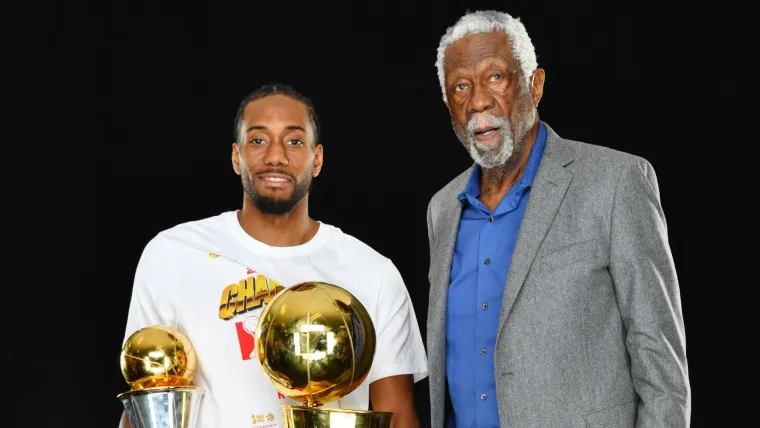
The Beatles sang “You say you want a revolution” in 1968, but it took the NBA almost 40 years to make a change to its iconic trophy, although the name remained the same.
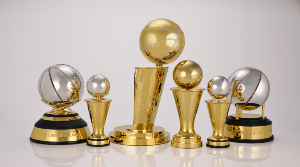
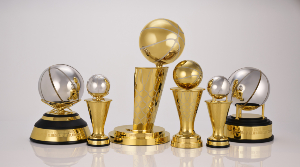
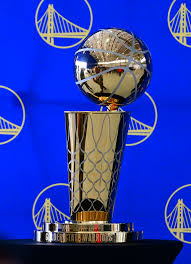
In 2022, the league made three subtle yet significant changes to the trophy.
The net and ball configuration were shifted forward to symbolize “the league looking ahead to its future.”
The 24K gold vermeil was masked to unveil sterling silver that highlights the ball and net.
The base was reconfigured to include two discs. The top disc lists the first 75 NBA champions, with the next 25 champions going on the second disc. The 2021-22 Golden State Warriors were the first team to get their name etched into the bottom disc.
NBA Larry O’Brien Trophy:
2. A Trophy to Call Its Own
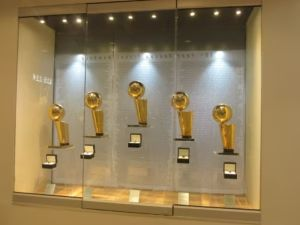
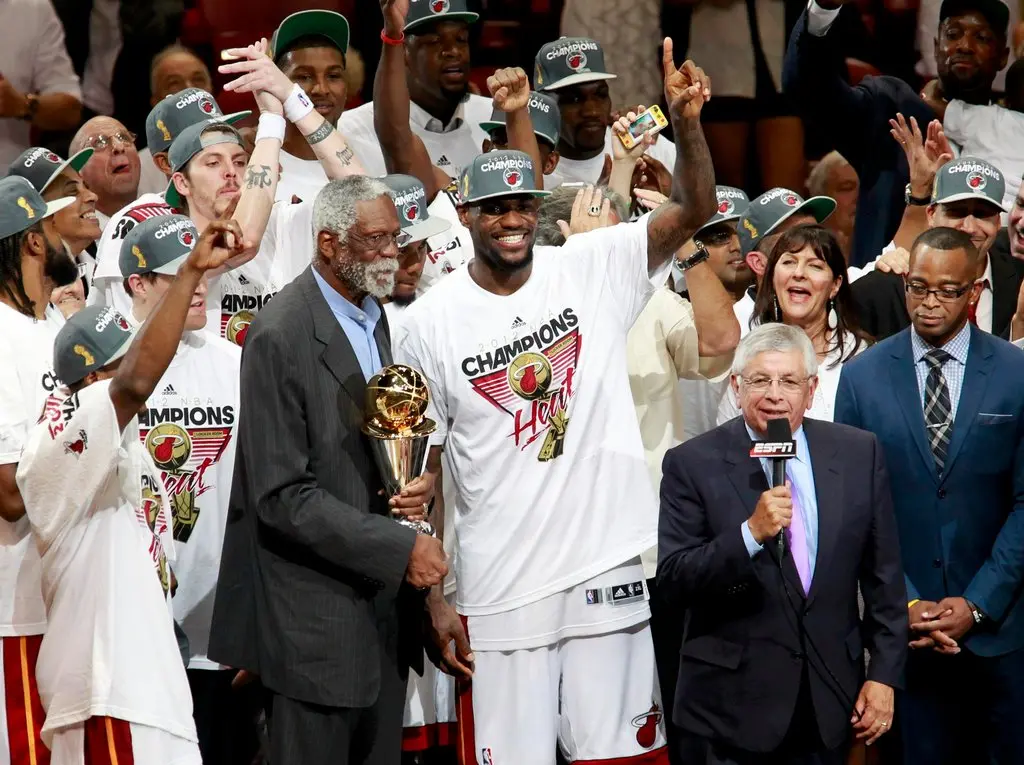
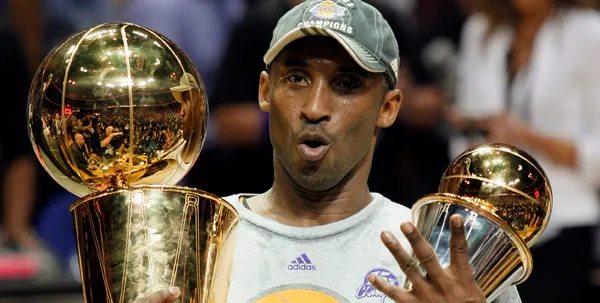
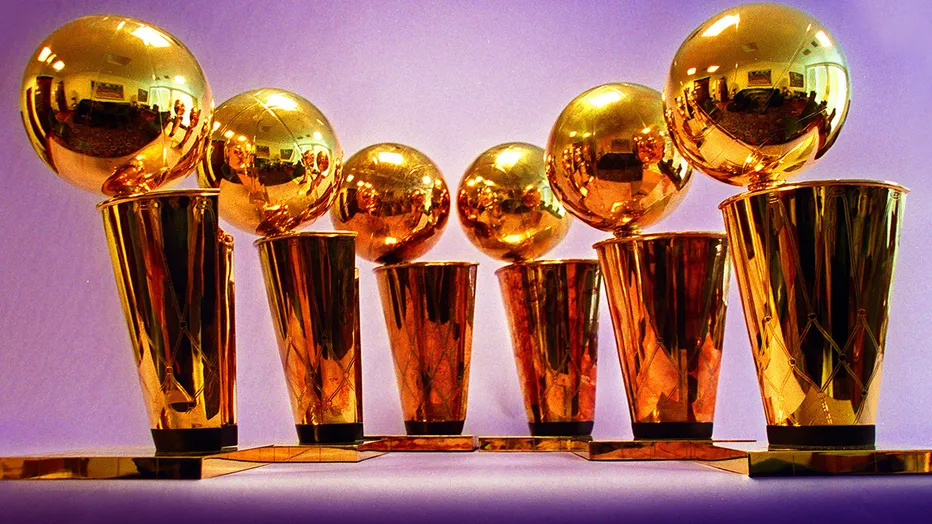
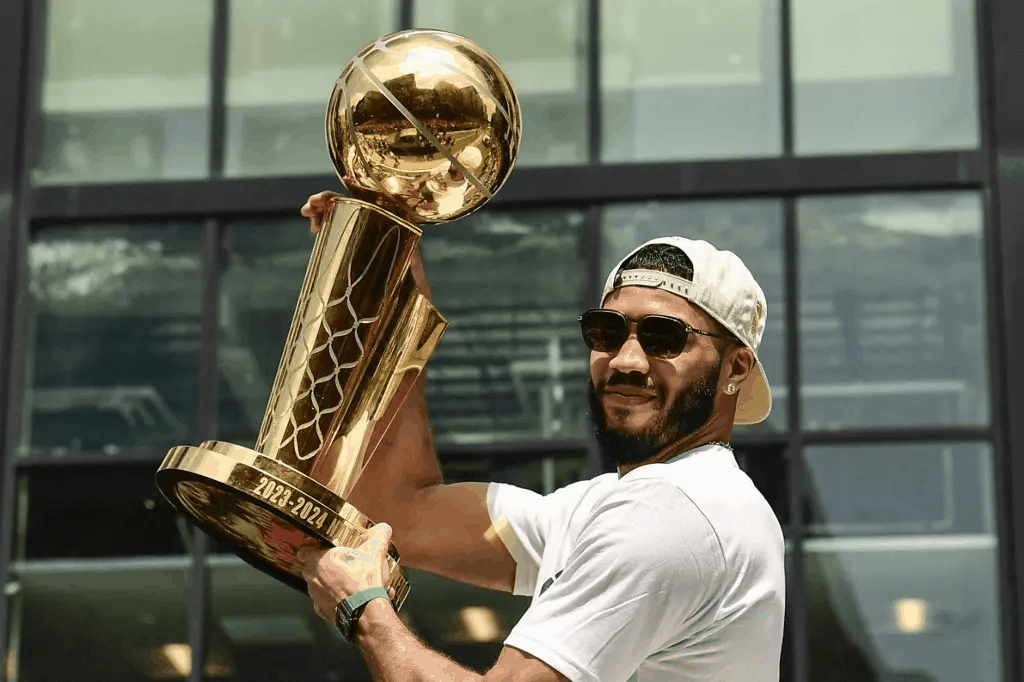
Unlike the Stanley Cup, which is passed from champion to champion, the Larry O’Brien Championship Trophy is crafted specifically for the winning team, and it gets to keep that trophy forever. Although the Pacers surprisingly bumped the NY Knicks, while the Thunder dispatched the Minnesota Timberwolves in five games during the conference championships, the artisans at Tiffany are already burnishing this season’s trophy, but they have yet to engrave the name of the winning team!
NBA Larry O’Brien Trophy:
3. When Did They Change the Name?
Although Larry O’Brien was only the commissioner for eight years, his reign proved to be transformative. The league changed the NBA title trophy name to the Larry O’Brien Championship Trophy after his tenure ended on January 31, 1984. It was only a few months later that the Celtics defeated the Lakers in seven games in the 1984 NBA Finals and accepted the first NBA title trophy with a new name.
NBA Larry O’Brien Trophy:
4. Why Larry O’Brien?
Well, it wasn’t always named after him, as the NBA’s original championship trophy was named after Walter Brown and had a completely different design. But along came Lawrence Francis O’Brien Jr., who came as close to competing in NBA games as you or me. But he was a high-ranking muck-a-muck in the Democratic party who took over as NBA Commissioner between 1975 and 1983.
During his tenure, he saved the league from going under, merged with the ABA, which ushered in the era of the San Antonio Spurs, Indiana Pacers, Denver Nuggets, and New York Nets, negotiated the then-richest TV broadcast deal in the league’s history, and worked out a new free agency agreement. He also developed the salary cap and instituted the three-point shot.
NBA Larry O’Brien Trophy:
Top 5 Facts Regarding the Larry O’Brien Championship Trophy
5. Trophy Stats
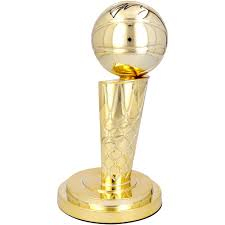
The NBA championship trophy may not quite be as big as Lord Stanley’s Cup, but it’s pretty damn close. Standing over 25 inches tall and weighing 30 pounds, Tiffany & Co. has designed and manufactured the trophy since 1977.
Lawrence Francis O’Brien Jr. (July 7, 1917 – September 28, 1990) was an American politician and commissioner of the National Basketball Association (NBA) from 1975 to 1984. He was one of the United States Democratic Party’s leading electoral strategists for more than two decades. He was Postmaster General in the cabinet of President Lyndon Johnson and chair of the Democratic National Committee. The NBA Championship Trophy is named after him.
O’Brien, son of Irish immigrants, was born in Springfield, Massachusetts. When he was not working in politics, O’Brien managed his family’s real estate and worked in public relations.
Early life and politics
O’Brien was born on July 7, 1917, in Springfield, Massachusetts. He learned about politics at a young age. His father, a local leader of the Democratic Party, recruited him at 11 years old to serve locally as a volunteer in the 1928 presidential campaign of Al Smith. O’Brien became a passionate Democrat. He earned a bachelor’s degree in law in 1942 at the Northeastern University – Springfield Division, now known as the Western New England University School of Law. O’Brien was married to the former Elva Brassard in 1945. They had one son, Lawrence F. O’Brien III, who became a lobbyist.
He was appointed in 1946, 1948, and 1950 by his friend Foster Furcolo to serve locally as the director of his U.S. House of Representatives election campaigns. O’Brien was appointed in 1952 by John F. Kennedy to serve in Massachusetts as the director of his successful U.S. Senate election campaign and, in 1958, to serve in Massachusetts as the director of his successful reelection campaign. Kennedy’s elections were largely attributed to O’Brien’s recruitment, his use of volunteers, and his insistence upon reaching voters in every corner of every state.
In 1959, he built the foundation for Kennedy’s 1960 presidential campaign by canvassing the United States and working to connect with state Democratic stakeholders. O’Brien was appointed as Kennedy’s national campaign director. His