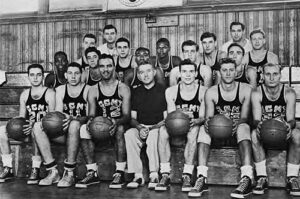
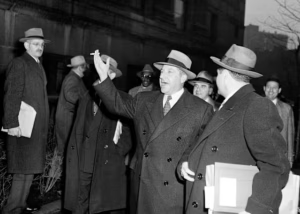
n 1951, allegations of point-shaving and match fixing in college basketball revealed widespread bribery and corruption involving major colleges and universities in and around New York City, particularly at Madison Square Garden. While the public scandal officially involved at least seven American colleges and universities (with one university having a player retroactively participating in the event during this time after initially being missed during the original investigation period),[1] the scandal has been most closely associated with the 1949–50 CCNY Beavers, which won both the 1950 NCAA basketball tournament and 1950 National Invitation Tournament and had a number of players implicated in point shaving and match fixing.
The initial scandal centered on New York City area colleges and universities: CCNY, Manhattan College, New York University and Long Island University, before spreading farther out west to the University of Toledo, Bradley University, and 1951 NCAA champion University of Kentucky. Players in California (specifically in Southern California and San Francisco), Oregon, Colorado, Georgetown, and the Ivy League also met up with gamblers, though only one player from those areas would ultimately accept any of their offers.
CCNY was eventually banned from playing at Madison Square Garden, although both head coach Nat Holman and assistant coach Bobby Sand were cleared of any wrongdoing themselves.[5][1][6] Manhattan District Attorney Frank Hogan led the prosecution of dozens of gamblers and players for attempted bribery and match fixing, including thirty-five players (some of whom had played professionally, including at the NBA), a disgraced NBA referee, and multiple members of organized crime. Previous investigations related to the scandal also revealed widespread bribery of police and corruption within the New York City Police Department, which led to the resignations of mayor William O’Dwyer and police commissioner William O’Brien alongside multiple other police officers that accepted bribes.
The scandal itself compromised the integrity of college basketball and threatened its very existence at the time.
In the early 1950’s – Gambling was prevalent throughout society.
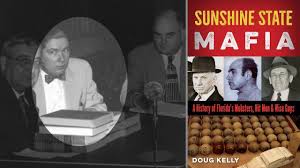
For professional and college players of the game, there was a lot more money in cheating than playing basketball games. The Mafia took the black hand and almost destroyed the NBA. Nobody would eventually watch rigged games. Eventually, after years of corruption, things changed … but fixing games and lottery picks has reappeared throughout the history of the NBA.
The 1950s basketball gambling crisis primarily refers to the massive 1951 college basketball point-shaving scandal. Operating from 1947 through 1951, the scheme involved over 30 players from seven different colleges (including CCNY, Bradley, and Kentucky) rigging games to match betting point spreads for organized crime syndicates.
The scandal deeply bled into the fledgling NBA, as several of the implicated college stars had already turned professional.
Key Details and Fallout
- College Origins: The fix was masterminded by organized crime figure Salvatore Sollazzo, who bribed players to ensure their teams won but failed to cover the point spread
- NBA Impact: College stars involved in the ring, such as Alex Groza and Ralph Beard (University of Kentucky), were playing for the NBA’s Indianapolis Olympians. Both players were permanently banned from the NBA after confessing to taking bribes.
- Referee Involvement: NBA referee Sol Levy was indicted on seven criminal counts for fixing professional games during the 1950–1951 season. He received a three-year sentence in 1953.
- League-Wide Damage: The scandal severely shook public trust in basketball, leading to bans that effectively destroyed several top-tier college basketball programs, most notably the City College of New York
Michael Jordan
Jordan in 201 |
Gambling
During the 1993 NBA playoffs, Jordan was seen gambling in Atlantic City.[359] The previous year, he admitted that he had to cover $57,000 in gambling losses,[360] and author Richard Esquinas wrote a book in 1993 claiming he had won $1.25 million from Jordan on the golf course.[361]
In 2005, Jordan discussed his gambling with Ed Bradley of 60 Minutes and admitted that he made reckless decisions:
Yeah, I’ve gotten myself into situations where I would not walk away and I’ve pushed the envelope. Is that compulsive? Yeah, it depends on how you look at it. If you’re willing to jeopardize your livelihood and your family, then yeah.
When Bradley asked him if his gambling ever got to the level where it jeopardized his livelihood or family, Jordan replied: “No.”[306] David Stern, the commissioner of the NBA, denied in 1995 and 2006 that Jordan’s 1993 retirement was a secret suspension by the league for gambling,[362][363] but the rumor spread widely.[364] In 2010, Ron Shelton, director of Jordan Rides the Bus, said that he began working on the documentary believing that the NBA had suspended him, but that research “convinced [him it] was nonsense”.[364]
Return to the NBA (1995)
The Bulls went 55–27 in 1993–94 without Jordan in the lineup[78] and lost to the New York Knicks in the second round of the playoffs.[135] In March 1995, Jordan decided to quit baseball because he feared he might become a replacement player during the Major League Baseball strike.[136] During the 1994–95 season, Jordan returned to the Bulls midway through the season. On March 18, 1995, Jordan announced his comeback to the NBA in a two-word press release: “I’m back.”[137] The next day, Jordan took to the court with the Bulls to face the Indiana Pacers in Indianapolis, scoring 19 points.[138] The game had the highest Nielsen rating of any regular season NBA game since 1975.[139] Although he could have worn his original number even though the Bulls retired it, Jordan wore No. 45, his baseball number.[138]
In the 1970s, the NBA experienced a significant era defined by a lack of a clear dynasty and a rise in organized crime connections. Because gambling was a foundational pillar of mob revenue, notorious mafia figures, including associates of the New York crime families, attempted to infiltrate the sport to fix games and expand their underground networks.
The most notable ties between the mob and basketball from this era involve both fixed games and mob debts:
- The Boston College Point-Shaving Scandal (1978–79): Orchestrated by Lucchese crime family associate Henry Hill and Jimmy Burke, this scheme involved paying Boston College players to manipulate point spreads rather than final outcomes, which successfully evaded detection.
- The NBA Referee Allegation: During the same BC point-shaving plot, Hill claimed to have an NBA referee in his pocket who officiated games at Madison Square Garden. The ref had reportedly racked up massive horse-racing debts to the mob.
- Jack Molinas: A prominent fixer with deep ties to the Genovese crime family, Molinas heavily influenced the collegiate and professional careers of notable players. While his original collegiate fixing scandal happened prior, Molinas’s heavy involvement in illegal sports betting and subsequent murder in 1975 reflected the dark reach of mob debt in basketball during this period.
Would you like to know more about the Boston College scandal or other historical
Victor Wembanyama embraced a strict 10-day physical and mental training retreat at China’s historic Shaolin Temple. Guided by 34th-generation warrior monks, the 7’5″ Spurs star meditated for up to 90 minutes at a time, practiced kung fu, and completed challenging night-hikes in total darkness to build emotional resilience
1979: Playing for the Mob
In the seven decades between CCNY’s era and our own, gambling influences continued to rear their heads in college basketball from time time—to but no modern scandal looms larger than Boston College’s. In 1979, several Eagles cooperated with a group of mobsters that included Henry Hill—Ray Liotta’s character in Goodfellas—to shave points in nine games in the Eagles’ last season as a hoops independent (they’d join the Big East in 1980). The scheme netted the gamblers hundreds of thousands of dollars, and only came to light when Hill began informing on his past associates. The NBA responded by preemptively banning three of the involved Boston College players for life.
Mafia returns to center stage in NBA betting scandal that included rigged poker games
Mafia returns In 2026
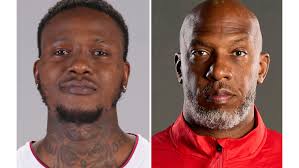
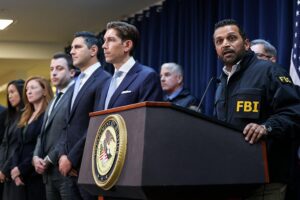
NEW YORK (AP) — Decades after a crackdown by prosecutors decimated the ranks of the New York Mafia, the indictment of an NBA coach, a player and nearly three dozen others in a betting scandal highlighted the mob’s persistence and adaptability to changing times and technology.
Four of New York’s five organized crime families allegedly participated in the sophisticated rigging of high-stakes poker games that one investigator said were “reminiscent of a Hollywood movie.”
The mobsters are accused of pocketing some of the $7 million that was fleeced from unsuspecting victims who were drawn to poker tables in Las Vegas, Miami, Manhattan and Long Island’s seaside playground for the rich and famous.
Former federal prosecutor Mitchell Epner said the indictments offered a reminder that La Cosa Nostra is “still very real” and that like any organization that has been attacked, “the mob has adjusted.”
Brooklyn case reveals Mafia is less visible but still alive
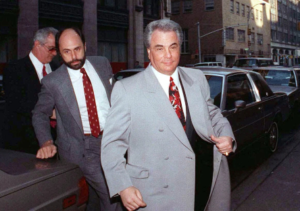
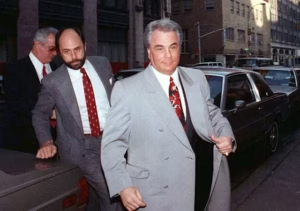
The mob has shrunk considerably since the days when John Gotti Sr. ran the Gambino family, once one of the most powerful and feared crime organizations in the U.S.
Back then, the dapper Gotti smiled and waved to courthouse spectators, winning the moniker of “The Teflon Don” from New York’s tabloid newspapers after a string of acquittals.
The Mafia and its violent mystique were a cultural phenomenon, featured in films such as “The Godfather” and “Goodfellas,” which paid tribute to a brazen $6 million robbery at Kennedy International Airport, and later in the television hit “The Sopranos.”
In the 1980s, federal prosecutors, including future New York Mayor Rudy Giuliani, launched a crackdown, using racketeering laws that carried life sentences and capitalizing on an erosion of the Mafia’s code of silence.
Dozens of “made men” went to prison, and the mob structure built around social clubs was largely dismantled. Gotti, who was eventually convicted, died of cancer in 2002 while serving a life sentence.
“I’m of a sufficient age to remember Giuliani claiming that organized crime is dead,” said David Shapiro, a former FBI agent and assistant prosecutor who now lectures at New York’s John Jay College of Criminal Justice.
While “the structure has changed, the leadership has changed, the methods of governance have changed, they’re still around because there are still people to be fleeced. It’s just not nearly as a centralized, as open, as organized,” Shapiro said.
There are occasional reminders that the Mafia lingers. Six years ago, the reputed boss of the Gambino family, Francesco “Franky Boy” Cali, was shot to death in front of his Staten Island home. But the mob’s relative lack of visibility does not mean it’s gone away.
Jerry Capeci, an expert on the mob who writes the ganglandnews.com web column, said the Mafia remains a force in the gambling world.
“They’re not as out there as they used to be, and they stopped killing people. But they’re still around,” he said.
Mafia was in familiar territory with corrupt poker games
In the Brooklyn prosecution, the Mafia played a major role in the high-end poker games, with mobsters posing as ordinary players at the tables and providing the muscle to collect debts, prosecutors said.
The victims, including one who lost $1.8 million, were drawn to the games, usually Texas Hold ’Em, that seemed exclusive because former professional athletes played at the tables too.
But federal prosecutors in Brooklyn say the ex-athletes and all the other players were in on a ruse, using technology to rig the outcome.
2007 NBA betting scandal

The 2007 NBA betting scandal was a scandal involving the National Basketball Association (NBA) and accusations that an NBA referee used his knowledge of relationships between referees, coaches, players and owners to bet on professional basketball games. In July 2007, reports of an investigation by the Federal Bureau of Investigation (FBI) were made public, which alleged that during the 2005–06 and 2006–07 NBA seasons, referee Tim Donaghy bet on games in which he officiated.[1] Donaghy later admitted to betting on games he officiated in each of the 2003–04, 2004–05, 2005–06, and 2006–07 seasons.
Donaghy has claimed that instead of using his position as an on-court referee to advance his bets, he exploited his insider knowledge to wager on NBA games, regardless of whether he was officiating them. However, some of Donaghy’s co-conspirators cooperated with the government and claimed that they only became involved because Donaghy offered a high win rate on the games which he officiated. Similarly, Donaghy’s best friend, Tommy Martino, noted that during most of the scandal’s four-year span, Donaghy only offered bets on games which he officiated. Furthermore, Donaghy’s betting predictions for the outcomes of games which he did not officiate were typically incorrect, so the co-conspirators generally avoided placing bets on such matches.[2][3][4] Researchers with access to Donaghy’s offshore betting accounts, electronic betting records, and betting line data have demonstrated that most of the betting activity involved games officiated by Donaghy.[4]
On August 15, 2007, Donaghy pleaded guilty to two federal charges related to the investigation. In 2008, he was sentenced to 15 months in prison and three years of supervised release.
- Len Bias: Died in 1986 from cocaine-induced cardiac arrhythmia shortly after being drafted by the Celtics, a pivotal moment that raised awareness about substance abuse in the league.
- Ricky Berry: Passed away in 1989 from complications related to amphetamine abuse.

- Haris Brkić: A European player, died in 2000 from gunshot wounds, but substance abuse was a significant factor in his life and death.

- Data Collection: The NBA doesn’t widely publish or track this specific statistic for all former players across history.
- Cause of Death Nuances: Sometimes, drug use contributes to deaths (like heart issues) but isn’t the sole listed cause, making categorization difficult.
Website Menu
... ... the youth who have usurped the game of Basketball
... ... & the bygone who set the foundation for the sport
PAST & PRESENT YOUNG STARS