



Bob Kurland
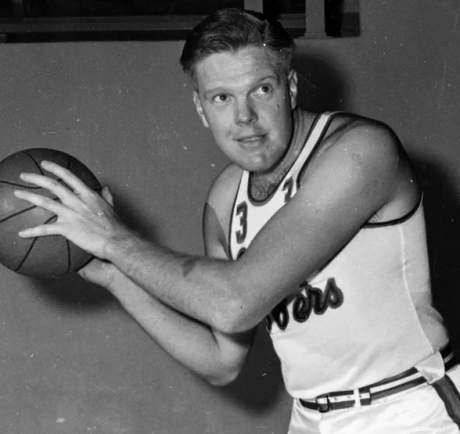
Robert Albert Kurland (December 23, 1924 – September 29, 2013) was an American basketball center, who played for the two-time NCAA champion Oklahoma A&M Aggies (now Oklahoma State Cowboys)
Standing 7-foot (2.1 m) tall, … …
… he has been credited as the first person to dunk in a college basketball game.
He led the U.S. basketball team to gold medals in two Summer Olympics, and led his AAU team to three national titles. He is a member of the Naismith Memorial Basketball Hall of Fame.
Kurland was born in St. Louis, Missouri to Albert and Adele Kurland. He graduated from Jennings High Schoo.
Personal life
Kurland received post-graduate management training at Stanford University. He became a salesman for Phillips Petroleum Company, where he played AAU basketball, and later served as a senior marketing executive. He held a variety of positions, including ones responsible for the development of the self-service gas station concept, growth of the agricultural and plastics divisions, and management of marketing initiatives. His corporate responsibilities took his family to Denver, Wichita, Memphis, Cincinnati and Atlanta. Ultimately, the family returned to the home of Phillips Petroleum, Bartlesville, Oklahoma, where Kurland served as vice mayor and as a member of the city commission for several years. He retired from Phillips in 1985.
Kurland was elected to the Naismith Memorial Basketball Hall of Fame in 1961. In 1996, he was inducted into the National Polish-American Sports Hall of Fame
After retirement, Kurland and his wife, Barbara, divided time between their homes in Bartlesville, Oklahoma and Sanibel Island, Florida.
Kurland died at his Florida home on September 29, 2013, at age 88. He was survived by his wife of 62 years, Barbara, their four children Alex, Ross, Dana, and Barbara, and seven grandchildren.


There were a limited number of surviving films/videos of the game of basketball from 1982 beyond the 20’s. The video with female playes is believed to be the earliest surviving footage in 1909. Notice rims with nets.
We have mostly only photographs to see what the game of basketball looked like. until 1940.
There are quite a few surviving audio clips about basketball during the early 20th century. They are difficult to obtain.
The earliest known film/video of a complete basketball game is from a doubleheader at Madison Square Garden in 1939. See this film footage of the first profession game being recorded on film below.
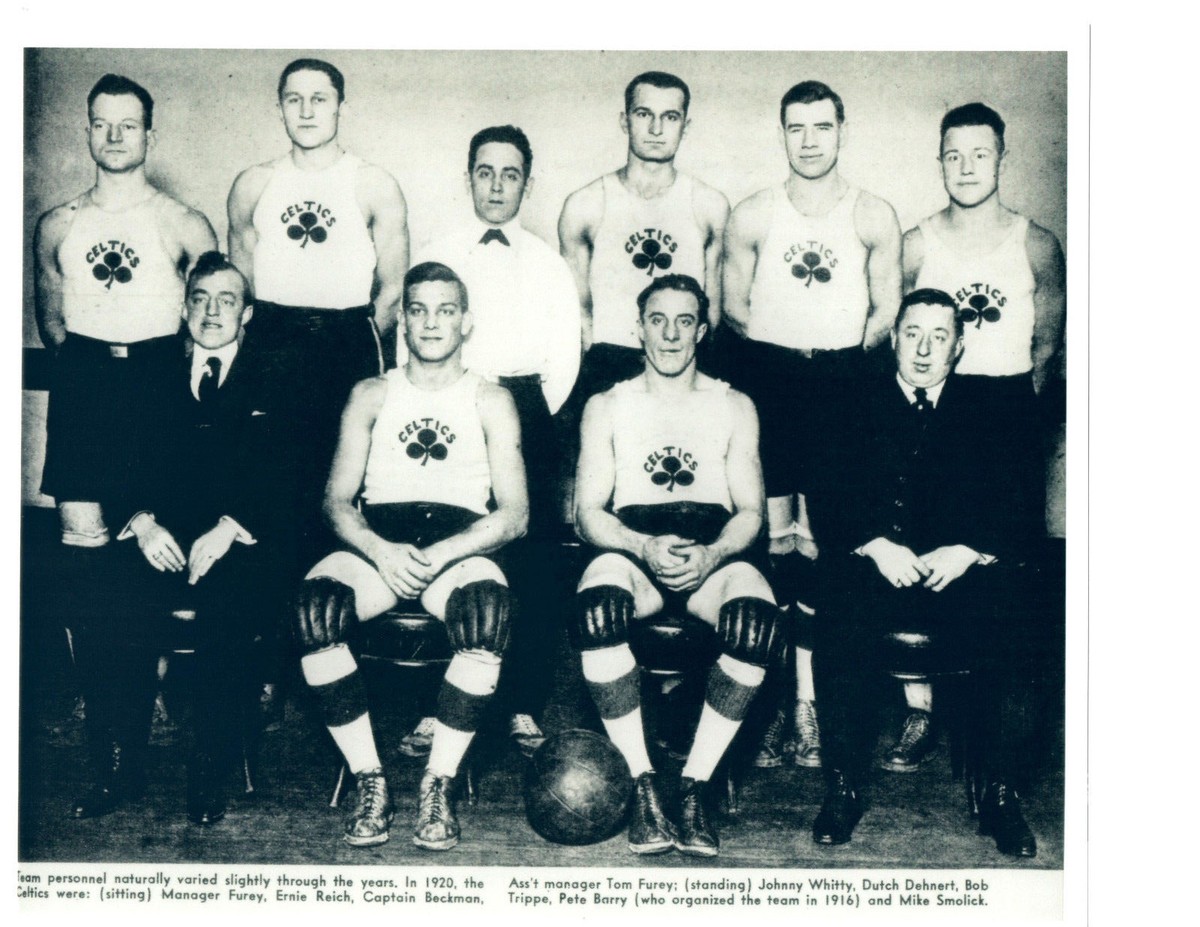
- Nat Holman (“Mr. Basketball”): Regarded as the best all-around player, known for his elite shooting, passing, and floor leadership with the Original Celtics.
- Bennie Borgmann: One of the greatest scorers of his generation,, capturing numerous scoring titles in various leagues.
- Dutch Dehnert: A standout with the Original Celtics, recognized for pioneering the pivot play and exceptional defensive skills.
- Joe Lapchick: Renowned as one of the best centers of the era and a key member of the dominant Celtics team.
- Paul Endacott: A star at the University of Kansas, named Helms Foundation Player of the Year in 1923.
- Chuck “Tarzan” Cooper: A dominant center in the 1920s professional circuit.
- Harry “The Horse” Leonard: Known as a top defensive specialist and scorer.
- Vern Corbin: A standout college player for Cal, earning All-America honors in 1928.
Between 1930- 45 the depression and WW II did not help professional basketball expand. Nevertheless, The War did amazingly help the game grow globally as hundreds of thousands of internationally stationed military men played basketball in numerous countries 1941 until today.
This period saw basketball have a global popularity boom as the local populations began to enjoy watching and especially playing the game of basketball.
Until the 1930 ‘s film/video/ the game of basketball wasn’t available. Sound recordings were limited. Below is believed to be the first complete basketball game on film.
Prior to 1930, everything we know was passed on by personal voice of those that lived it, audio recordings, limited short visual video/film clips,
We also have the writings. Unfortunately, the death of the aging generation of early basketball has eliminated the word of mouth.
But by the 1940′ we start to see a decent amount of film on teaching and of the actual games
Below we get into a little thought the thirty’s … …
1939 – 45
- Bobby McDermott: A standout guard in the NBL, he was arguably the most famous and dominant player in the first half of the 1940s, winning multiple MVP awards.
- Joe Fulks: A prolific scorer for the Philadelphia Warriors, he was the top scorer in the BAA (precursor to the NBA) during the late 40s.
While the NBA as the world knows it today did not come into fruition until the 1949-50 season, its first official season is considered to be the 1946-47 season. That year marked the formation and inaugural season of the Basketball Association of America (BAA), which merged with the National Basketball League (NBL) in the 1949-50 season to become the NBA as we know it today.
The league, and the game of basketball itself, was at a remarkably different place during its early days than it is today. The 1940s, therefore, saw a version of the game and league almost unrecognizable from today.
However, just because the era was different does not render its legitimacy worthless. The era came before the emergence of superstars, but there were still plenty of elite players during the game’s early days. The following are the five greatest players of the 1940s, the league’s inaugural decade.
1947
The First NBA Championship
The league (NBA) began in the late 1946. The majority of players who played basketball during that decade continued their career into the 1950s.
Bob Kurland
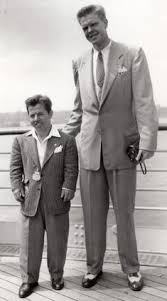
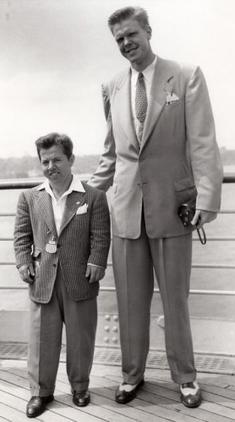
![]() Joseph DePietro (left) and Kurland on the way to the 1948 Summer Olympics | |||||||||||||||
| Personal information | |||||||||||||||
|---|---|---|---|---|---|---|---|---|---|---|---|---|---|---|---|
| Born | December 23, 1924 St. Louis, Missouri, U.S. | ||||||||||||||
| Died | September 29, 2013 (aged 88) Sanibel Island, Florida, U.S. | ||||||||||||||
| Listed height | 7 ft 0 in (2.13 m) | ||||||||||||||
| Listed weight | 220 lb (100 kg) | ||||||||||||||
| Career information | |||||||||||||||
| High school | Jennings (Jennings, Missouri) | ||||||||||||||
| College | Oklahoma State (1942–1946) | ||||||||||||||
| Playing career | 1946–1952 | ||||||||||||||
| Position | Center | ||||||||||||||
| Number | 90 | ||||||||||||||
| Career history | |||||||||||||||
| 1946–1952 | Phillips 66ers | ||||||||||||||
| Career highlights | |||||||||||||||
| |||||||||||||||
| Stats at Basketball Reference | |||||||||||||||
| Basketball Hall of Fame | |||||||||||||||
| Collegiate Basketball Hall of Fame | |||||||||||||||
Medals
| |||||||||||||||
Robert Albert Kurland (December 23, 1924 – September 29, 2013) was an American basketball player, who played for the two-time NCAA champion Oklahoma A&M Aggies (now Oklahoma State Cowboys). Standing 7-foot (2.1 m) tall, he has been credited as the first person to dunk in a college basketball game.[1] He led the U.S. basketball team to gold medals in two Summer Olympics, and led his AAU team to three national titles. He is a member of the Naismith Memorial Basketball Hall of Fame.
Early life
Kurland was born in St. Louis, Missouri to Albert and Adele Kurland. He graduated from Jennings High School in Jennings, Missouri, where he participated in basketball and track.[2]
College career

Kurland, a Missouri native, considered attending the University of Missouri. But when Oklahoma A&M played a game at Saint Louis University, A&M coach Henry Iba invited Kurland to dinner and offered him a scholarship. Missouri could only offer Kurland a job.[1] Many of Kurland’s family members had not finished high school, and Kurland was the first in his family to attend college at any level.[3]
Kurland was an integral part of the team’s consecutive NCAA titles in 1945 and 1946, and was named the NCAA basketball tournament Most Outstanding Player both times.[4] In the 1945–46 season, he scored a then-season record 643 points, including 58 in a game against Saint Louis University, which featured 6 ft 8 in (2.03 m) freshman Ed Macauley. Kurland was voted Helms Foundation College Basketball Player of the Year.[2][4]
Kurland was known to leap above the rim to grab opponents’ shots. This led to the NCAA banning defensive goaltending in 1945.[5] The rivalry between him and De Paul’s George Mikan would foreshadow similar matchups, especially those of basketball’s “big men.”
In college, Kurland was active in many campus activities, including the student council, for which he served as president in 1945 and 1946. He graduated with a Bachelor of Science in education.[2]
AAU career
Kurland never played professional basketball, passing up the newly formed Basketball Association of America and the older National Basketball League (both of which would merge operations together in 1949 to form the present-day National Basketball Association), to play for Phillips Petroleum’s A.A.U. team, the Phillips 66ers. Kurland played for six years with Phillips, winning three championships.
Summer Olympics
Since Kurland never played professionally, he was eligible as an amateur for the Olympic Games. In the 1948 Summer Olympics in London, England, he led the U.S. basketball team to the gold medal.[6] He was second on the team in scoring (behind Alex Groza) as the U.S. defeated France in the gold medal game, 65–21.[7] In the 1952 Olympics in Helsinki, Finland, Kurland carried the U.S. flag in the opening ceremony. He was again a dominant force at center as the U.S. defeated the Soviet Union in the gold medal game, 36–25.[8]
Personal life
Kurland received post-graduate management training at Stanford University. He became a salesman for Phillips Petroleum Company, where he played AAU basketball, and later served as a senior marketing executive. He held a variety of positions, including ones responsible for the development of the self-service gas station concept, growth of the agricultural and plastics divisions, and management of marketing initiatives. His corporate responsibilities took his family to Denver, Wichita, Memphis, Cincinnati and Atlanta. Ultimately, the family returned to the home of Phillips Petroleum, Bartlesville, Oklahoma, where Kurland served as vice mayor and as a member of the city commission for several years. He retired from Phillips in 1985.[2]
Kurland was elected to the Naismith Memorial Basketball Hall of Fame in 1961. In 1996, he was inducted into the National Polish-American Sports Hall of Fame.[9]
After retirement, Kurland and his wife, Barbara, divided time between their homes in Bartlesville, Oklahoma and Sanibel Island, Florida.
Kurland died at his Florida home on September 29, 2013, at age 88. He was survived by his wife of 62 years, Barbara, their four children Alex, Ross, Dana, and Barbara, and seven grandchildren.[2]
See also
- List of Oklahoma State University Olympians