
Gregg Popovich’s Division III breakthrough
Over time, the Sagehens’ fortunes improved.
They went from 2-22 in Popovich’s first season to 10-15 in his second and finished .500 in their conference in his third season. The program’s trajectory was decidedly up, in part because of some of the skill its young coach had displayed in getting it there.
In a cold-hearted-but-ultimately-effective move, Popovich made every player from his first team try out to be a part of his second, with only two making the cut. He’d bring in more freshmen than he realistically would have needed, if only to increase his odds of stumbling upon a hidden gem or two. He formed a JV program, giving Pomona-Pitzer some much-needed depth and a developmental pipeline. From his first year to his second, the team’s average height rose three inches, from 6-foot-2 to 6-foot-5.
His tactical brilliance was put on display, too, often due to desperate circumstances. In those 4-on-4 scrimmages in his first season, he realized the Sagehens played better with two fewer players on the court at a given time, opening up lanes and spacing the floor. With not much to lose, he decided to try it out in a game, having four players come up the floor on offense while one lagged behind near midcourt, bringing a defender out to keep an eye on him. They’d play a four-out offense with nobody in the post and even when teams adjusted to bring the fifth defender into the fold, Pomona-Pitzer would have their wayward fifth man jump into an open spot at an opportune moment, transforming their offense from a horrid unit to something significantly more passable.
“He was pulling rabbits out of a hat,” Osgood said to Grantland. “He was like a magician, trying to find any way to make us good.”
Though he was sometimes led astray, Popovich remained a relentless recruiter, following every tip he got and every so often striking gold, just as he did with 6-foot-5 forward Dave DeCesaris from Riverside Community College, who chose Pomona over several Division I offers and went on to set most of the Sagehens’ all-time scoring records.
He benefited from a supportive administration, which is seldom a given at Division III schools where sports play a significantly smaller role in campus life. Specifically, there was Pomona’s dean, Bob Voelkel, a former Division III All-American basketball player who liked athletics and aimed to foster the success of his school’s teams.
During the 1985-86 season, Popovich’s seventh at the helm, those years of hard and diligent work came together for a run that Pomona-Pitzer had never seen to that point.
With DeCesaris leading the way averaging 22 points per game, the Sagehens won their league, the Southern California Intercollegiate Athletic Conference, outright for the first time in 68 years. That earned them a spot in the NCAA Tournament, where they were blown out 89-59 by Nebraska Wesleyan in a game that Popovich told reporters “didn’t think that this would happen in my worst nightmare.”

Still, a group that he described before the tournament as “one talented person and 10 overachievers” reached a point few, if any, would have imagined two years earlier, let alone when Popovich was hired.
“We didn’t really care [about the NCAA Tournament loss,” Popovich said to The Student Life. “We’d have rather won, but we were so excited about winning the conference championship for the first time in so many years that it didn’t even feel like a loss.”
The invariable exit
After that run, the gears that led Popovich to basketball immortality were put into motion.
With the encouragement of Pomona athletic director Curt Tong, a former Division III coach himself, Popovich took a sabbatical. Rather than going abroad somewhere or taking time away from the game to avoid burnout, Popovich got a basketball education in which he was able to view the game through a lens that was previously unavailable to him.
While still a player in the early and mid-1970s, Popovich developed a relationship with legendary coach Larry Brown, who was twice a part of staffs that cut Popovich – first for the U.S. men’s national team for the 1972 Summer Olympics and then again in 1975 while Brown was the head coach of the Denver Nuggets, then of the ABA.
The two stayed in touch and following the 1985-86 season, Popovich went to learn under Brown. He spent October and November of the 1986-87 season at North Carolina, Brown’s alma mater, under Dean Smith before going through the rest of the season with Brown and Kansas, serving a key role on the Jayhawks’ bench and coaching a group of players, most notably Danny Manning, that would lead the program to the NCAA championship the following season.
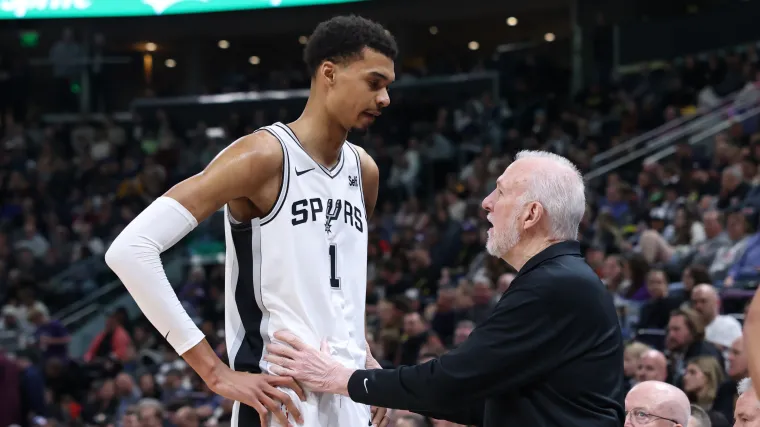
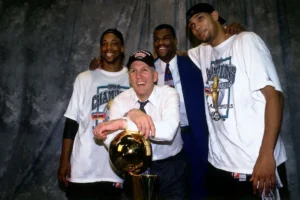
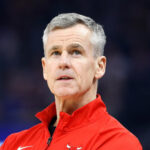
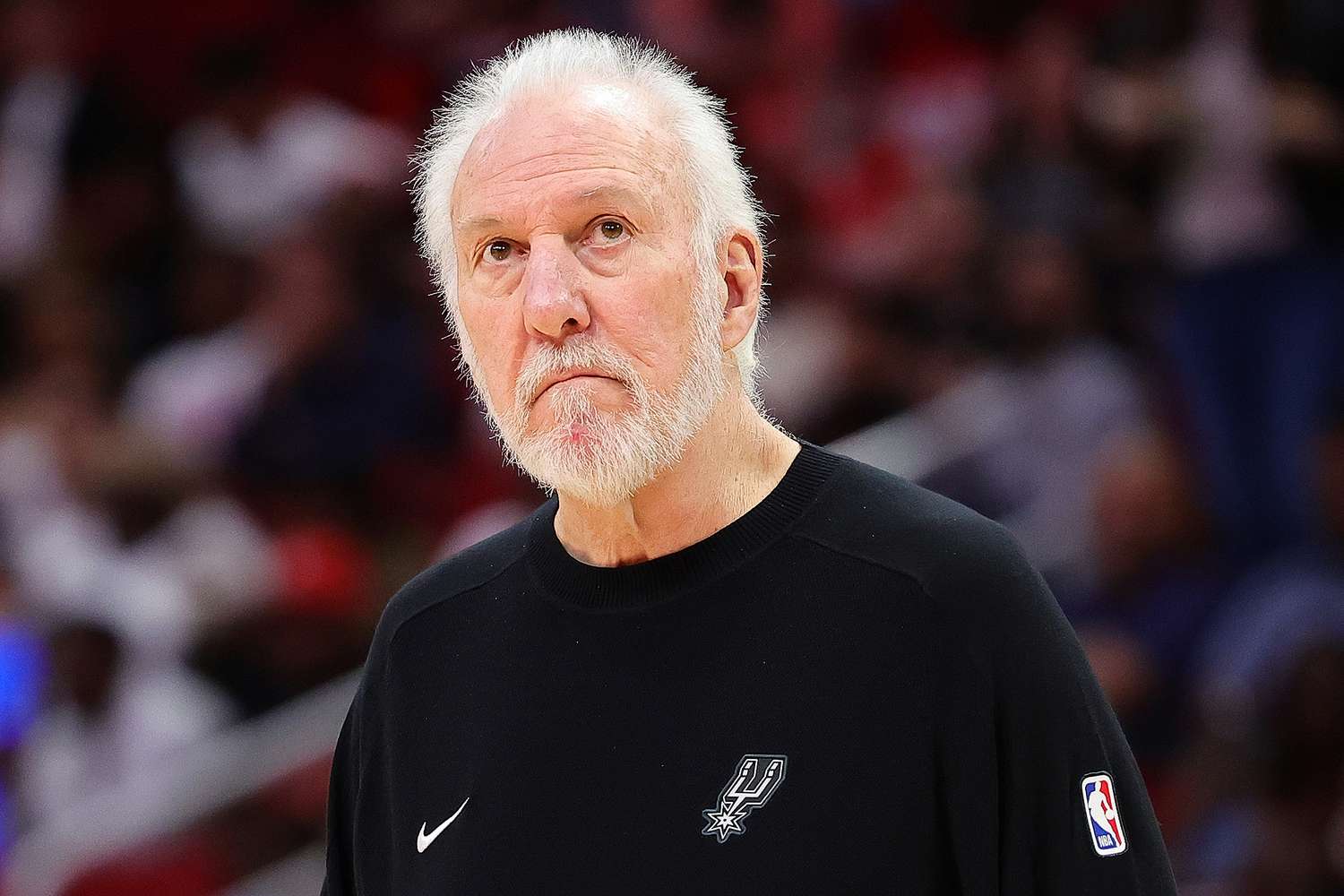
Gregg Charles Popovich (born January 28, 1949)[1] is an American professional basketball executive and former coach who is the president for the San Antonio Spurs of the National Basketball Association (NBA). He was the head coach of the Spurs for 29 seasons from 1996 to 2025, during which he won five NBA championships, and was the longest tenured active coach in the NBA as well as all other major sports leagues in the United States. He has been a member of the Spurs organization since 1994, originally as president of basketball operations and general manager, before taking over as coach in 1996. Nicknamed “Coach Pop“, Popovich has the most wins of any coach in NBA history,[2][3] and is widely regarded as one of the greatest coaches of all time.[4][5]
Popovich led the Spurs to a winning record in each of his first 22 full seasons as head coach, surpassing Phil Jackson for the most consecutive winning seasons in NBA history. During his tenure, the Spurs have had a winning record against every other NBA team. Popovich has been a key figure in the sustained success of the Spurs in the 1990s, the 2000s, and most of the 2010s.[6] Popovich has led the Spurs to all five of their NBA titles, and is one of only five coaches in NBA history to have won five titles. He was also the head coach of the U.S. national team at the 2020 Summer Olympics, leading the team to a gold medal. In 2023, Popovich was inducted into the Naismith Memorial Basketball Hall of Fame.[7]
After 29 seasons as head coach of the Spurs, Popovich stepped down in 2025 and transitioned into a front office role as the team’s president of basketball operations.
Early life
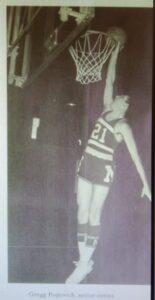
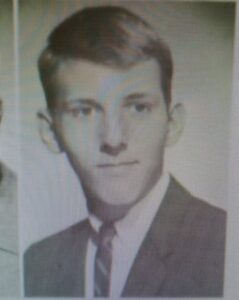
Popovich was born on January 28, 1949, in East Chicago, Indiana, to a Serbian father and Croatian mother.[8][9][10] He graduated from Merrillville High School in 1966.
College career
Popovich attended the United States Air Force Academy. He played on the academy’s Air Force Falcons men’s basketball team, and in his senior year was the team’s captain and leading scorer.[11] He graduated from the Academy in 1970 with a bachelor’s degree in Soviet studies. Popovich underwent Air Force intelligence training and briefly considered a career with the Central Intelligence Agency.[12][13][14]
Popovich served five years of required active duty in the United States Air Force, during which he toured Eastern Europe and the Soviet Union with the U.S. Armed Forces Basketball Team.[14] In 1972, he was selected as captain of the Armed Forces Team, which won the Amateur Athletic Union (AAU) championship.[15] This earned the 6-foot-2-inch (1.88 m) guard an invitation to the 1972 U.S. Olympic Basketball Team trials.[16]
Coaching and executive career
Pomona-Pitzer and early career (1973–1994)
In 1973, Popovich returned to the Air Force Academy as an assistant coach under the school’s head basketball coach Hank Egan. Egan later became an assistant coach under Popovich for the San Antonio Spurs. During his time as an assistant coach at the Academy, Popovich earned a master’s degree in physical education and sports sciences from the University of Denver.
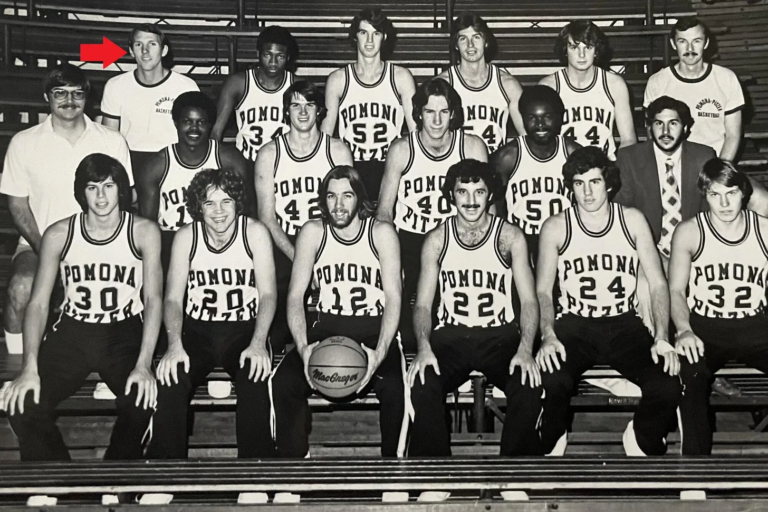
In 1979, Popovich was named the head coach of the Pomona-Pitzer Sagehens, the joint men’s basketball team of Pomona College and Pitzer College in Claremont, California. Popovich coached the Pomona-Pitzer men’s basketball team from 1979 to 1988, leading the team to its first outright title in 68 years.[17]
During his time as head coach at Pomona-Pitzer, Popovich became a disciple and later a close friend of head coach Larry Brown at the University of Kansas. Popovich took off the 1985–86 season at Pomona-Pitzer to become a volunteer assistant at Kansas, where he could study directly under Brown. Popovich returned to Pomona-Pitzer and resumed his duties as head coach the next season.
Following the 1987–88 season, Popovich joined Brown as the lead assistant coach for the Spurs. From 1988 to 1992, Popovich was Brown’s top assistant, until the entire staff, including R. C. Buford, Alvin Gentry and Ed Manning, were fired by owner Red McCombs. Popovich moved to the Golden State Warriors for a brief stint in 1992, serving as an assistant under future Hall of Famer Don Nelson and bringing with him Avery Johnson, who had been cut by the Spurs.
San Antonio Spurs (1994–2025)

In 1994, Popovich returned to San Antonio as the general manager and vice president of basketball operations after Peter Holt purchased the team. Popovich’s first move was to sign Avery Johnson as the team’s starting point guard. Another one of Popovich’s early moves in San Antonio was to trade Dennis Rodman to the Chicago Bulls for Will Perdue.[18]
After the Spurs had a 3–15 start in the 1996–97 season, with David Robinson sidelined with a preseason back injury, Popovich fired coach Bob Hill on December 10, 1996, and named himself head coach.[19] Robinson then broke his foot after only six games and was lost for the season. Sean Elliott was also limited to 39 games due to injury, and Chuck Person missed the entire season. With a reduced roster that included an aging Dominique Wilkins, the Spurs struggled and won only 17 games for the remainder of the season for an overall record of 20–62. The Spurs’ disastrous season allowed them the first overall pick in the 1997 NBA draft, which they used to draft Tim Duncan out of Wake Forest University.
The Spurs blossomed as the 6’11” Duncan teamed up with the 7’1″ Robinson in a “Twin Tower” offense and defense for several years. After recovering to win 56 games in 1997–1998 (Popovich’s first full year as coach), the Spurs won their first NBA title in 1999.
In 2002, Popovich relinquished his position as general manager to R. C. Buford, who had served as the team’s head scout. Popovich and Buford were both given their starts in the NBA in 1988 as assistants on Brown’s coaching staff with the Spurs.
Popovich has won five championships with the Spurs—1999, 2003, 2005, 2007 and 2014. He was named NBA Coach of the Year in 2003, 2012, and 2014.
On April 4, 2008, Popovich returned to the U.S. Air Force Academy to receive the academy’s award of Distinguished Graduate. Despite his four NBA titles at the time, Popovich said it was the most meaningful award he had ever received.[20]
On May 2, 2012, Popovich won his second Coach of the Year Award for the 2011–12 NBA season.[21]

On November 29, 2012, Popovich sat out starters Tim Duncan, Tony Parker, Manu Ginóbili, and Danny Green for a nationally televised game against the Miami Heat. Popovich frequently sat out his starters on road trips over the years to ensure they have enough rest for the playoffs; the Spurs’ roster was among the oldest in the league. NBA commissioner David Stern was outraged by this and said on the night of the game that it was “unacceptable”, and “substantial sanctions [would] be forthcoming”.[22] On November 30, Stern fined the Spurs $250,000 for what he called “a disservice to the league and the fans”. According to Stern, Popovich had not informed the Heat, the league or the media in a suitable time frame that the four players were not making the trip to Miami.[23] Stern’s decision was criticized by commentator Adrian Wojnarowski of Yahoo! Sports.[24]
Popovich led the Spurs to the 2013 NBA Finals to face the Miami Heat. The series lasted seven games, but the Spurs had their first-ever Finals loss.

On April 22, 2014, Popovich was awarded the Red Auerbach Trophy as he won the NBA Coach of the Year for the third time.[25] He also won his fifth NBA championship with San Antonio that season, beating the Heat 4–1 in the Finals.
On February 9, 2015, Popovich became the ninth coach in NBA history to win 1,000 games when the Spurs defeated the Indiana Pacers 95–93. He and Jerry Sloan are the only two coaches in NBA history to win 1,000 games with one franchise.
On August 1, 2015, Popovich served as Team Africa’s head coach at the 2015 NBA Africa exhibition game.[26]
In the 2015–16 season, Popovich led the Spurs to a franchise-high 67 wins, but he and the team lost in the conference semifinals against the Oklahoma City Thunder in six games.
On February 4, 2017, Popovich recorded his 1,128th regular season win with one franchise, surpassing Sloan.[27]
On April 13, 2019, Popovich surpassed Lenny Wilkens and became the all-time winningest coach in NBA history with his 1,413th win (regular season and playoffs combined).[28]
On January 26, 2020, the Spurs hosted the Toronto Raptors just hours after a California helicopter crash claimed the lives of nine people, including NBA legend Kobe Bryant and his 13–year-old daughter Gianna, and Popovich proposed that both teams take an intentional 24-second shot clock violation on each of their first possessions to pay homage to Bryant’s jersey number 24, which he donned from 2006 to 2016. This violation tribute would subsequently be repeated at the beginning of nearly every game around the league over the rest of that day and the following days.[29]
On March 27, 2021, after leading his team to a 120–104 victory against the Chicago Bulls, Popovich won his 1,300th regular season game and became the third NBA coach to reach the milestone.[30]
On March 11, 2022, Popovich surpassed Don Nelson for most regular season wins of all time, notching his 1,336th regular season victory with the Spurs.[31] Popovich needed 370 fewer games than Nelson to achieve this record.[32]
On July 8, 2023, Popovich signed a five-year contract extension, keeping him with the franchise through the 2027–28 season.[33]
On November 2, 2024, Popovich suffered a stroke. Two days later, it was announced that he would take an indefinite leave of absence from the team, with assistant Mitch Johnson stepping in as interim head coach.[34] In a meeting with Spurs players on February 27, 2025, Popovich confirmed that he would not coach the team for the remainder of the season.[35] The Spurs would post a 34–48 record, but with Popovich only coaching five games that season, the NBA later announced that they would adjust Popovich’s career total by crediting the 32–45 record of the remaining 77 games to Johnson.[36]
On May 2, 2025, the Spurs announced that Popovich would step down as coach of the Spurs after 29 seasons and would transition to a new role as president of basketball operations.[37] Johnson was promoted to succeed Popovich as the Spurs head coach.[38]
National team career
Popovich served on the coaching staff for the U.S. men’s national team during the 2002 FIBA World Championship (assisting George Karl),[39] during the 2003 FIBA America Men’s Olympic Qualifying Tournament, and during the Athens 2004 Olympic Games (assisting Larry Brown), where the U.S. team won the bronze medal.
On October 23, 2015, Popovich was named the head coach of the U.S. men’s national team, taking over from Mike Krzyzewski after the Rio 2016 Olympic Games.[40]
At the 2019 FIBA Basketball World Cup, the U.S. national team finished in seventh place, its worst finish ever in international competition.[41]
With Popovich serving as the head coach for the U.S. men’s national team, he led the team to a gold medal at the 2020 Summer Olympics in Tokyo, going 5–1 and defeating France 87–82 in the final.[42][43]
Personal life

Popovich was married to Erin Popovich for 42 years until her death on April 18, 2018; the couple has two children.[44]
Popovich is a serious wine collector and an investor in Oregon’s A to Z Wineworks.[45]
On November 2, 2024, Popovich had a stroke. He later took an indefinite leave from the Spurs to recover.[34]
On April 15, 2025, Popovich reportedly fainted at a restaurant before being taken to a hospital by ambulance. Within days, he had returned home.[46]
In 2020, a paper published in the Proceedings of the National Academy of Sciences identified the gene responsible for nectar spur growth in Aquilegia (columbines). The researchers behind the paper agreed to name the gene POPOVICH because one of them, Evangeline Ballerini, wanted “to name it after Gregg Popovich, in part, because the gene plays a regulatory role in spur development, kind of like a coach controls the development of their team”.[47]
Political views
On multiple occasions, Popovich has spoken out on behalf of social justice issues. He expressed support for the 2017 Women’s March.[12] He also repeatedly criticized the behavior of U.S. President Donald Trump during his first term in office.[48][49][50] Popovich endorsed Joe Biden in the 2020 presidential election.[51]
Humanitarian work
Popovich has spent considerable time and money working with several charities and nonprofits such as the San Antonio Food Bank and the Innocence Project. He also took part in Shoes That Fit, an organization that aims to deliver shoes to more than 200 students at Gates Elementary School affected by Hurricanes Irma and Maria.[52] Popovich is helping raise funds for J/P HRO, a disaster relief program that operates in Haiti, and various disaster relief organizations in the U.S. and Caribbean