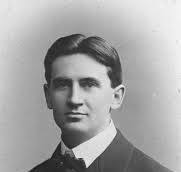
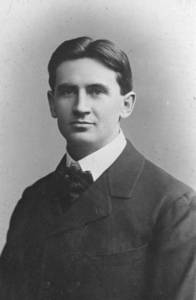
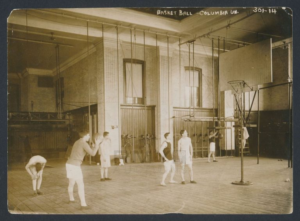
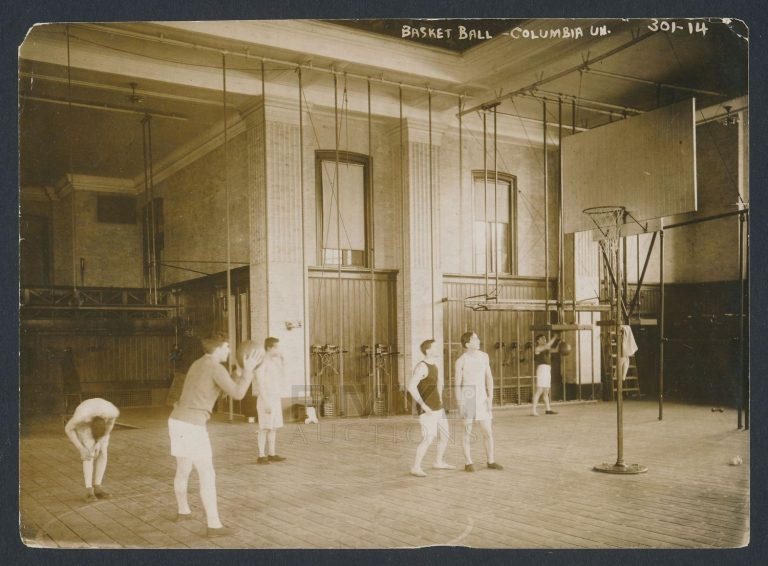
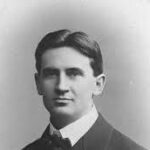
Melvin Rideout, one of Naismith’s students and original basketball disciple, went to Paris to help set-up the YMCA’s new center at 14, rue de Trévise in 1893. The 22-year old from Illinois introduced basketball to the group’s teachers in the building’s new gymnasium, today the world’s oldest original basketball court
The links between France and basketball go back to the game’s origins. Two years after the game’s 1891 invention in Springfield, Mass., 22-year-old YMCA educator Melvin Rideout arrived in Paris to transmit the game to French counterparts. The first basketball game on European soil was held Dec. 27, 1893, in the new Paris YMCA facility at 14, rue de Trévise, which today is the oldest original basketball court in the world.
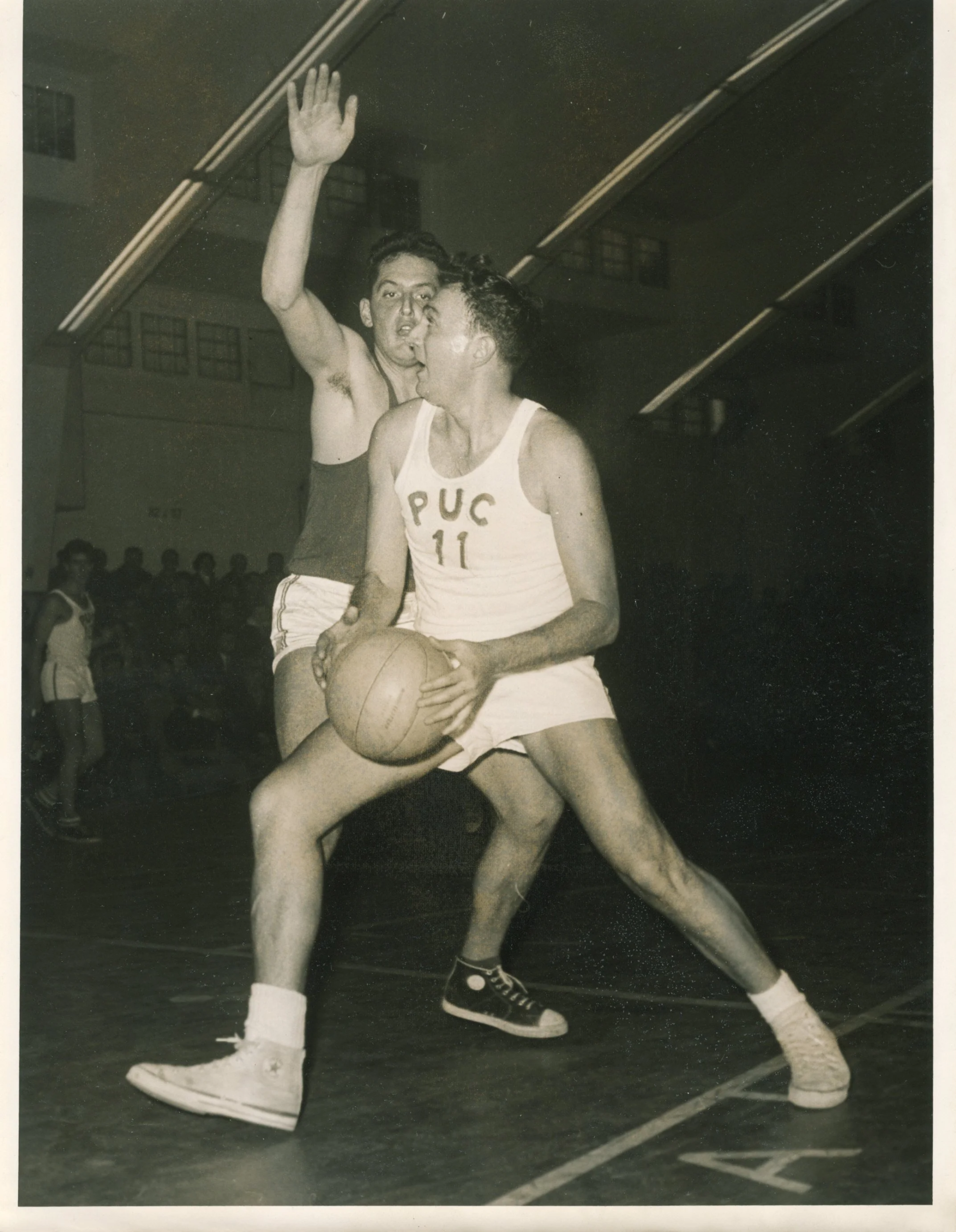
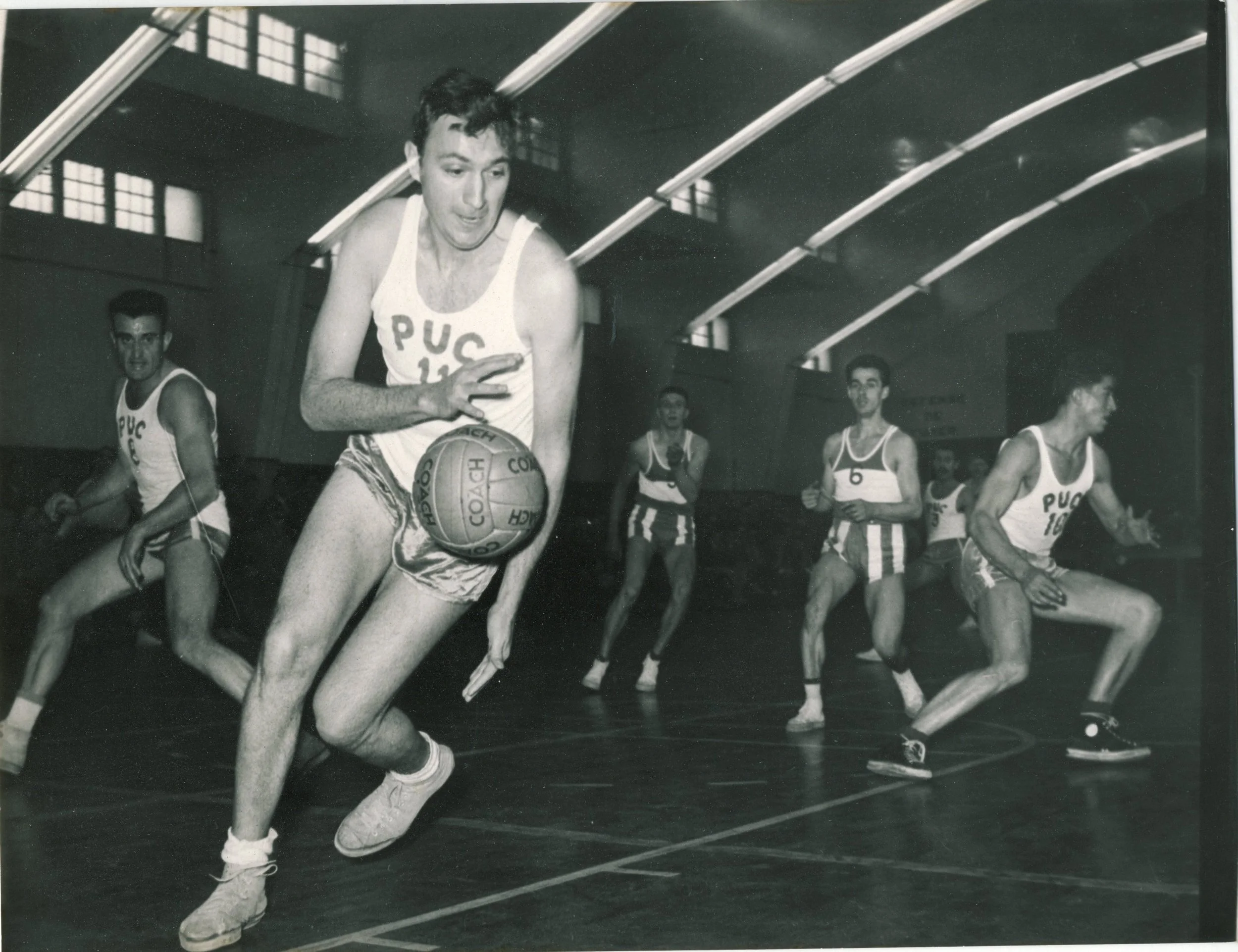
TThe game spread across Western Europe before the First World War, but it took on a new meaning during the early Cold War with Paris Université Club (PUC). This amateur club helped sow the seeds that made France a 21st century basketball breeding ground thanks to a culture of openness to outside influences
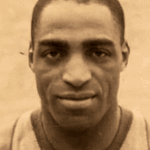
The team, composed mostly of university students from around the French capital, was one of the country’s elite of the era. It won French league titles and tournaments and featured members of the men’s national team on its roster, including longtime captain Roger Antoine, Team France’s first male basketballer with African roots. The club also traveled throughout Europe, including behind the Iron Curtain, and North Africa, exposed along the way to different styles of play.
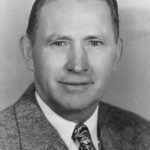
Thanks to its cosmopolitan outlook and makeup, PUC was ground zero for integration of U.S.-influenced basketball tactics, techniques, and drills. Such efforts were due to the team’s first “American” of the postwar era, Martin Feinberg, the son of a Cleveland cab driver who arrived in Paris in 1954 to study at the Sorbonne. The tall U.S. player was rapidly recruited and introduced French teammates to some of the training drills and styles of play he learned back home, including during the 1945-46 season at the University of Michigan while he trained to be a U.S. Navy officer. Feinberg organized a trip for the team to travel to the United States—the first French side to do so—to see how differently the game was held, played, and consumed. The experience was transformative, and PUC began to integrate plays they picked up as a result of their trip into their on-court arsenal.
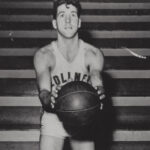
Several years later, another American, recruited by Feinberg, came to Paris to connect its basketball style to that flourishing across the Atlantic: Henry “Gentleman” Fields. By the 1960s, players like Boston Celtics star Bill Russell transformed the U.S. game into an ever-more vertical one, whereas its French counterpart was still centered on passes akin to a “ballet on the court.” Fields brought Bill Russell-style defense and techniques to France. Fields also modeled a U.S.-style work ethic when it came to sport; he diligently practiced hour after hour, at a time when basketball practices in France were semi-weekly.
Fields’ impact was real. PUC clinched the French championship title in 1962, and the Coupe de France trophy in 1962 and 1963. He was also integral to PUC’s 1962 return to the United States, where they again tested themselves against American counterparts and picked up new tactics, techniques, and a first-hand understanding of how racial segregation in the United States impacted the game. By the time Wembanyama’s maternal grandfather, Michel de Fautereau, began to play the first of three seasons with PUC in 1967-68, the club’s style and culture were forever marked by “their Americans” Feinberg and Fields.
Fields wove an indelible mark on the game. He later conquered hardcourts with Antibes in the 1970s, as well as imparted his Russell-style game in clinics with the French, Swiss, and German national teams. These were further examples of how individuals played important roles evolving basketball overseas thanks to cultural, technical, and knowledge exchange—examples of what today would be considered types of sports diplomacy.
Thanks in part to these early informal people-to-people exchanges, the French game changed. Although basketball migrants from across Europe, Africa, and the French Caribbean contributed significantly to France’s hoops history since the mid-20th century, the game’s U.S. accent left a strong mark. Ever-more young men from the United States played on French hardcourts in the 1970s and 1980s, leading to what French media decried as an “American colonization” of the game; in the 1980s, their female counterparts also began to dribble in France, too, including Hall of Famer Denise Curry.
As a result, the flow of players began to change in the 1980s and 1990s as young Frenchwomen and men began to cross the Atlantic to play in North America. They became NCAA Division One starters, such as Marist College’s Paoline Ekambi, the first Frenchwoman to play at that level in 1984, and multi-year co-captains like University of Washington Huskies’ Katia Foucade. In 1997, Isabelle Fijalkowski and Tariq Abdul-Wahad made history as the first French players in the WNBA and NBA, respectively, as did subsequent generations including Tony Parker, the first Frenchman to win an NBA Championship in 2003 with the San Antonio Spurs and later enshrined into the Hall of Fame (2023), and Sandrine Gruda, the first Frenchwoman to win an WNBA Championship in 2016 with the Los Angeles Sparks
Despite being considered a thoroughly American sport, basketball’s oldest surviving playing field is found in the basement of a Paris YMCA.The YMCA Paris was founded in 1852. Architect Émile Bénard, winner of the Grand Prix de Rome in 1867, designed its headquarters at rue de Trévise, inspired by models of American YMCA buildings.
Lyman Archibald introduced the game of basketball to Saint Stephen near the turn of the century. The first game was played on October 17, 1893. The original basketball court floor still exists in the former St.Stephen YMCA building on King Street
Despite being considered a thoroughly American sport, basketball’s oldest surviving playing field is found in the basement of a Paris YMCA.The YMCA Paris was founded in 1852. Architect Émile Bénard, winner of the Grand Prix de Rome in 1867, designed its headquarters at rue de Trévise, inspired by models of American YMCA buildings.
Lyman Archibald introduced the game of basketball to Saint Stephen near the turn of the century. The first game was played on October 17, 1893. The original basketball court floor still exists in the former St.Stephen YMCA building on King Street
Melvin Rideout, one of Naismith’s students and original basketball disciple, went to Paris to help set-up the YMCA’s new center at 14, rue de Trévise in 1893. The 22-year old from Illinois introduced basketball to the group’s teachers in the building’s new gymnasium, today the world’s oldest original basketball court
The links between France and basketball go back to the game’s origins. Two years after the game’s 1891 invention in Springfield, Mass., 22-year-old YMCA educator Melvin Rideout arrived in Paris to transmit the game to French counterparts. The first basketball game on European soil was held Dec. 27, 1893, in the new Paris YMCA facility at 14, rue de Trévise, which today is the oldest original basketball court in the world.
Meet Melvin Rideout, a basketball pioneer who introduced the game to France in 1893.
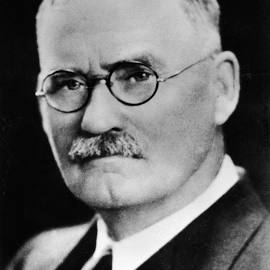
Born in 1871, Rideout attended Springfield College (then known as the International YMCA Training School) where he learned the game of basketball from James Naismith, the sport’s inventor, in December 1891. After graduation in 1893, Rideout was dispatched to Paris to help set-up the YMCA’s brand new building at 14, rue de Trévise. There, the 22-year old Illinois native introduced the game to Parisian YMCA educators and on December 27, 1893, the first basketball game on European soil was played.
The Context
Basketball was invented with a specific goal in mind: to keep (male) students occupied and engaged in productive physical activity during the cold, snowy Massachusetts winter. At first Naismith tried to recreate football practice in the gymnasium. But after several players suffered broken bones from the rough play, it was clear that a new game was needed, one that was nonviolent and appropriate for indoors but still thrilled players.
The first basketball match, an innovative tool at its origin, was held on December 21 to the players’ great amusement, and rapidly spread in the United States.
But basketball is unique for also being the first sport born-global thanks to its rapid diffusion. The YMCA dispatched Rideout to France and from there the game spread across Western Europe to Belgium, the Netherlands, Spain, Portugal, and Italy. Other YMCA educators carried the game to South America (Brazil, 1894), Chinese port cities Tianjin and Shanghai (1895), and Australia (1897) while during the early twentieth century U.S. colonial administrators and soldiers began to play basketball in the Philippines.
Basketball’s development and early diffusion occurred at a time when the United States played an increasingly larger role in international relations. Improvements in transportation made it easier and quicker to travel, while new inventions and technology facilitated fledgling global communications. The result was greater movement of people, goods, and ideas from one part of the world to another. Yet, the sport’s early popularity in France was hindered by its close association with the YMCA, a Protestant-affiliated organization, in an era of intense public discourse about the role of religion in the republic. In 1905, the French government officialized secularization of public life. Although basketball did not begin to gain greater traction in France (or some parts of the United States) until the First World War era, the important foundations were laid during this era.
The Sports Diplomacy Connection
A video by the French Basketball Federation (FFBB) on Melvin Rideout for his 2019 induction into the Académie du Basket français.
Rideout’s work with his Parisian counterparts to introduce basketball is an example of what today is recognized as informal sports diplomacy. The 1880s and 1890s were a time of greater Franco-American interactions, perhaps best symbolized by the French gift of the Statue of Liberty to its sister republic. The YMCA’s construction of an outpost in Paris was yet another such gesture. Through the personal interactions Rideout had during his five years stationed there, he helped to impart U.S. cultural attitudes and organizational knowledge to say nothing of transmitting the game and technicalities of basketball.
Mapping the Connections
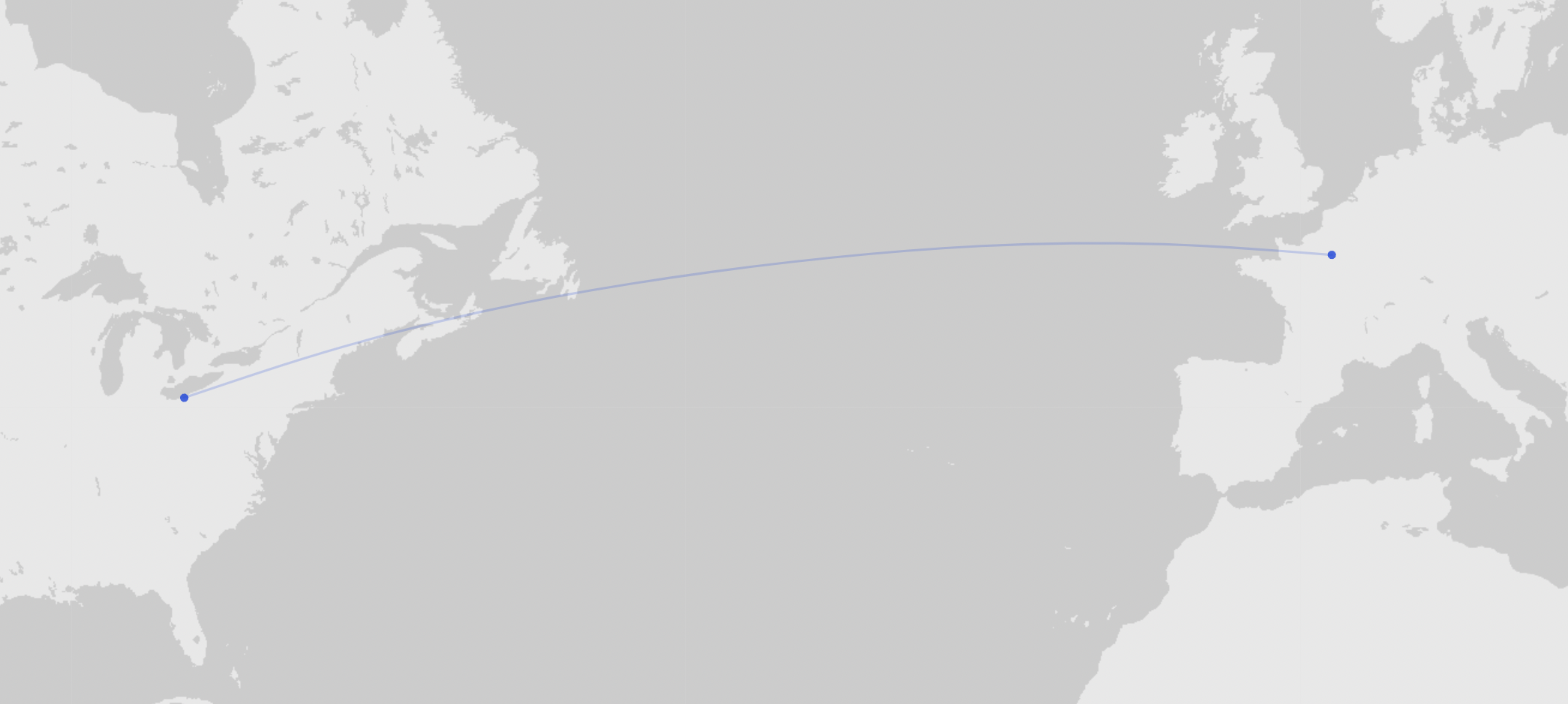
From Springfield, Massachusetts to 114, rue de Trévise in Paris, France
Despite being considered a thoroughly American sport, basketball’s oldest surviving playing field is found in the basement of a Paris YMCA.The YMCA Paris was founded in 1852. Architect Émile Bénard, winner of the Grand Prix de Rome in 1867, designed its headquarters at rue de Trévise, inspired by models of American YMCA buildings.
Lyman Archibald introduced the game of basketball to Saint Stephen near the turn of the century. The first game was played on October 17, 1893. The original basketball court floor still exists in the former St.Stephen YMCA building on King Street
Text and images are owned, held, or licensed by Springfield College and are available for personal, non-commercial, and educational use, provided that ownership is properly cited. A credit line is required and should read: Courtesy of Springfield College, Babson Library, Archives and Special Collections. Any commercial use without written permission from Springfield College is strictly prohibited. Other individuals or entities other than, and in addition to, Springfield College may also own copyrights and other propriety rights. The publishing, exhibiting, or broadcasting party assumes all responsibility for clearing reproduction rights and for any infringement of United States copyright law. Contact host institution for more information.
Publisher:
Springfield College
Notes:
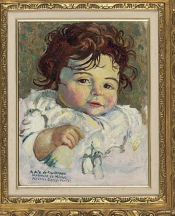
Rideout was born on May 15, 1871 in Illinois. Rideout is credited with introducing basketball to England while serving as a French delegate at the YMCA Jubilee Convention in June 1984. He spent five years as the physical director of the Association in Paris, France, and the following three years as a field secretary doing special organizing work in Europe. From 1899 until 1905, he served at a YMCA in Washington, D.C. as a physical director. Rideout died on November 26, 1957. Part of the Training School Alumni Portrait Series
Celui par qui le basket est arrivé… Le 27 décembre 1893, le basket-ball fut joué pour la première fois en France et en Europe. Cela se passait dans le gymnase de la rue de Trévise, à l’Union Chrétienne des Jeunes Gens de Paris. Un instructeur américain (et non pas français comme le prétend le commentateur ), dépêché par la YMCA de Springfield, vient prendre en charge les activités physiques de l’UCJG. A la fin de la séance de gymnastique du 27 décembre, il propose à ses élèves cette nouvelle activité. Il s’appelait Melvin Rideout et il incarne l’apparition du basket-ball en France et en Europe.
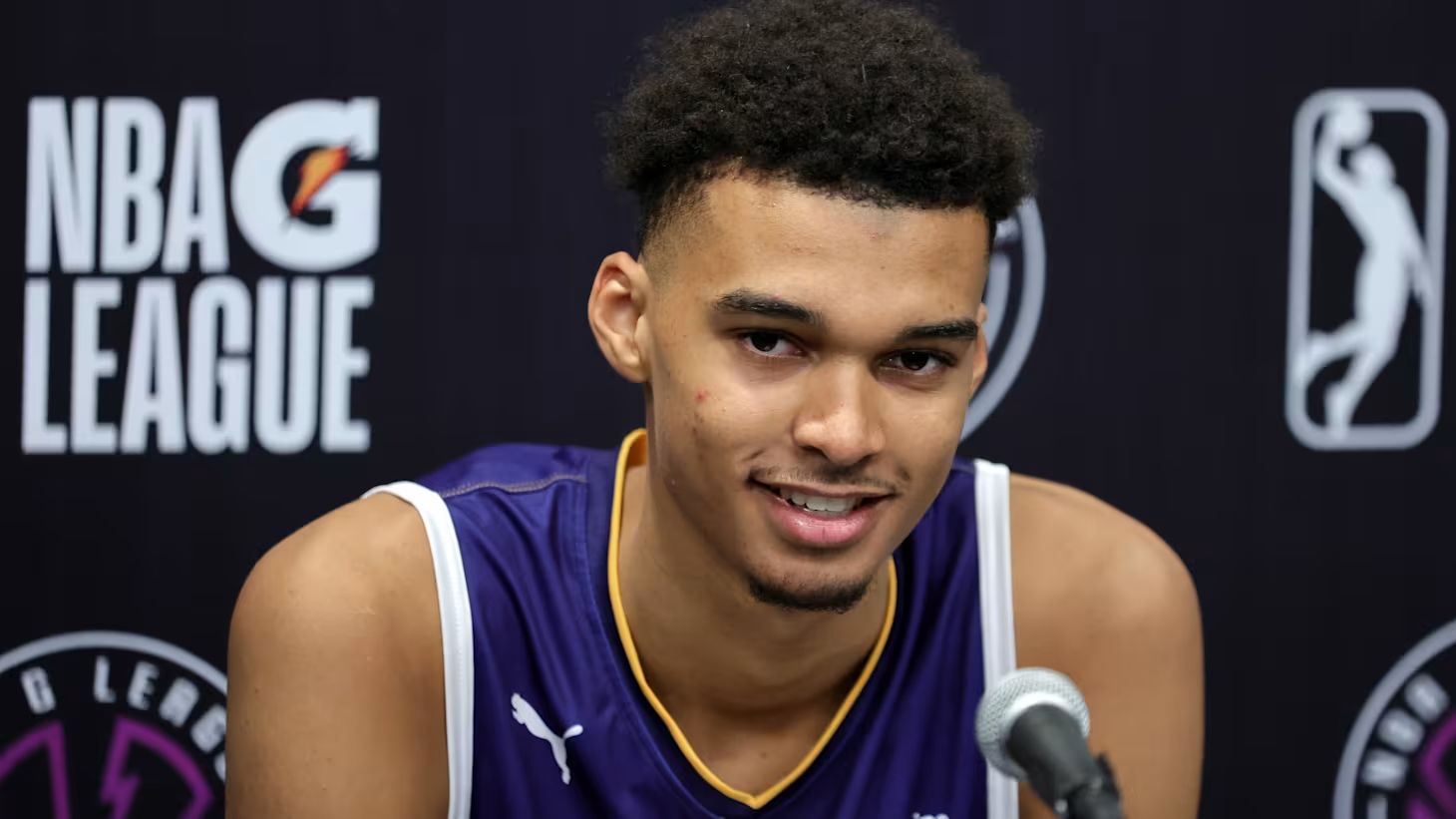
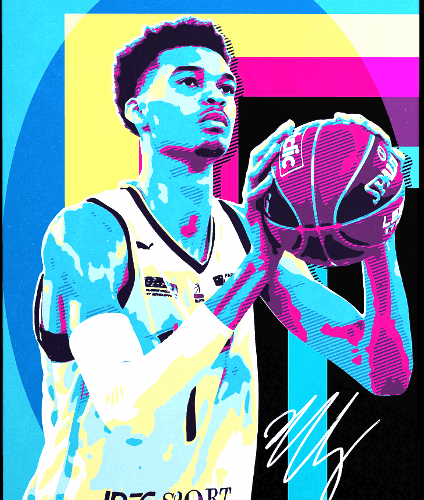
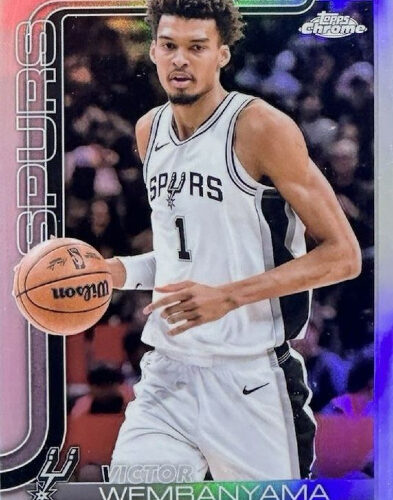
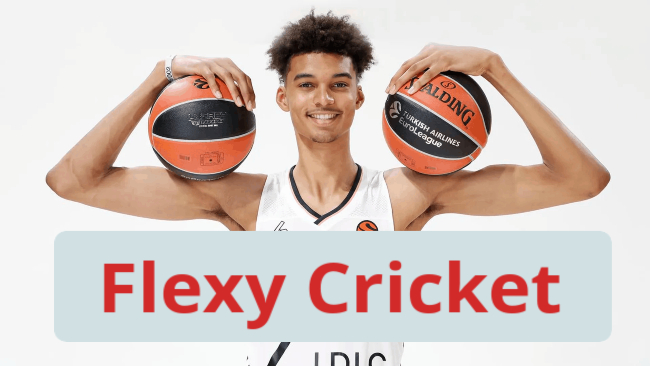
Victor Wembanya is the latest on a long list of French Basketball Stars
French basketball legends are highlighted by NBA Hall of Famer and four-time champion Tony Parker, alongside iconic figures like Boris Diaw, Rudy Gobert, and rising superstar Victor Wembanyama. These players have defined generations of success, supported by historical legends such as Alain Gilles (“Monsieur Basket”) and modern stalwarts like Nicolas Batum.
All-Time Top French Legends
Tony Parker: Widely considered the greatest French player, a 4-time NBA champion with the Spurs and 2007 NBA Finals MVP.
Alain Gilles: Voted France’s best player of the 20th century, a dominant force for ASVEL and the national team (1966–1981).
Boris Diaw: A versatile forward and long-time captain of the French national team, renowned for his high basketball IQ and 2014 NBA champion status.
Rudy Gobert: A dominant defensive force, multiple-time NBA Defensive Player of the Year.
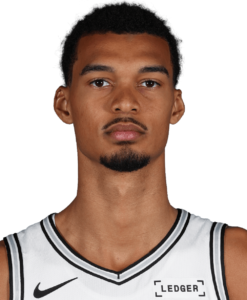
Victor Wembanyama: A 7’2″ generational talent who has rapidly become one of the NBA’s premier players, leading in blocks and showcasing immense potential.
Nicolas Batum: Known for his versatility and clutch performances, a stalwart of the national team’s success.
Antoine Rigaudeau: Considered one of the best European guards of his era, nicknamed “Le Roi” (The King).
Richard Dacoury: A dominant player in the 1980s and 90s, crucial to France’s international efforts during that era.
Key Contributors & Modern Stars
Nando de Colo: A decorated EuroLeague legend and key guard for the national team.
Evan Fournier: A consistent scorer for France in major international competitions.
Ronny Turiaf: NBA champion and tenacious defender.
Joakim Noah: Known for his high-energy play and defensive impact in the NBA.
These players have built a strong legacy for French basketball, transitioning from national successes in the 20th century to becoming a consistent powerhouse in the NBA and international FIBA competitions.
Top French Women Basketball Players
• Paoline Ekambi: In 1984, she became the first Frenchwoman to play at the NCAA Division One level, starting for Marist College.
• Katia Foucade: She was another early collegiate standout, serving as a multi-year co-captain for the University of Washington Huskies.
• Isabelle Fijalkowski: She made history in 1997 as the first French player to compete in the WNBA.
• Sandrine Gruda: While following the earlier pioneers, she achieved a major milestone by becoming the first Frenchwoman to win a WNBA Championship in 2016 with the Los Angeles Sparks.
The sources also note that during this same era in the 1980s, the flow of talent was reciprocal, as American female players like Hall of Famer Denise Curry began playing professionally in France.
Would you like me to create a tailored report on the history of French players in the WNBA and NBA, highlighting these first transitions across the Atlantic?
From the pioneering era to the stars of the NBA and EuroLeague, French basketball has produced a line of exceptional talent. Through their achievements, leadership and cultural impact, these players have not only raised the French flag on the world’s biggest stages, but have also inspired generations.
Determining a definitive order is a subjective exercise that combines achievements, longevity, international impact and symbolism. Our ranking strives to reflect these multiple facets.
Here is our Top 10 All-Time French basketball players, as well as an honourable mention for the future legend.
Melvin B. Rideout
Paris Sports Club (PUC)
When mentioning Melvin B. Rideout and the creation and development of Basketball in France, the second half of the story is presented by the actions of:
A Martin Feinberg and the Paris Sports Club (PUC)
Read and view the second half of the story on the creation and growth of Basketball in France.
National team honours : 177 caps for France (1966–1981) Club honours : 8x French champion with ASVEL, 2x French Cup winner, voted France’s best player of the 20th century.
Alain Gilles is the leading figure in 20th-century French basketball. Nicknamed ‘Monsieur Basket’, he dominated the national championship for two decades with ASVEL. His club achievements are unrivalled, making him a Lyon legend.
More than his titles, it is the unanimous praise for his talent and commitment that sets him apart. Voted Best French Player of the 20th Century by a panel of journalists and coaches, he is a symbol of quality and longevity in the pre-NBA era. The trophy awarded to the best French player of the year now bears his name, an eternal tribute.
The Alien: Victor Wembanyama
Honours in selection : 🥈 Olympic Games (2024) Honours : No. 1 in the NBA Draft (2023), NBA Rookie of the Year (2024).
Victor Wembanyama is not yet an ‘All-Time’ player in terms of longevity or accumulated achievements, but he is already a legend in the making and a global phenomenon. His selection as the No. 1 pick in the 2023 NBA Draft is a historic event for French sport. His unique profile, combining height, mobility and skill, puts him on a potential trajectory to become, according to almost unanimous opinion, the best French player of all time, and even one of the best in the world. He represents the future and hope for French basketball, followed by a generation of talented players such as Zaccharie Risacher and Alexandre Sarr, who will be aiming for gold at the Olympics, and why not do so in front of our American friends in LA in 2028. Go Wemby.
Rudy Gobert : Gobzilla, the defensive tower
Honours with the national team : 🥈 Olympic Games (2021, 2024), 🥈 EuroBasket (2022), 🥉 World Cup (2014, 2019) Honours : 4x NBA Defensive Player of the Year, 3x NBA All-Star, 4x All-NBA Team, 6x NBA All-Defensive First Team.
Rudy Gobert is the quintessential French defensive force, reinventing the role of the centre in the NBA. Along with Dikembe Mutombo and Ben Wallace, he is the only player to have won four Defensive Player of the Year (DPOY) titles, a feat that places him among the elite in league history. His deterrent presence has transformed his teams’ defences.
On the national team, he is the pillar of Les Bleus’ paint, the guarantor of medals. His ability to dominate physically and mentally under the basket has been crucial to the Olympic and world medals won by the French team. Rudy Gobe
Nando de Colo : The European Genius
Honours with the national team : 🥇European Champion (2013), 🥈 Olympic Games (2021, 2024), 🥈 EuroBasket (2011), 🥉 World Cup (2019), 🥉 EuroBasket (2015) Honours : 2x EuroLeague winner (2016, 2019), EuroLeague MVP (2016), EuroLeague Final Four MVP (2016)
Nando de Colo is quite simply one of the greatest players in the history of European basketball. His record in the EuroLeague, the highest level after the NBA, is exceptional. He has won every major title and was crowned MVP of the regular season and the Final Four in 2016, a rare double distinction. His intelligence on the court, his scoring prowess and his free-throw efficiency are legendary.
Although his NBA career went unnoticed, his superstar status on the Old Continent is undeniable. Playing for France, he has always risen to the occasion, forming an iconic duo with Tony Parker, then taking over as a discreet but essential leader, contributing to all the major medals of the last decade.
Tony Parker : The extraordinary point guard
Honours with the national team : 🥇European Champion (2013, MVP), 🥈 EuroBasket (2011), 🥉 EuroBasket (2005, 2015) Honours : 4x NBA Champion (2003, 2005, 2007, 2014), NBA Finals MVP (2007), 6x NBA All-Star, 4x All-NBA Team.
Tony Parker is our GOAT, us French people. He led an entire generation, and we owe the success of French basketball today in part to Tony. He is the figurehead of modern French basketball. He is not only the most decorated French player in the NBA; he is also the most decorated European player in the history of the league at the time of his retirement. His 2007 coronation as MVP of the NBA Finals in Tim Duncan’s team, perhaps the greatest power forward of all time, is a unique achievement for a non-American point guard and proved that a player trained in France could dominate at the top of world basketball.
In the French national team, ‘TP’ was the driving force and undisputed leader of a golden generation, leading Les Bleus to the European Championship title in 2013, a historic first. His aura extended far beyond sport, making him a national icon who propelled basketball to the forefront of the French media scene. His induction into the Hall of Fame seals his status as a global legend and the undisputed number one in France.
Evan Fournier : The Firefighter Scorer
Honours with the national team : 🥈 Olympic Games (2021, 2024), 🥈 EuroBasket (2022), 🥉 World Cup (2019), 🥉 EuroBasket (2015) Honours : Greek Super Cup winner (2024)
Evan Fournier is the offensive leader and ‘firefighter’ of the post-Parker French national teams. He is a natural scorer, capable of catching fire and carrying the offence on his shoulders, as he has demonstrated with world-class performances at the Olympic Games and European Championships.
His role as a franchise player in Orlando for several seasons and his ability to establish himself as a respected starter in the NBA attest to his quality. In the national team, he has become the go-to scorer, finishing in the ideal five at the 2019 World Cup. He is a major figure in the new medal-winning era.
Hervé Dubuisson : Dub, the legendary scorer
Honours with the national team : Record holder for points (3,847) and appearances (254) for the French national team. Record for points scored in a single match (51 points) Honours : 2x French champion with Le Mans, 8x top scorer in the French league
Hervé Dubuisson is the top scorer in the history of the French national team, a record that still stands today. Nicknamed ‘The Baron’, he was the most prolific forward of his generation. His 51 points scored against Greece in 1985 remain an unmatched individual achievement for the national team.
He embodies an era of French basketball which, although less focused on international titles, highlighted the purity of offensive talent. His name is synonymous with longevity and dedication to the French national team, accumulating an impressive number of caps over nearly two decades.
Boris Diaw : Captain Babac
Honours with the national team : 🥇European Champion (2013), 🥈 EuroBasket (2011), 🥉 World Cup (2014, 2019), 🥉 EuroBasket (2005, 2015) Honours : NBA Champion (2014), NBA Most Improved Player (MIP) (2006)
Boris Diaw, known as ‘Babac’, is the jack-of-all-trades, strategist and iconic captain of Les Bleus. His exceptional basketball IQ and versatility, enabling him to play both point guard and centre, earned him the title of Most Improved Player (MIP) in the NBA in 2006. His contribution to the Spurs’ NBA title in 2014, through his playmaking and tempo management, is often cited as a key factor.
He holds the record for the most caps for the French national team and has always been the glue that holds the ‘Parker Generation’ together. More than his statistics, he embodies team spirit, the culture of passing and French tactical intelligence, leading the team to European gold.
Joakim Noah : Hustle and defence
Honours with the national team : European Junior Vice-Champion (2002) Honours : NBA Defensive Player of the Year (2014), All-NBA First Team (2014), 2x NBA All-Star.
Joakim Noah is pure energy, passion and soul. Trained at the University of Florida, where he won two consecutive NCAA titles, he had a dazzling NBA career, notably with the Chicago Bulls. His 2013-2014 season, in which he finished 4th in the MVP voting and won Defensive Player of the Year (DPOY), is one of the best individual seasons for a French player in the history of the league.
Although he rarely wore the French national team jersey, his impact in the NBA is monumental. He is the French player who best embodied hustle and intensity, becoming a fan favourite for his spectacular playing style and vocal leadership
Antoine Rigaudeau : The European Mozart
Honours with the national team : 🥈 Olympic Games (2000), 🥉 EuroBasket (2005) Honours with his club : 2x EuroLeague Champion (1998, 2001), 2x Italian Champion, 5x French Pro A MVP.
Nicknamed ‘The Mozart’, Antoine Rigaudeau is the embodiment of elegance and tactical genius. Before the NBA era of French players, he was the French superstar par excellence in Europe. His time at Virtus Bologna is legendary, where he won two EuroLeague titles and dominated the Italian championship.
He is one of the few French players to be inducted into the FIBA Hall of Fame. As a member of the French national team, he led Les Bleus to a memorable silver medal at the 2000 Sydney Olympics, a feat that marked an entire generation and reaffirmed France’s place on the world basketball map.
Top Achievements in French basketball of all time
France 65 – 52 Spain, 2014 World Cup quarter-finals 🥇 : It was Spain’s World Cup. Playing at home, their ambition was clear: to defeat Team USA in the final! And they certainly gave it their all. The Gasol brothers, Sergio Lull, Serge Ibaka, Rudy Fernández, Ricky Rubio, Juan Carlos Navarro… All killers. They played in the group stage, beating Brazil by 19 points, Egypt by 47 points and France by 24 points. Yes, our Frenchies were in the game. However, the Euro 2013 ‘all-in’ has evaporated, as have the absences of big names such as Tony Parker and Nando de Colo. These shortcomings were reflected in mixed results, with two defeats already on the board at the start of the quarter-finals. In addition to the imbalance in terms of individual talent and momentum, the Spanish women were hungry for revenge. In the middle of a red and yellow arena, all systems were go for the Iberian team, ready to put the church back in the centre of the village. Finally, before a young Rudy Gobert came along and put up a big stop sign in the middle of Madrid, on which Pau Gasol could read 13 rebounds and 4 blocks. Florent Pietrus also got in on the act by harassing Sergio Llull. Then Thomas Heurtel showed his clutch ability at the end of the game with the famous ‘Oh maman the shoot!’. That day, our Frenchies didn’t just win. No, they crushed a team that we thought was out of reach. The essence of the feat lies in this feeling of the unexpected. The Tricolores’ victory in the quarter-finals really came out of nowhere. And the way they did it added another layer of incredible.
Nicolas Batum : Batman
Honours with the national team : 🥇European Champion (2013), 🥈 Olympic Games (2021, 2024), 🥈 EuroBasket (2011), 🥉 World Cup (2014, 2019), 🥉 EuroBasket (2015) Honours : French Champion (2006)
Nicolas Batum is the ‘Batman’ of the French national team, the perfect role player with multiple talents. His versatility in defence and attack (3-and-D) has kept him at the highest level of the NBA for more than fifteen years. His impact on the national team is immense: he is one of the most decorated players in Les Bleus and was a pillar of the European champion generation in 2013.
He is the link between the first NBA generation and the new one, having been a key teammate of Parker and playing a mentoring role for the younger players. His decisive block against Slovenia at the 2021 Tokyo Olympics will go down in history as one of the most heroic moments in the history of French team sports.
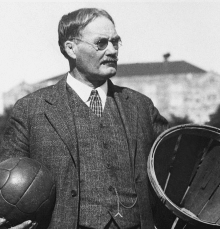
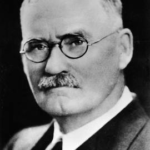
Basketball was invented by Dr. James Naismith, a Canadian physical education instructor, in December 1891 at the YMCA Training School (now Springfield College) in Springfield, Massachusetts. He devised the game using peach baskets as hoops and a soccer ball, writing the original 13 rules himself.
The Challenge: Luther Gulick, the school’s director, asked Naismith to invent a new indoor game to keep students active during cold New England winters.
The First Game: Played on December 21, 1891, using peach baskets nailed to the gym balcony and a soccer ball, with rules like no running with the ball
.
The Rules: Naismith’s initial rules emphasized passing and limited physical contact, laying the foundation for modern basketball.
Some say Naismith devised the game to create a less injury-prone indoor sport for winter.
Currently, national emergency care room statistics in the U.S,A. would prove his failure in that regard. Basketball injuries rank in the top three events causing injury requiring medical attention to youth in the United States. Basketball mishaps are not far behind skateboard injuries requiring emergency medical attention.
Others have said, Naismith was in the pedagogic care of an exceptionally unruly hyper-active group of young men that needed a winter time activity to direct their youthful energy in a positive manner. Perhaps, the instructions to create a suitable activity from Luther Gulick , who was dealing with the discipline of the school, supports this claim.
Another key to understanding the start of the game is in the name of its inventor, Doctor Naismith. James was not a medical doctor, he held the highest advanced degree in the studies of physical education. Naismith was attempting to put that education into practical action.
This online narrative, ‘Michael and the Cricket’ proposes what has propelled the game of basketball forward and into the hearts and minds of so many players was evident at the games initiation.
There was something unexplainable happening … …
Spread of the Game: Naismith spread the game nationwide through the YMCA network, and it became an Olympic sport in 1936.
…………………………….
Throughout the first half of the 20th century, the YMCA was a nationwide organization with local programs in various sports.
Young Men’s Christian Association, a global non-profit organization founded in London in 1844 to provide safe spaces, spiritual support (Bible study), and social programs for young men during the Industrial Revolution, though it now serves everyone with diverse community, fitness, and youth programs.
Key points about the YMCA:
Started by George Williams as a refuge from harsh city conditions for young men working long hours.
Expanded from its Christian roots to become an inclusive organization open to all people, regardless of age, race, or religion, offering secular services.
Offers health & fitness centers, sports leagues, childcare, camps, and community development programs
Focuses on youth development, healthy living, and social responsibility, embodying Christian principles in practice …………………………..
Why? This is the key question that directs to an important aspect of the game. What made tossing a ball into a peach basket so appealing. Further, why was it interesting to other YMCA organizations.
………………………………….
The answer to reaches into where we are headed in this online book. The …
We can not verify that the voice or words in the above video are actually the words spoken by Dr, Naismith.
However, we are certain beyond any doubt about his personal proclamations and the facts about the game’s creation. Those facts are well documented. As a man with a Doctorate in Education, Naismith, documented every detail in writing. His writing still exist.
If it is his voice, he confirms the delinquent rowdy and rough behavior of the boys.
THE POINT IS THAT THE GROWTH OF THE GAME OF BASKETBALL IS PARTIALLY DUE TO THE FACT THAT IT HAS ALWAYS APPEALED TO YOUTH OF A CERTAIN, … … … SHALL WE SAY, ROUGH NATURE!
… is this not also why the game appealed to fans. Who among us doesn’t watch a fight in the school yard …
BASKETBALL IS AND HAS ALWAYS BEEN A ‘CONTACT’ SPORT THAT PEOPLE LIKE TO WATCH.
This instantly supports the narrative of this Online Website Book.
There were a limited number of surviving films/videos of the game of basketball from 1982 beyond the 20’s. The video with female playes is believed to be the earliest surviving footage in 1909. Notice rims with nets.
We have mostly only photographs to see what the game of basketball looked like. until 1940.
There are quite a few surviving audio clips about basketball during the early 20th century. They are difficult to obtain.
The earliest known film/video of a complete basketball game is from a doubleheader at Madison Square Garden in 1939. See this film footage of the first profession game being recorded on film below.
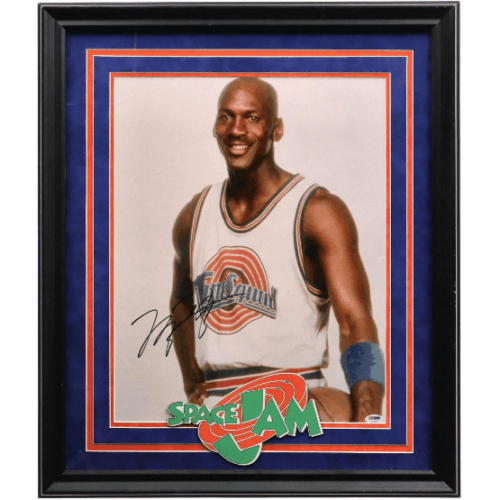
MJ IN Paris 1997
A Changing Moment in French Basketball History
START …. Paris to help set-up the YMCA’s new center at 14, rue de Trévise in 1893.
How the game spread across Western Europe ‘AFTER’ the Second World War, … … 1945-1975
The 1957 World University Games, the 22nd edition of the World University Games, were held between 31 August and 8 September.[1][2] They were organised under the direction of Jean Petitjean by the Paris University Club in Paris at their Stadium Charlety. He engaged an American student athlete at the Paris University Club, Martin Feinberg, as his assistant. Petitjean met with and encouraged both Eastern and Western Bloc student sports federations to participate together, which they did for the first time since the end of World War II.
Scripture teaches God said: “Let There Be Light”, thereafter, there was light. Who said ‘Let There Be Basketball’, and what happened thereafter.
How did the game of basketball come into existence, and how did it grow into the version of the game we have today.
In this chapter, we address what happened immediately after it was proclaimed by the great Doctor Naismith that WE SHALL PLAY BASKETBALL!
WAS THE IT ORDAINED WITH ‘MANIFEST DESTINY’.
From the games initiation, it had a high acceptance level. It was welcomed internationally, and by men and women as participants and fans.. There is no doubt something propelled the game forward globally. There was something magnetic about the sport of basketball.
‘GOD SURELY MUST HAVE SHINED A LIGHT FROM THE HEAVENS ON THE SPORT OF BASKETBALL’
There is no doubt that basketball has provided much for many.
Here on this website, we address professional basketball at the highest level. For those who pursue playing at this level there are benefits. But the highest levels of competition are not achieved without sacrifice and consequences. Everyone must pay that price to play. It can’t be paid with money. And often, the toll comes well after one finishes playing competitive basketball. Far too often, that effort to excel at playing basketball on its highest level results in the early termination of life itself. … … Let’s continue with this philosophy and cost analysis later. Point made, it’s not all fun and games at the professional level of basketball.
Here in this chapter, ‘Let Ther Be Light’, we start to move toward an understanding of those who had that special sauce, that ‘SOMETHING”, the it FACTOR, from the games invention in 1989 to mid 1900’s. We believe a certain set of skill and circumstance has always existed in the game of basketball at its highest competitive levels. In some manner or form in it appears often in those who strive for the top of the ladder within the game.
IN THIS CHAPTER NARRATIVE, WE ESTABLISH THAT THE ‘IT FACTOR’ WAS AN INTEGRAL PART MOST ALL YOUNG PROFESSIONAL PLAYERS DURING THE FIRST 70 YEARS OF THE GAME.
This website is not a history of the game presentation. However we need to understand a few basics to proceed.
Eventually, in subsequent chapters, we get to the 1960’s era of professional basketball. This is where the real personal narrative on Michael & The Cricket actually begins.
In chapter one, we insufficiently cover 70 years of the games history on one website page, … … a very quick and simple manner from a historical perspective.
We address this ‘it’ factor as a key element in most all young phenom basketball players from half of the 20th century.
Further, demonstrate that there is a historical connecting element between:
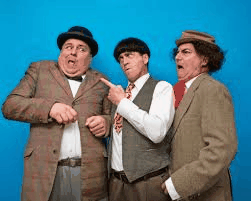
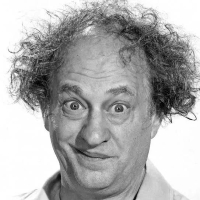
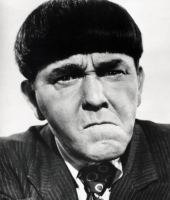
BREAKING NEWS: THE THREE FAMOUS BASKETBALL COMMENTATORS: Curly – Larry & MOE, along with Ernie will NOW be hanging with the crickets.
Straight from the studios of E.S.P (extra super perceptions), the dynamic group will provide their deep introspective on the active San Antonio Spurs basketball games, while adding commentary based on a voluminous education.
THE CRICKETS ARE ECSTATIC TO HAVE THESE PROFESSIONAL ACTORS AS NEW MEMBERS OF THE CRICKET GROUP.
The Crickets are in Paris having a good time listening to ‘FRENCH JAZZ’ music &… “avoir une conversation” … … JOIN THEM!
‘Michael & The Cricket
This digital presentation is an accumulation of stories about basketball players, coaches, teams, games, practices, international travel, grand pianos in hotel lobbies, and living life while playing the game for an education and for money. Narrated by a former professional basketball player.
This digital narrative explores the spiritual and historical genesis of basketball, framing the game’s 1891 invention by Dr. James Naismith as a providential event that ignited a global “it factor” among young athletes. The text blends early sports history reviewing those who played pivotal roles in transforming basketball from a newly invented indoor activity into a professionalized, global sport with structured coaching and evolving rules.
Ultimately, the website serves as an educational and philosophical foundation dedicated to basketball phenoms, arguing that the sport’s enduring appeal lies in a unique, magnetic character trait found in those who compete at the highest levels.