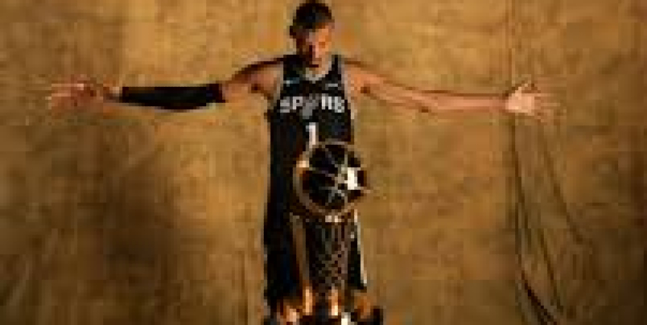
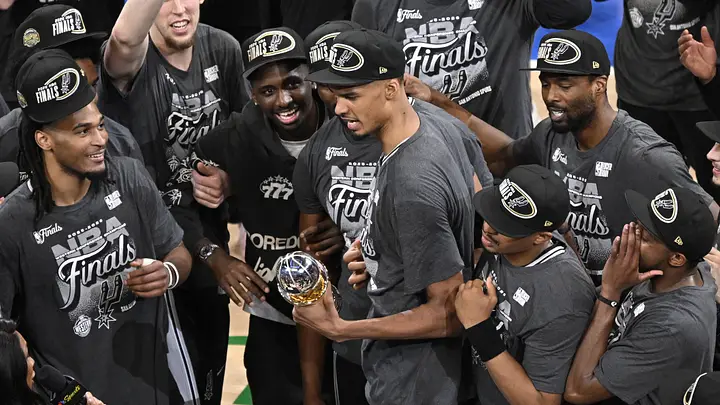
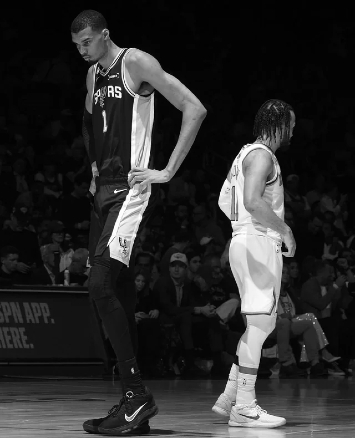
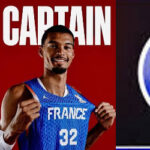
Wemby Chases His Dreams & His Own Basketball Legacy … … …
In this website’s previous section: ‘Basketball & France’, we established a link between France and Victor Wembanya to the origin of the game. Detailing a path from Melvin Ridout, Martin Feinberg, Henry ‘The Gentlemen’ Fields, to Victor’s grandfather, Michael de Fautereau, and his playing basketball days in Paris at club PUC. Then ultimately we presented Victor Wembanyama’s mother, Elodie de Fautereau, and her playing and coaching basketball in France. Elodie was Victor’s oncourt ‘basketball mom’ and his first experiences on a basketball court were with his mother nearby.
This website section: ‘Michael & Wemby’ is not a presentation about how Michael Jordan and Victor Wembanyama are similar, nor about how they share a common path. Further, we have no knowledge that they have any personal relationship whatsoever. In so very many ways, manners and physical structure they are different. They have taken very different routes to the NBA.
This is a presentation of how the early roots of Michael Jordan’s college and youth development stemmed from the very same basketball tree that is now sprouting the branches of Victor Wembanyama’s professional career in San Antonio Texas.
They are two separate branches stemming from the same basketball tree trunk, with a shared lineage and multiple links covering a century of basketball coaches.
We will demonstrate this timeline connection throughout the following presentations:
Phog Allen was a direct disciple of James Naismith. He played for Naismith at the University of Kansas. Years later, in 1952, Coach Allen’s Kansas team won a NCAA Championship and Dean Smith played on that team, and played for four years at the University of Kansas.
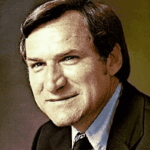
Dean Smith coached Michael Jordan and Larry Brown at the University of North Carolina. Larry Brown coached for the San Antonio Spurs.
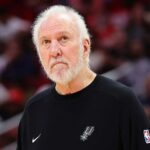
It was Coach Brown that hired Greg Popovich, the five time Spurs NBA championship winning coach, as an NBA assistant.
The ties are even deeper into this tree of basketball as you find out the roots of R.C. Buford, Doug Moe, Tony Parker and many more individuals connected to this basketball history who were in the past a part of, or, those who are now members of the San Antonio Spurs organization.
In understanding this history, you will see there is a deep connection between Michael Jordan and Victor Wembanyama.
We address the early basketball path of Michael Jordan and separate some of the myth from facts about his early career.
All of this is about the ‘real’ path, of a young Michael Jordan, which will actually demonstrate his tremendous perseverance, endurance and determination to be a six time NBA champion. The journey Michael Jordan took in order to win his first trophy was not a path of roses and instant greatness, as often portrayed. Only after years of struggle, and improvement did subsequently five NBA championship trophies come under his many accomplishments.
Michael’s actual path was not a journey of instant success, and what most people think and believe it was, when today they discuss his greatness, or if he is The Greatest of All Time (G.O.A.T.), ‘they’ flower Michael Jordan’s basketball career with myth.
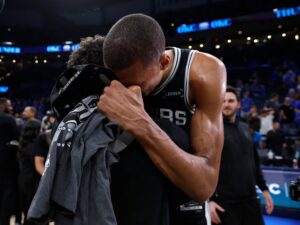
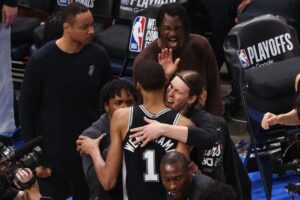
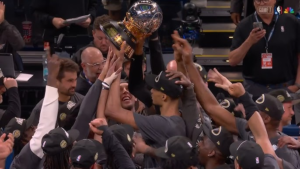
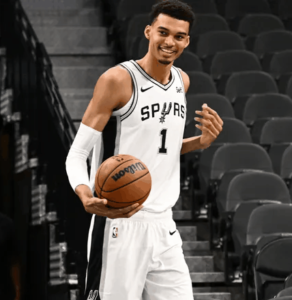
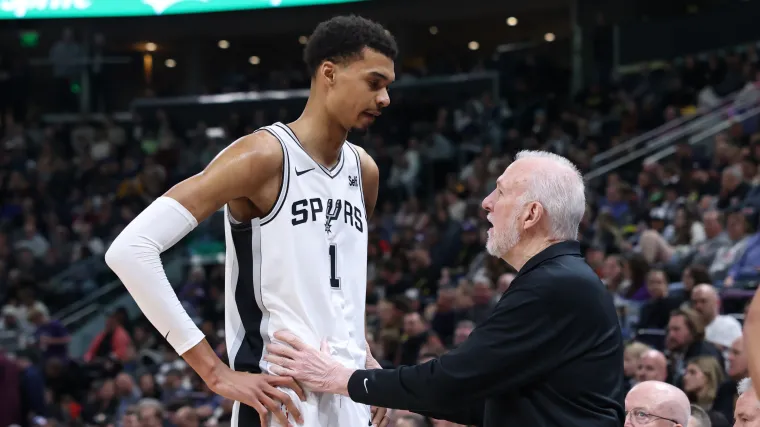
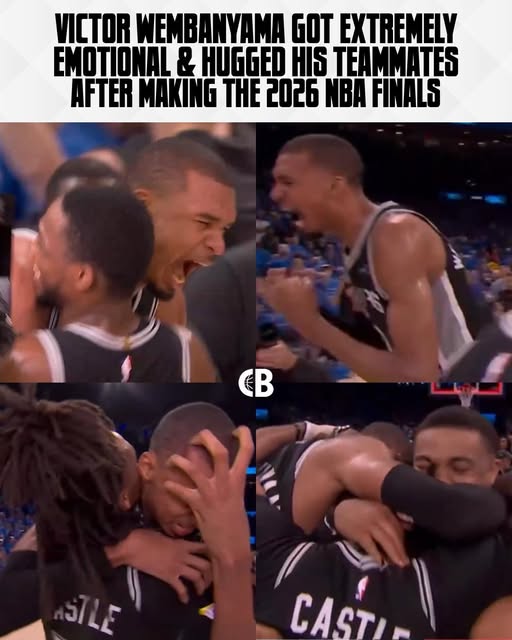
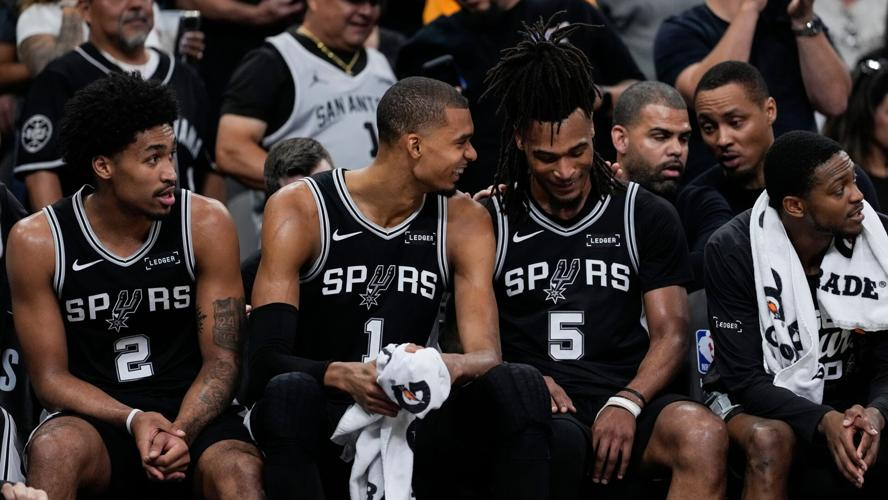
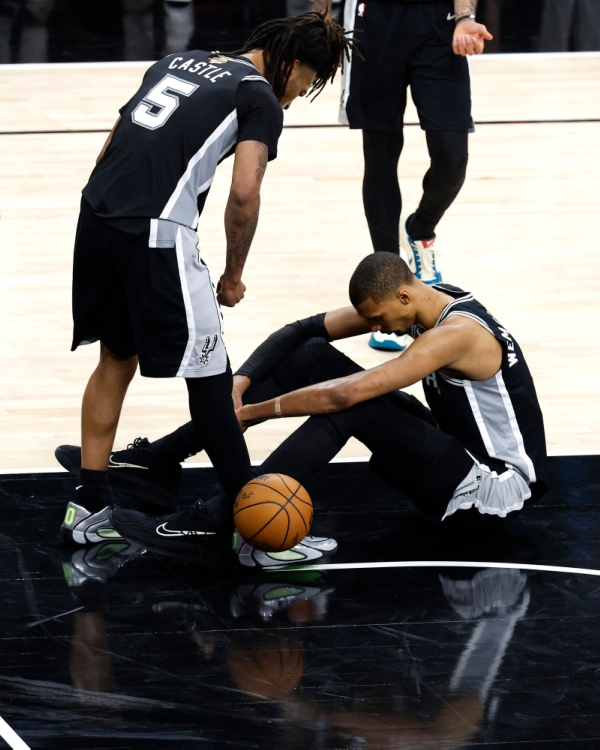
We address what all this actually means now to a 22 year old Victor Wembanyama in pursuit of his own basketball legacy in 2026 with the San Antonio Spurs. … … and what he most likely must endure to accomplish these objectives.
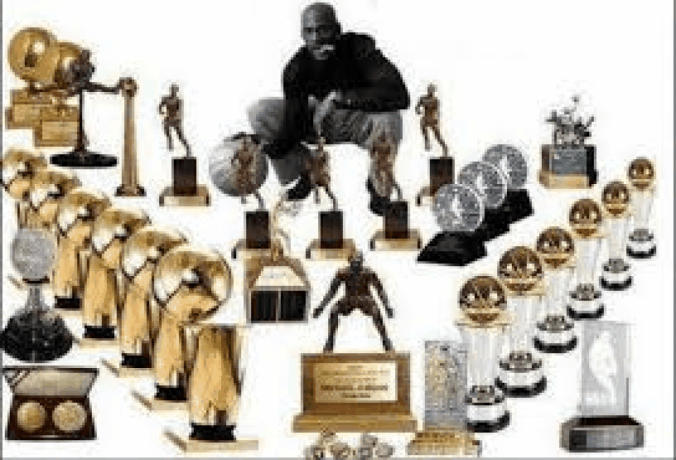
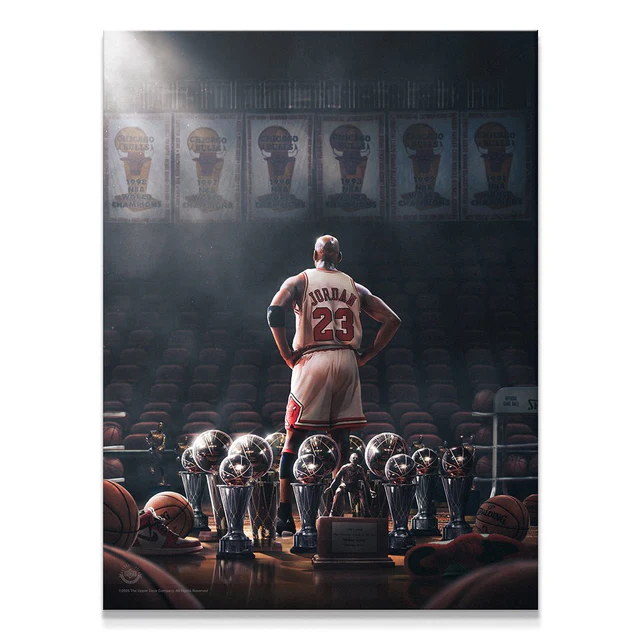
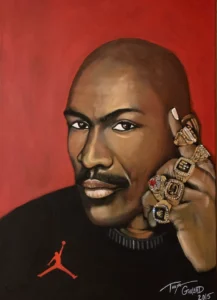
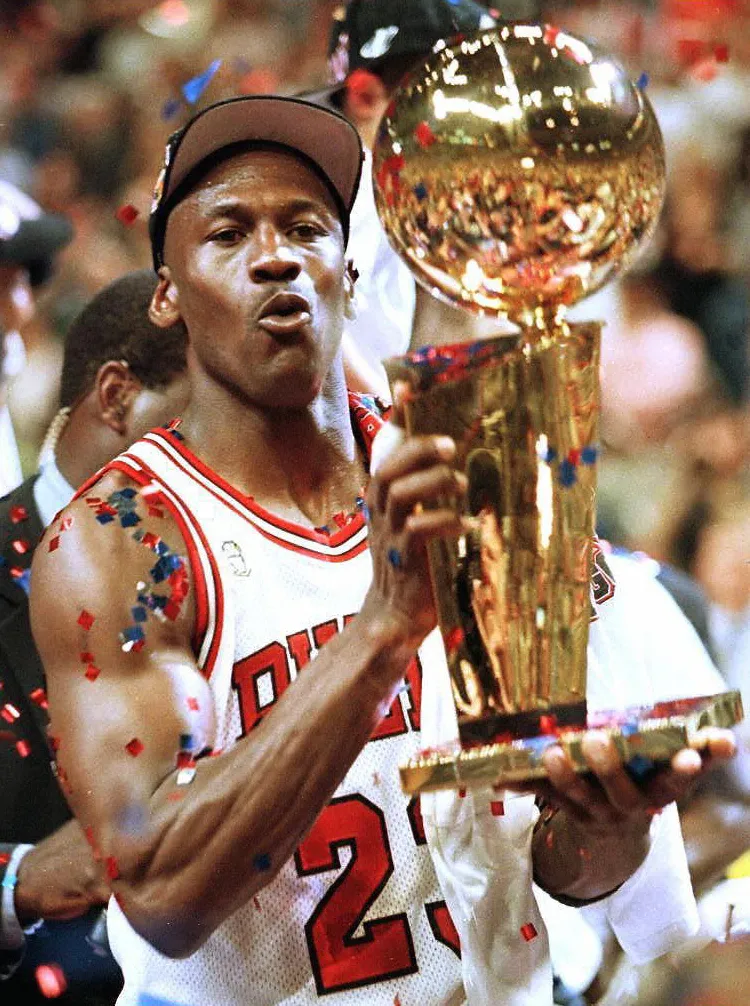
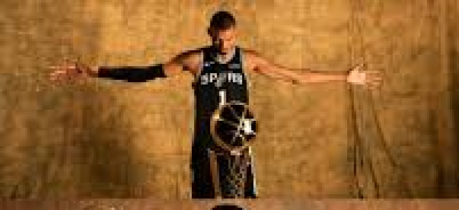
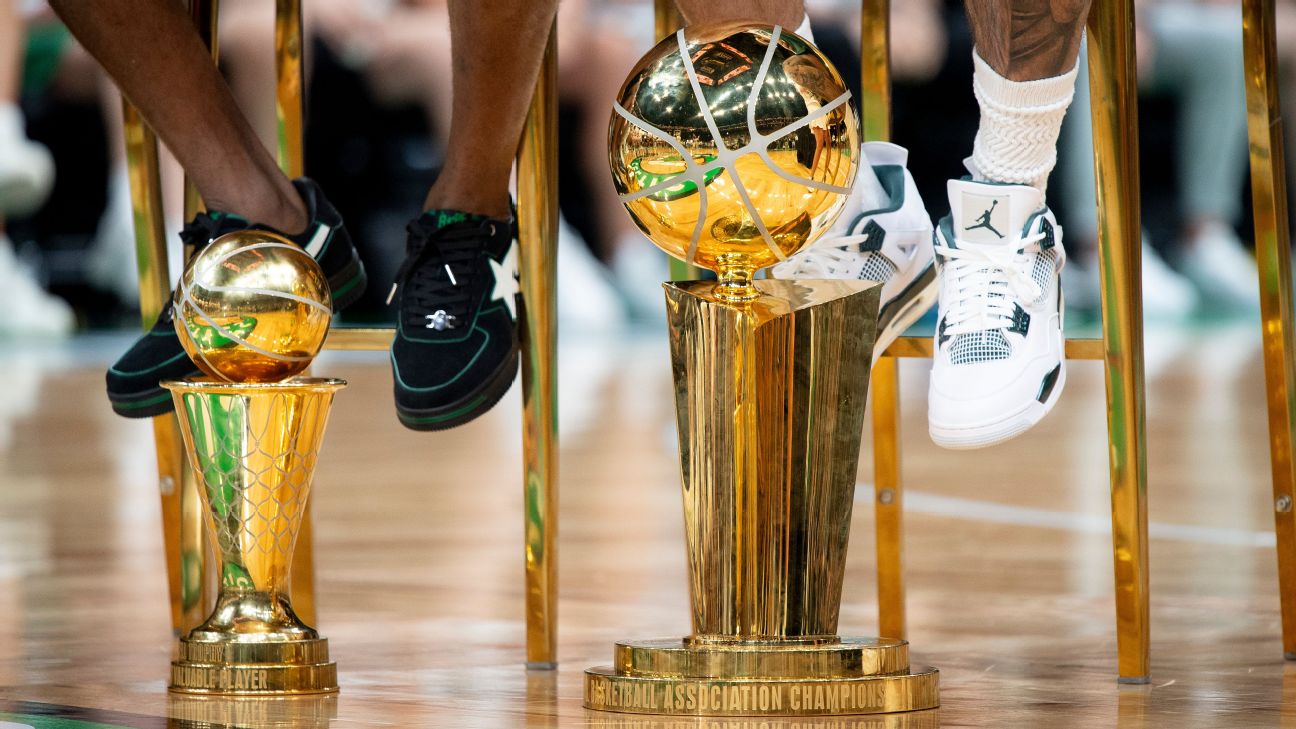
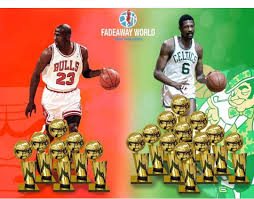
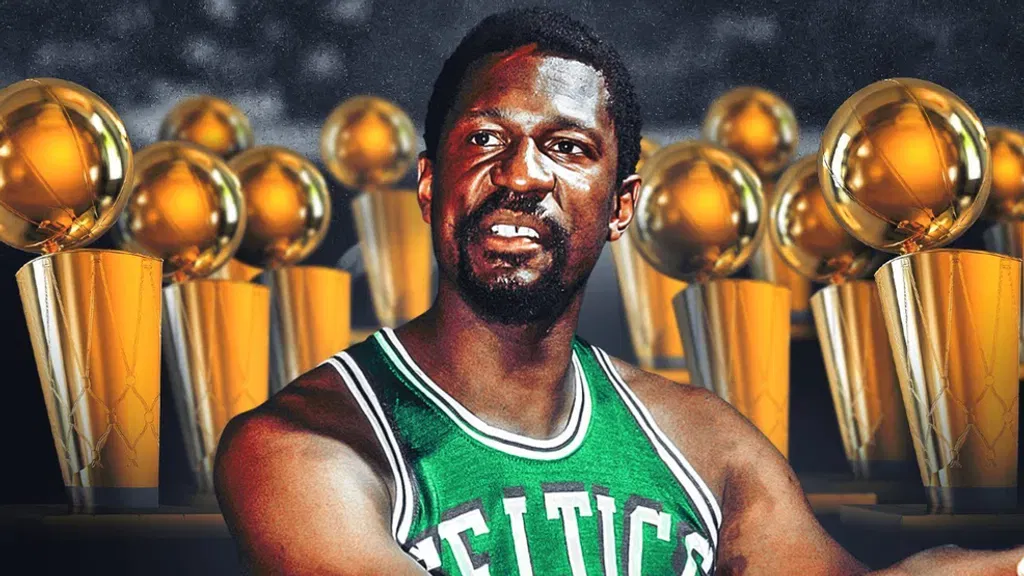
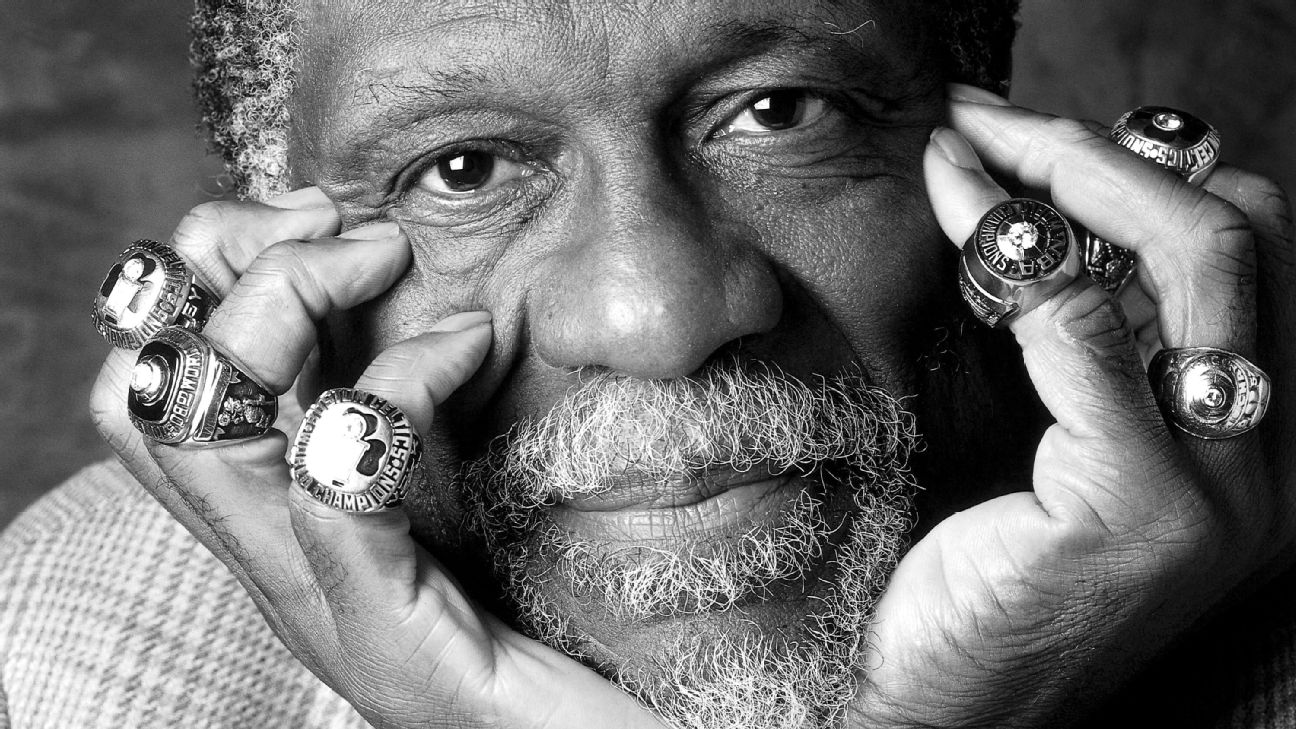
Obviously the largest current difference is Michael Jordan has six (6), yes six, NBA Championship trophies. Victor has zero. (Only a handful of players have won more titles than Michael Jordan).
A difference in basketball size, youth development, manner by which the game is currently played, current money paid to players, all the motivations which surround a current player, and much more should all be discussed as significant differences in this section.
In any case, it is the same basketball ‘TREE’ that set Michael Jordan into his career path that is now in complete control of assisting Victor Wembanyama’s career outcome.
Michael Jordan was NOT the best player on that 1982 UNC team, Sam Perkins and James Worthy were the team stars. Michael was the third option on the famous play which resulted in ‘THE SHOT’.
The play was designed to get the ball into the hands of James Worthy in the post, or to Sam Perkins for one of his great left-handed baby hook shots across the middle in the lane.
Matt caught the pass twice on the elbow from the on the point guard Jimmy. He did not execute the play, not pivoting and turning to face the basket, or even looking into the post, he quickly tossed the ball immediately back to Jimmy. He had just bricked a free-throw and was extremely nervous. Matt was a very good free throw shooter. However the passes between Jimmy and Matt were moving the defense over to the right side of the court, away from Michael’s weak side.
Careful not to turn it over at the wrong time, they did not toss it into the post. The team kept composure but seemed afraid to make a play. Time was running out.
Patrick Ewing was the determining factor in Michael’s famous shot. He had blocked everything near the rim the entire game. (Watch the first minutes of the game). Coach Smith and everyone watching the game knew Ewing was ready to take away any inside shot. Coach Smith knew Michael would most likely be open on the opposite side wing, if the ball was passed into the post. This was a well known universally taught zone offensive rule. ‘Opposite Wing Zone ‘O’ Outlet’, is always option one, from the post. Standard procedure. Dean knew the ‘Golden Zone Offensive Rules’ since childhood. He wasn’t designing a play on the bench to break the rule and get the ball into the hands of a Freshman to take a final shot for an NCAA Championship, as myth would later portray. The myth was later created to elaborate heights in the Bulls Championship years.
Nevertheless, Coach Smith knew Michael had a good chance of ending up with the ball in his hands, and Coach Smith had absolute faith that his ‘cocky’ and often over confident Michael Jordan would make a 15 footer from the wing 70% of the time. As usual, Coach Smith had covered his bases long before the moment required.
With Ewing in the middle of the Georgetown zone defense the plan was set to go directly at him with Sam or James and challenge him. Take it at him and into his body. Perhaps draw a foul, if the shot misses. This was the huddle plan and instructions.
After the huddle timeout broke, while players returned to the floor, Dean tapped Michael on the butt and said,”‘if your open, make the shot’. Eddy Fogler was the only person to hear Coach Smith’s last instructions.
The myth of exaggerated greatness began to grow as the ball swished through the net.
The famous mythical MJ ‘shot’ did not determine the outcome of the game. Time remained on the clock after Jordan made ‘the shot’.
Georgetown still had a chance to win the game. Timeout was called to set up the Hoyas winning play, UNC went into a man-to-man defense. And then, in a complete unexplainable, unpredictable, and chaotic play of basketball, there was a game determining panic turn of events.
Hoyas guard, Fred Brown, turned without looking and passed the ball to James Worthy, who had made a big, terrible, stupid mistake in a gamble to over defend the passing lane in order to steal the ball. James was standing in the dead zone, 45 feet from the basket with time running out on the clock. Not the location you want your 6’10 All-American standing with Patrick Ewing under the basket during the final determining play of the game. The game was over as James Worthy dribbled out the clock in open court, getting fouled and ending the game with free throws. James, who was always very bright and clever as a basketball player, must have thought to himself, I never made a bigger basketball mistake that turned out to be such a great play.
Although Michael played his part and made ‘the shot’, he was trained to take that shot in the Dean Smith system. It wasn’t the mythical greatness of MJ that determined the 1982 championship.
Contrary to the later created myth, it wasn’t a last second shot, and it wasn’t a play designed to have the ‘G.O.A.T’ score a buzzer ending shot.
Michael mentioned the shot in his Hall of Fame speech. (See video below). It did provide a spark to Michael’s career and confidence … … it motivated him to get better. He always worked hard to improve, he worked even harder after ‘the shot’, and Michael’s faith in Dean’s system became unshakable.
However, Michael Jordan never returned two an NCAA Final Four. He became an All-American college player in the next two seasons before turning pro. But, at that time, he had not the ability to propel a team to a college championship. That took a special mixture to accomplish.
It was a standing joke around the organization at basketball camp the summer of 1982, that it was God’s predetermined destination that resulted in the outcome of that bizarre chaotic final minutes of the 1982 Championship game. A manifestation sent from the ‘Carilina Blue Sky’ straight from the Almighty himself right onto that basketball court.
But, as they say, “A Win Is A Win, Is A Win”! Take ’em All! Dean Smith and the University of North Caroline won their first Championship. 1982 wasn’t Coach Smith’s last NCAA Championship. Michael Jordan did not win another Championship until 1992!
Despite some early low points, Smith was supported by the University administration and EVENTUALLY, after decades of success, Smith became beloved by most of the fan base, even some of the same fan base who hung him in effigy eventually embraced Coach Smith.
Despite prestigious team achievements over a period of many years, the University of North Carolina fan base was never completely satisfied with Coach Smith until the NCAA Championship in 1982.
The insatiable self righteous Tarheel fan base tagged Coach Smith with the label: ‘He Can’t Win The Big One’!
Despite always being in the mix for an NCAA Championship, it just wasn’t enough for the Tarheel illumni and fans. The Charlie Scott ordeal also left a bad taste in a community which was slow to encrust segregation justice.
Coach Smith ran a ‘clean program’ and he was always able to maintain the University’s administration support, and there were plenty of supporting wealthy booster who understood how lucky the school was in having Smith run the program in the manner in which he did and compete with the best teams in college. Most top college programs were breaking lots of NCAA rules to maintain success, Dean wasn’t a cheater.
Smith’s first major successes came in the late 1960s, when his teams won consecutive regular-season and ACC tournament championships, and went to three straight Final Fours, going all the way to the national championship game in 1968. But ACC championships and Final Four appearances were not enough for the Carolina Blue fan base. They wanted a sky blue heaven and a championship banner in the arena. This relentless demand created a cloud over his head, which Coach Smith mostly ignored. He knew he was running a basketball program built for the benefit of everyone.
Out of all the great accomplishments of Michael Jordan, the greatest unspoken accomplishment was indeed his ‘SHOT’ and the 1982 U.N.C. basketball TEAM winning an NCAA Championship. This was Coach Smith’s first championship, which put an end to the reluctant constant criticism of Coach Dean Smith.
They Hung Dean Smith in effigy ….
January 7, 1965, UNC basketball coach Dean Smith was hung in effig by students outside Woollen Gym after a 107-85 loss to Wake Forest.
The protest occurred during his fourth season following a four-game losing streak. Player Billy Cunningham pulled down the dummy, while Smith, unfazed, later recalled the incident with humor.
Details regarding the 1965 incident:
Context: The team had lost four consecutive games, culminating in a 22-point defeat to Wake Forest.
The Scene: Around 100 students gathered at the gym when the team bus returned, with a dummy hanging from a tree, which Smith recognized by its “big nose”.
While Assistant Coach Ken Rosemond noted the incident, Smith instructed players to stay on the bus to avoid confrontation.
Billy Cunningham, a player on the team, went out and tore the effigy down.
It remains a notable moment in UNC history, representing the high-pressure, early-tenure struggles of the future Hall of Fame coach.
Smith, who was not actually fired, went on to lead the team to a win over Duke shortly after and never had another losing season in his career.
Despite this early low point, Smith was supported by the university administration and eventually became beloved by the same fan base, with the current arena bearing his name. Coach Smith opposed the naming of the arena.
The good news was that the uppity snobby, raised nose, self indulgent UNC fan base stopped trying to hang real live (black) people at about the same time as this event. The Carolina fan base hasn’t changed much over the years. They have just gotten richer and more protective of their own clicks.
Of course, the entire bushel of apples is seldom rotten, you can always find good apples. The Carolina fan base has many great people.
In 1983, I witnessed six college age guys call a black guy out of a campus house and rough him up because he was dating a white woman. Jimmy, a U.N.C. starting point guard, had to explain the situation to me, I was in disbelief as to the reason for the attack. We did stand up and move forward, giving a little presence warning. Things subsided shortly thereafter.
The true racism of the geographical area was demonstrated when Coach Smith had the first lack player on the team.
Charlie Scott was a two-time All-American and became the first great African-American player in ACC history.
Charlie was the first Black scholarship athlete to play for Dean Smith and the University of North Carolina (UNC) men’s basketball team, joining in 1967 and debuting on the varsity team in December of that year. He was a trailblazer in the Atlantic Coast Conference (ACC), leading the Tar Heels to two Final Four appearance.
Beyond recruiting Scott, Smith was a vocal proponent of civil rights in Chapel Hill, including efforts to desegregate local businesses. Local, as meaning, Chapel Hill!
The Spurs Legacy of Larry Brown:
The San Antonio Spurs rize to the top & His Assistant Coach Greg Popovich
Coach Larry Brown and the San Antonio Spurs
Larry Brown played for Coach Dean Smith at the University of North Carolina for three years in 1961-63. He played one year for Frank McGuire, Dean’s predecessor.
Larry was a lifetime coach who started his coaching career in the ABA, after a short ABA playing career. He had his best friend Doug Mo by his side for years as a college player at U.N.C. and then a professional player in the ABA. Doug Mo was Larry Brown’s assistant coach as he started his coaching career.
Doug Mo played for Dean Smith and coached the San Antonio Spurs for four years from 1976-80.
Larry Brown served as the San Antonio Spurs head coach from 1988 to 1992, compiling a 153-131 record over four seasons. He revitalized the franchise, leading them to back-to-back 50-win seasons and two division titles. Despite early success and nurturing David Robinson’s rookie season, Brown was fired in January 1992 following a 21-17 start to his fourth season.
Brown hired Greeg Popovich as his assistant coach in his first year. Popovich was a Spurs assistant for four years
Brown was a basketball program turnaround expert. If you wanted to get thing corrected on the basketball win – loss record, you hired Larry Brown. This was his reputation.
After a 21-61 debut season (1988-89), Brown turned the San Antonio Spurs team around to 56-26 (1989-90) and 55-27 (1990-91) records.
Playoff Performance: Led the Spurs to two consecutive division titles and playoff appearances in 1990 and 1991, although they never advanced past the second round.
Development of The Admiral:
Brown was fired in January 1992 amidst front-office friction, something Brown was also well known for as a coach. Brown often did not agree that office workers and owners knew more about coaching than he knew and would often would not relent his coaching methods to fit their demands. The San Antonio team ‘organization’ cited the need for a different direction despite his previous successes.
Legacy: Brown’s tenure was noted for stabilizing a struggling franchise and setting the stage for future success, as well as being part of the history that led to the eventual hiring of Gregg Popovich
Larry Started The Spurs Championship Journey
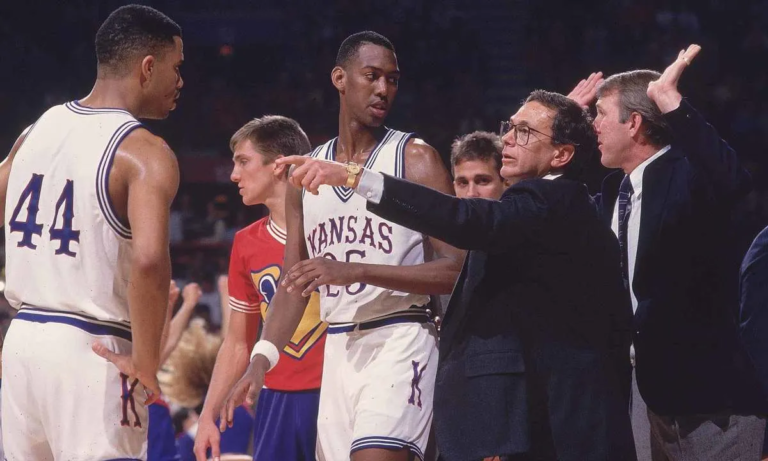
Greg Popovich With Larry Brown on The University of Kansas Basketball Team Bench
Pop’s Players Love Him – But The Fandom Relationship With Popovich Was Difficult
… … … it took Championships before embrassing Pop
Gregg Popovich’s Division III Succes Leads him To Dean Smith and Larry Brown’s Coaching Staff
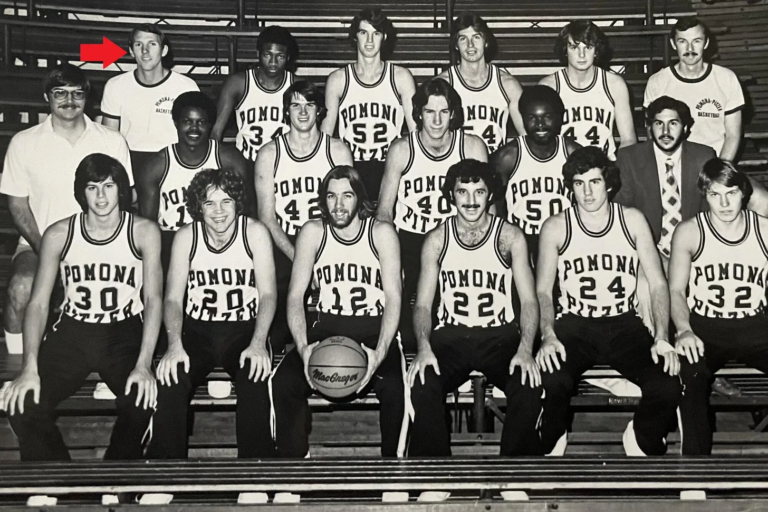
During the 1985-86 season, Popovich’s seventh at the helm at Division III Palmona-Pitzer, those many years of hard and diligent work came together in a championship. The Palmona Sagehens won their league, the Southern California Intercollegiate Athletic Conference, outright for the first time in 68 years. That earned them a spot in the NCAA Tournament, where they were blown out 89-59 by Nebraska Wesleyan in a game that Popovich told reporters “didn’t think that this would happen in my worst nightmare.”
The Change …
After that run, the gears that led Popovich to basketball immortality were put into motion.
With the encouragement of Pomona athletic director Curt Tong, a former Division III coach himself, Popovich took a sabbatical. Rather than going abroad somewhere or taking time away from the game to avoid burnout, Popovich got a basketball education in which he was able to view the game through a lens that was previously unavailable to him.
While still a player in the early and mid-1970s, Popovich developed a relationship with legendary coach Larry Brown, who was twice a part of staffs that cut Popovich – first for the U.S. men’s national team for the 1972 Summer Olympics and then again in 1975 while Brown was the head coach of the Denver Nuggets, then of the ABA.
The two stayed in touch and following the 1985-86 season, Popovich went to learn under Coach Larry Brown.
Greg Popovich spent October and November of the 1986-87 season at North Carolina, Brown’s alma mater, under the supervision of Dean Smith before going through the rest of the season with Brown and Kansas, serving a key role on the Jayhawks’ bench and coaching a group of players, most notably Danny Manning, that would lead the program to the NCAA championship the following season.
Popovich’s sabbatical time with Dean Smith in North Carolina gave him direct coaching knowledge on the UNC program that developed Michael Jordean in his College career.
It was Popovich’s recent coaching and organizational activities of the San Antonio Spurs in 2022 and 2023 that made Victor Wembanyama the first round selection of the team.
This Popovich – Larry Brown -Dean Smith background is the round-robin physical connection and coaching tree that exist between Michael Jordan and Victor Wembanyama
Despite being respected by his players and the Spurs organization, Greg Popovich had to win two NBA titles before the general sentiment about his coaching would become positive. We will not even consider his relationship withe ‘The Press’ in this section. Except to say, ummm.
In Dec. 1996, then-San Antonio Spurs general manager Gregg Popovich made what would become one of the shrewdest moves in NBA history, firing coach Bob Hill after a dreadful 3-15 start to the season and inserting himself into the position.
You probably know what came next.
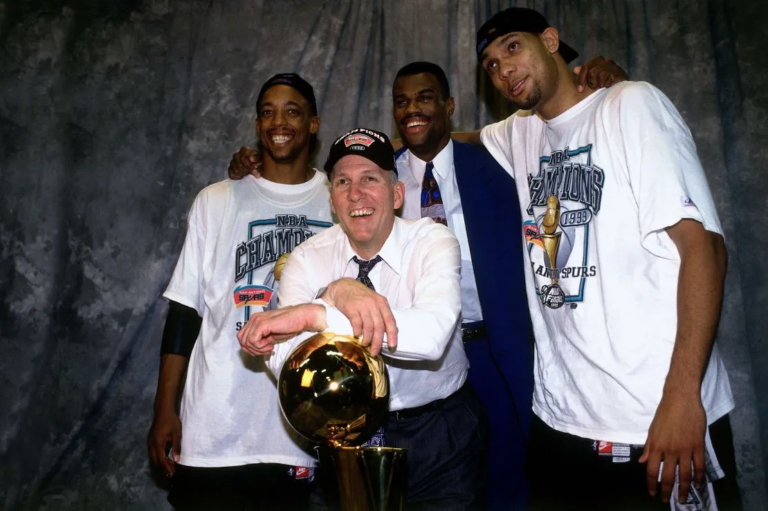
The Spurs became one of the longest-running and unlikeliest dynasties in NBA history, winning five championships over a 15-year stretch while experiencing significant roster churn and employing wildly different playing styles from their first title to their last. And at the head of it all was Popovich, the wise and wry basketball genius who cemented his place as one of the greatest coaches in NBA history.
Watch Video Below Titled: ‘Nobody, Snake, to the G.O.A.T’ of coaches.
While at a cabin in the summer of 1988, news broke that Brown, months after leading Kansas to the national title, had been named the Spurs’ head coach. One of his assistants, Lee Wimberly, suggested Popovich call him to see if he’d bring him along to San Antonio. Popovich had his doubts.
What followed, is now history, with Popovich spending four seasons with Brown in San Antonio, leaving to work as an assistant under Don Nelson for two years with the Golden State Warriors and returning to the Spurs to become their president of basketball operations and general manager in 1994. Then taking over the Head Coaching position, resulted in lots of NBA Championship Trophies.
In 1979 – after six years as an assistant coach at his alma mater, Air Force – a 30-year-old Popovich was named the head coach at Pomona-Pitzer, a hiring that was back page news in in a small handful of California newspapers.
After Popovich’s sabbatical his heart led him back to Pomona-Pitzer.
“I’ve been spoiled at North Carolina and Kansas,” he said to the Los Angeles Times in 1987. “When I get back to Pomona, I’m going to have to be careful not to be someone else other than me. I know I’ll be more efficient and I’ll have a computer bank of knowledge that should help my teaching techniques. I’d be a fool to say it isn’t a thrill to watch and help players of Division I caliber develop into great players. But I think at this point, the small-college level is the place to be if you want to coach and not have droves of people who want a piece of you. That’s more consistent with my personality.”
In his brief time away, though, circumstances had changed. Shortly after Popovich got back to Pomona-Pitzer, Voelkel died and school leadership that succeeded him wasn’t as invested in his program’s success. By the end of the 1987-88 season, he began thinking of life away from the community he loved.
While at a cabin in the summer of 1988, news broke that Brown, months after leading Kansas to the national title, had been named the Spurs’ head coach. One of his assistants, Lee Wimberly, suggested Popovich call him to see if he’d bring him along to San Antonio. Popovich had his doubts.
What followed, as they say, is history, with Popovich spending four seasons with Brown in San Antonio, leaving to work as an assistant under Don Nelson for two years with the Golden State Warriors and returning to the Spurs to become their president of basketball operations and general manager in 1994.
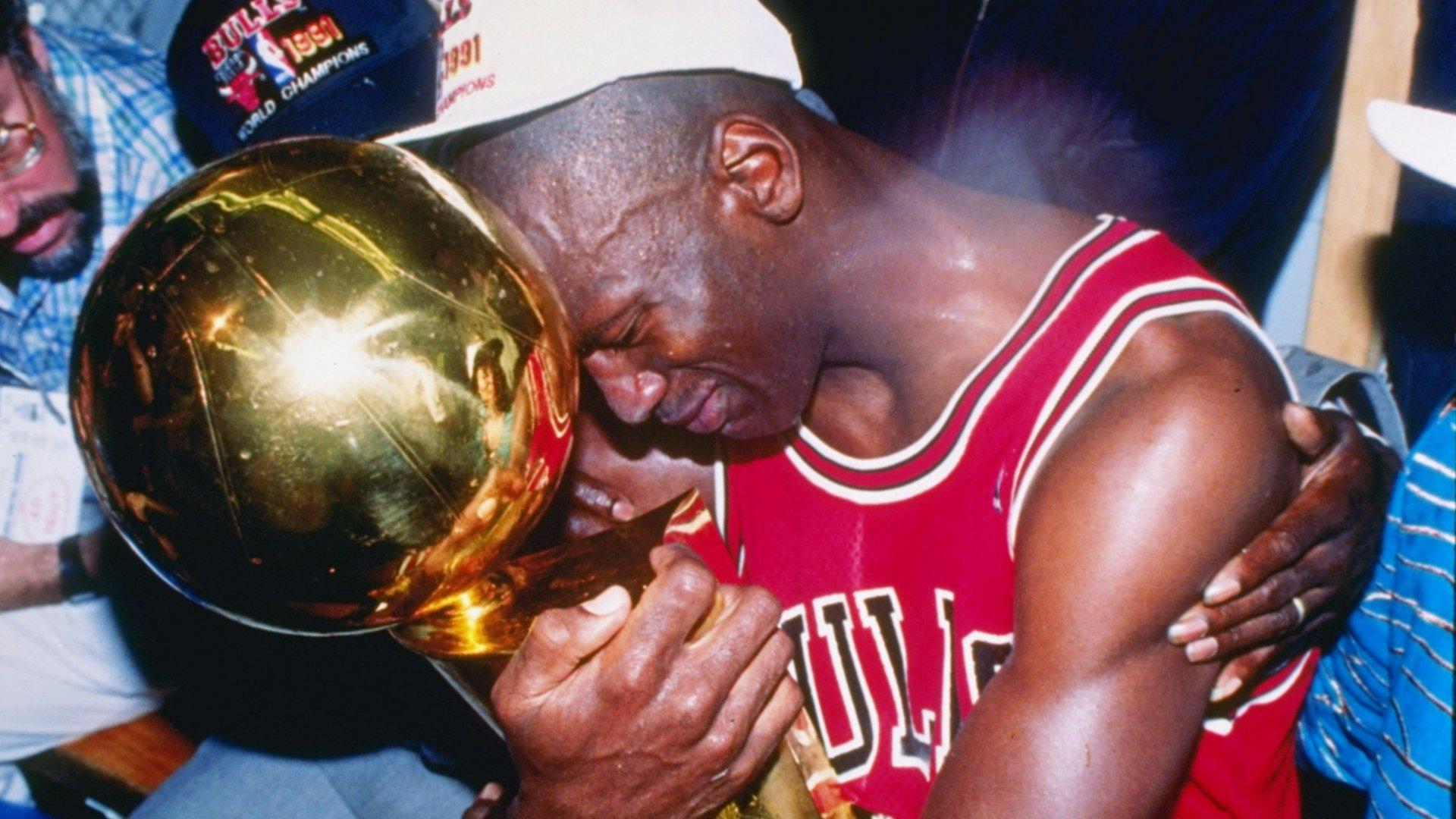
IF YOU CAN’T CRY ABOUT LOSSING … …
… … WINNING A CHAMPIONSHIP IS LESS LIKELY TO OCCUR
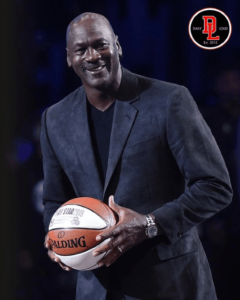
His Name Is Michael Jeffery Jordan
THE MYTH OF THE GOAT (G.O.A.T.):
… BEST BORN CHAMPION TO HAVE LIVED / OR / MOST NBA CHAMPIONSHIP TITLES
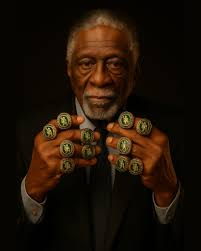
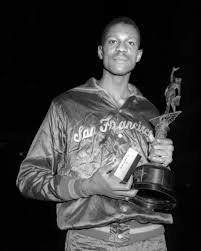
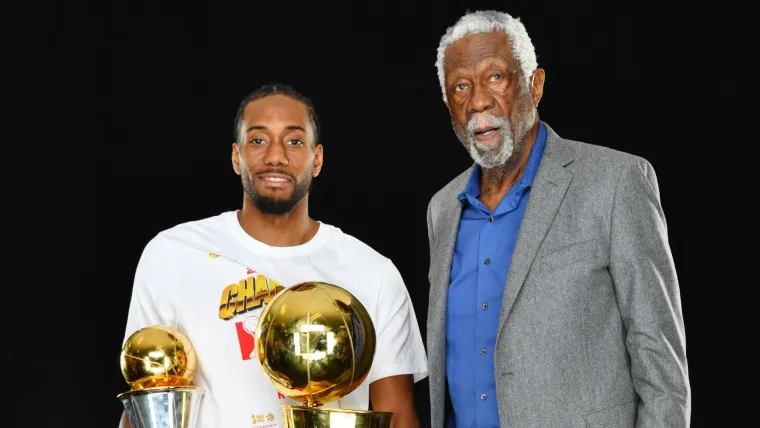
Michael Jordan and Bill Russel are the two BEST “WINNERS” to ever play the game of basketball. This is a personal opinion, not a fact.
G.O.A.T. WINNERS.
Even Michael Jordan has said, ‘calling him the greatest of all time (G.O.A.T.), is not possible. One can not accurately compare players of different eras.
Here Is a List of NBA players with 6 or more Titles:
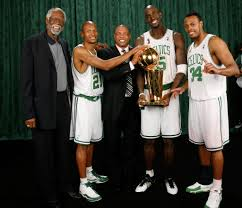
Bill Russell (11): 1957, 1959–1966, 1968–1969
Sam Jones (10): 1959–1966, 1968–1969
K.C. Jones (8): 1959–1966
Satch Sanders (8): 1961–1966, 1968–1969
John Havlicek (8): 1963–1966, 1968–1969, 1974, 1976
Are the above players the Greatest of All Time (G.O.A.T.) ?
It took Michael Jordan many years to learn how to combine his great individual skills with a team championship formula. Michael Jordan was 28 years old when he won his first NBA title. He did not win an NBA Championship title until his seventh NBA season.
It was the coaching of Phil Jacson that altered how Michael approached playing the game to win championships.
The first thing Michael Jordan states in his Hall of Fame speech is: ” I didn’t do this alone. Scotty Pippen was there with me for all six titles”.
In my opinion, for a period of about two years, in the after retirement championship run, Scotty Pippen was better than Michael Jordan, as an overall player. Scotty Pipen was a great NBA basketball player.
THE MYTH OF BEING CUT FROM HIS HIGH SCHOOL TEAM.
Below is a video of the coach, Fred Lynch, who is associated with this myth that “CUT”” Michael Jordan in High School..
Hear it from the man himself … He calls it: “Hollywood Fiction”
The Michael Jeffery Jordan Path Was Not Easy
I met Michael when we were young basketball players attending the Dean Smith Basketball School at the University of North Carolina in the 1979 … … . Dean Smith appropriately always called it the Bill Guthridge Basketball School, an inside acknowledgement about who really ran the show. It was also never called a basketball camp by coach, it was called a basketball ‘SCHOOL’! As part of the ‘school‘ show for ten years, I became good friends with Coach Bill Guthridge. Beloved and missed he remains to me.
I think, it was the 79-80 basketball year. In any case, Michael was a rising high school star, and I was just an aspiring college player … … , we both attended the basketball camp – I mean school .
I briefly met Michael’s Father and his sister in that summer of that year as well, I think. Michael’s Dad had watched me play on a Friday morning of camp. While watching Michael in the same gym. There was always multiple games going on simultaneously. SIMULTANEOUSLY the Dean Smith Way … … . Mr. James Jordan, later spoke to me back at the dorms. After watching me for only a few minutes, he liked my game, and he told me so. The point is, perhaps, the sons eyes often come from the father’s eyes. This was the only time Coach Smith put Michael and I in the gym together during the entire week of camp. Dean always had his reasons … … …
For two summers, Michael and I stayed in the same large dorm on the University of North Carolina campus at the Bill Guthridge Basketball School, with 500 other basketball crazy camper kids. We moved in the same paths to and from the cafeteria, down to the pool, and into the basement for ping-pong and piano playing. I had been attending the Dean Smith – Bill Guthridge Basketball School since the age of 14. I worked the camp my first three years of college and returned once or twice in later years, then the 90’s for a final hooray. You just could beat the Dean Smith pay structure of weekly and yearly bonus increases. It was like getting paid to go on vacation. In any case, now, all of those Carolina Basketball School days blend together as a marvelous episode of my basketball life.
I remember that I first encountered Michel Jeffery Jordan on a Sunday in Carmichael Auditorium, playing pick up basketball games. The same day Roy Williams claims to have watched a 17 year old basketball player and immediately proclaimed, he knew at that moment,”he was watching the greatest basketball player of all time. Roy doesn’t lie, never! But Roy tells a lot of fish catching stories on the golf course, and he always tells the same story, but after some time, Coach Roy enlarges the size of the catch, and the size of the fish. But the stories are always factual in basic actuality.
I was there too that day with Coach Roy. I remember proclaiming spending time in the open play gym with the most entertaining, humorous, mischievous coaches of all time, Roy Williams. Yes he was quite the entertainer. It was always enjoyable being around Roy, especially on camp Sundays when the duties were light and time was free. This was, of course, long before Roy became grand and famous. He then became very very serious as a successful college basketball coach.
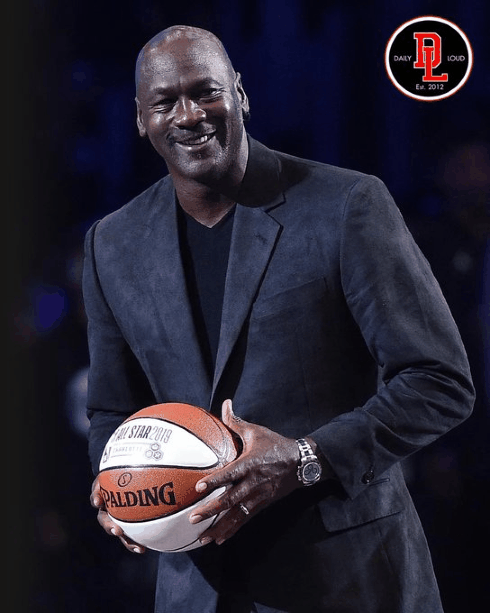
I have different details in my fish story of that day. I played with Michael on the court that day, and in the year later. However, I also played with and knew a few guys who were hanging around campus who were much better at playing hoops than Michael, at that time.
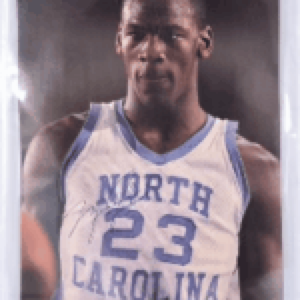
I had spent those muggy North Carolina afternoons playing pick-up games with Walter Davis, James Worthy, Sam Perkins, Al Wood, and Phil Ford, just to name a few guys who spent those days on the court in Chapel Hill. All of these guys were older, and better than Michael Jordan at that time. Walter was a NBA MVP!
Coach Smith always had a game plan in putting his teams together. The coach was a savant of basketball and a genius with a photographic memory. He would memorize five hundred camper names in a week, and call them by name when handing out ‘Basketball School’ completion certificates on Fridays. And, Coach Smith, required you to learn the name of every kid in your assigned coaching gym before Friday at camps end. He had a plan for everything long before most anyone ever knew a plan was needed. He was not forgetful.
Coach Smith called ‘MJ” Michael, not Mike, as Coach most often used your formal birth name when addressing you. Everybody followed coaches lead, we called him Michael. I always called him Michael.
We did indeed marvel at the ‘potential’ ability of young Michael those summer days. We also knew, Michael was going to test Coach’s unwritten rule about not starting freshman basketball players. Sam and James had pushed, around campus, betting odds were taken on whether MJ was going to break the coach’s freshman rules. Michael was going to take over Al’s small forward spot for the upcoming season, this team would have four returning starters from an NCAA finals team that lost to Indiana. Most of us did agree that Michael was going to be the first to break those rules. But UNC was at the top of the ladder in those days, it wasn’t a small ball time. Patients were always required in the Tarheel program.
That first encounter was all occurring the year before Michael was driving around Chapel Hill in his black Monte Carlo preparing for his freshman season at UNC . In that summer, the 1981-82 pre-season, we both were hanging around for three weeks that summer. We were both now playing college basketball on opposite sides of the country. Mike hadn’t hit the famous Georgetown Jumper’, yet. On any given night, you could watch Mike and Buzz cruising the streets of Chapel Hill without anyone in town knowing who he was or why he was listening to such music. It was the last time Micheal Jordan every did anything without being recognized.
During that summer, Michael and I spoke a few times, and we had friendly encounters, but we were not friends, just friendly … … … .. well, we were not made of the same cloth. … … … … after much thought, we were made from the same cloth, just different tables.
Chapter 3 UNC Ideas : … … umm … attack or defend … … losing in SLC to UNC , my NCAA dream crashed by Dean and Bill, … … … the deep end, and Coach Guthridge’s European phone call to me while swimming in the deep end of the swamp…. … … .somebody’s gotta play with the alligators … … Bill knew all about my alligator adventures .. … the UNC Irish eyes were crying on the Notre Dame basketball court , that day … a tear in Coach Dean’s eye? … … where ya going now with $3k from camp salary, … … … forbidden Basketball Card Trading during UNC basketball School … . How about nothing?
Michael Jeffery Jordan During Our Youth.
The Day Michael Jeffery Jordan Changed Basketball In France
THE CROWNING MOMENT IN FRANCE’S BASKETBALL HISTORY
Surprisingly, both the Italian and Spanish champions, traditional European powerhouses Benetton and FC Barcelona, lost their preliminary stage games and were forced to battle for 5th place. The Chicago Bulls instead led by Michael Jordan, and without Scottie Pippen managed to win their semifinal game against the hosts PSG Racing coached by Božidar Maljković, by 89–82. In the final game Chicago Bulls faced European champions Olympiacos Piraeus. The Greek side coached by legendary Serbian coach Dušan Ivković proved stronger than PSG Racing, but the Bulls pulled the best of their abilities and cruised to an easy 104–78 win.[3]
The tournament was noted for having more than 1,000 journalists from 54 countries covering it, more than the previous NBA finals.[4] It was mentioned in an early episode of the documentary miniseries, The Last Dance.
DECEMBER 11 ,2025 Thursday
By: Christopher Lee (Pin Name)
a.k.a.: Mr. Fat Hat / Picasso / Kristoph Lee
Qualification History: It was Chip that initiated it all and he connected me to the Bulls.
Few if any know about Chip. Almost nobody knows anything about me and my participation. In Coach Phil Jackson’s long NBA coaching career of championship basketball at Chicago and Los Angeles, there is a man who can be observed sitting next to coach Phil Jackson in every game. That’s Chip Shaefer.
Chip was a friend, he had supervised me daily through rehabilitation and back from a double Achilles tear injury. We spent many days together during my Sophomore year in college. When most everyone had written me off to the wind, and said my playing career was finished, it was Chip, who was at that time, a college student trainer at Utah, leading me step-by-step daily, through many months of pain and disappointment and back to the court. After a long year, I was starting on a basketball team that won a few NCAA tournament games my Junior year. That wasn’t likely without Chip. I continued playing internationally until the age of thirty.
Years later, Chip Shaefer could be found sitting next to Phil on the bench in the Bulls organization, he was much more than a trainer to the Chicago Bulls dynasty.
Again, Chip and I crossed paths many years after those college days. After I had been forced to stop playing basketball in Europe due to injury and I was unsuccessfully trying my hand at coaching, bouncing around back and forth from the States, Brazil, and to Europe. I found myself grounded back home in Indiana. I was stationary in that location out of unexpected serious health concern for my daughter – which is in itself a long story. Chip had heard some of the real story from Gary Vitti. and I let him know I was doing some writing for FIBA magazine and arranged to met Chip in Indianapolis to find out about extending it to the hottest team on earth, the Chicago bullls..
I was digging into the Flying Dutchman of the Indiana Pacers, Rick Smits, preparing an article for FIBA — which, by the way, is how, when and where I started selling basketball cards, through FIBA basketball magazine, taking out paid advertisements and selling cards to kids in Europe. So Chip and I arranged to meet on Christmas at the hotel in Indy. Satisfying the forever curious Chip – always the polymath – I tossed him a file on my notes during our encounter. Not thinking much about it.
During a secluded depressive filled Christmas lunch in a room with a non-conversational Michael and most of the tired weary Bulls team, I quickly realized the entire Bulls team was simply unapproachable. The Beatles phenomenon had taken over the team. I wasn’t gonna get much in that closed circle. There was no source to procure any articles with this group.
A few hours later, Chip came walking down the empty streets of Indianapolis, asking me if I had any more info on The Dunkin’ Dutchman.
Chip said he shoved my writing onto Coach Phil’s desk at the hotel and he wanted to read more. I guessed, to my surprise, Phil liked what he was reading and he asked for more reports. Chip escorted me to the only open copy location in downtown and I zipped off a few more pages of my prep notes.. We chatted a little after the Pacers game and suggested we stay in touch.
A few days later, after a telephone-fax call, we didn’t have text, yet, back in those years, Chip arranged for me to attend practices and watch a Bulls basketball game. I wrote about my observations. Then, I forwarded my writing to Chip. After that, he continued asking me to come up to Chicago every few weeks. I would drive up to Chicago and watch morning practice and then attend the games at night. He arranged open access to practice and Chicago games. Phil and I had a few short verbal discussions after practice or the games. But I barely spoke to the player of the team. I remember these talks with Phil to be quite esoteric, Zen like verbal exchanges, ten minute deep thought mind warping exchanges … … usually not about basketball. Sometimes in the back halls of the Chicago arena post game, often sharing a cigarette break. I wasn’t paid much, I had enough money for gas money and a hotel. But I knew it was an experience of a lifetime watching this team. It was priceless.
It was fascinating to watch Michael – or MJ, as he had by then known to be called by most all, some friends addressed him as Mike, I had always called him Michael – work out with the Chicago Bulls in the morning of game days, then watch the games at night. I was around the team enough to hear what was being spoken by the players, but I tried to stay out of the fray and not interfere, nor participate, as I was interested in the observation of the basketball process. Chip was always happy to speak and answer any questions I might have had during my visits.
During that period, I was, however, able to get two autographed Michael Jordan Fleer 1986 Rookie cards signature authenticated by Michael Jordan, himself. I did not have Michael Jordan sign the cards. But I wanted to know if they were authentic after paying good money to a mutual friend who claimed he got them signed during a card game, Prior to this request, I had heard through the grape vine … … . Well, … … I heard the rumors from those games and Michael confirmed he had signed the two cards, stating it was most likely during one of the many card games.
This is how and when my 1986 Fleer Michael Jordan Rookie cards became signed and authenticated. However, there is more intrigue within the story.
On one of my trips, I brought the cards with me, knowing if the team won, Chip would get me into the locker-room post game. I came prepared. As a spoof, I ask Michael to autograph a tiny pair of Nike baby shoes. He laughed, and scribbled something on the small side of the shoe. Then, made his usual facetious response. Then, I showed him the cards and he confirmed those were his signatures. If I recall correctly, that was the 1991-92 season. The start of the third championship year. I gave the baby shoes to a high school friend with a four year old daughter dealing with serious health concerns. She had an entire family of absolute crazy Chicago Bulls and Chicago Bears fanatical nuts. They didn’t believe the shoes were an authentic autograph, but the young girl didn’t care. She was so happy to have a pair of Nike baby shoes signed by Michael Jordan … … … although the shoes were too tiny for her feet, she walked around carrying them for days. She was the queen of the family.
I never ask Michael for a single thing in my endeavors hanging in the old Chicago stadium during games and practice facilities up north. I even brought the team a few gifts. One such renderings were hand made Amish crafted wood memorabilia displays of unique photos and cards. Michael wasn’t interested, but other teammates liked the gifts. I wasn’t interested in eating any of the lucrative ‘pie’ from the global financial bonanza surrounding the entire Chicago Bulls situation. Basketball was my thing, and my sole needed that during this period of my life.
Everybody wanted everything from Michael, and I saw the toil up close and personal. Micheal really did not ever seem to have a minute to spare, I wasn’t there to take on him. I visited the Jordan restaurant downtown between practices and games, and sometimes I would run over to Michael’s newly purchased sky scraper building and drop off recorded cassette tapes of my thoughts and observations. I think Juanita listen to some of the info with strange suspicions. I would visit the basketball courts in the ghetto next to the stadium. I just did my thing and watched, then, I wrote reports on my thoughts from observation. Like a Professor, Coach Phil Jackson read the reports, that was enough for me. Well worth the five minutes of verbal time he often provided me after games.
During my last visit to the Bulls, the game had changed venues to the new stadium. An era had ended with the destruction of the old stadium. That is the occasion I bought four old bricks of the torn down stadium from a desperate street vendor. Much later, I tried to get UNC basketball office to forward one of the bricks to the Jordan family. I suggested that someone in the Jordan family would place the brick in the fresh cement of a newly built walkway at one of the many mansions. Everybody seemed oblivious to ‘Real Sports Memorabilia’ and responded as if I was crazy. I don’t know what happen to the brick I left at the UNC basketball office years after the Jordan Bulls team disseminated. I put one of the bricks in my walkway cement at Lake Wolcott. Foresight isn’t always seen by all with eyes.
Michael did, on one occasion, ask me what I wanted from him. I had absolutely no response.
This happened after I snuck a few of the neighborhood young park rats into the stadium hours before the game. As I knew, he would be alone on the court hours before game time, unprepared to fight them off. I never found a basketball stadium or a court I couldn’t find entrance into. The kids went crazy watching MJ take jumpers in an empty gym hours before the game. Those were some happy kids, some with missing teeth and one without shoes. After a time, he did enjoy speaking with the kids before security stepped in to clear the ecstatic kids out the door. Michael then asked me to follow him down to the locker room tunnel. We were alone in the empty stadium, as it was hours before game time. I got him good with the kids, so I followed with a smile. We stood relaxed face-to-face with one foot propped up behind us on the wall for support. We mentioned the latest UNC rumors and then Michael ask me, “What do you want”? I had no response. I just shook my shoulders.
He had nothing to give me that I wanted at that given time. My needs were in my house with my family. Fame and fortune would not change those requirements, or suffice my fill my needs. He did not have anything that I could use at that time. I had no request, nothing except what I was already experiencing, watching him practice and play basketball games up close and personal. My soul needed that experience.
So, my trips took a hiatus when MJ went to hit baseballs. I did take one trip to watch Scotty take over the basketball world as the best player on the globe, and I made a last HAJJ after the MJ return from “retirement’ celebration.
THE PRESSURE OF WINNING
Michael Jordan’s persona underwent a significant transformation as he transitioned from a relatively anonymous college student at the University of North Carolina to a global icon with the Chicago Bulls. This evolution is marked by changes in his public name, his accessibility, and the mounting pressure of his superstardom.
The “Michael” Era at UNC
During his time at North Carolina, Jordan was primarily known as “Michael,” largely
because Coach Dean Smith insisted on using players’ formal birth names when addressing them.
At this stage, he was seen as a player with immense “potential,” though teammates like James Worthy and Sam Perkins were considered better than him at the time. A defining characteristic of his college persona was his relative anonymity. In the summer of 1981, Jordan could still cruise the streets of Chapel Hill in his black Monte Carlo without being recognized. This period represented the last time he could move freely in public without the interference of fame
The Transition to “MJ” and Global Icon
By the time he was established with the Chicago Bulls, his persona had shifted into the world-famous “MJ” or “Air Jordan” there were many key aspects of this evolution. Jordan became secluded, often preferring to stay hidden in a hotel room rather than facing a mobbing adoring public.
Unapproachability: By the 1990s, the “Beatles phenomenon” had taken over the Bulls, making Jordan and the team almost entirely unapproachable to outsiders. He was often described as “non-conversational,” “tired,” and “weary” due to the constant demands of his fame.
• The Burden of Stardom: Unlike his college days, “everybody wanted everything from Michael” during his professional career. This constant pressure created a persona that was often on the defensive; Jordan’s immediate question was often, “What do you want?”
Guarded Nature: He lived within a “closed circle” where he rarely had a minute to spare.
This level of fame eventually led to “physical and mental exhaustion,” contributing to his first retirement in 1993.
THE CONCLUSION:
What will be the result of the Victor Wembanyama legacy. Sorry, this we can not disclose. You have to buy the book. No, just joking, seriously. Nobody knows.
However, we will leave you with this thought. The Michael Jordan Legacy demonstrates that you cannot achieve an NBA Championship by yourself, no matter how good you are as an individual player. He was good.
And, we believe this applies to the same fact of how tall you are, and how skilled of a tall player you might be. Victor Wembanyama is tall and skilled. He may be the tallest most skilled player to have ever played the game. However, he can’t win an NBA Championship by himself. It’s never been accomplished by a single player.
It takes a team to win an NBA Championship. Through the decades, we have witnessed dozens of great individuals who were of tremendous basketball skill that did not have a single championship trophy.
Winning NBA Championships is like a rope made up of many individual inter-twinded strands of ropes, all twisted together and making a single stronger, thicker, and more durable rope that doesn’t break under the pressure.
This is the secret magic of the game of basketball that only the masters of the game have created.
One must not be blinded by myths and endure much to win. It took Michael Jordan many years, until the age of 28, after spending a decade of being taught by masters of the game, to win an NBA title. Victor Wembanyama is 22 years of age, at this time.
Our advice to Victor Wembanyama is: “DO NOT BELIEVE THE MYTH(S)”!
BREAKING NEWS: THE THREE FAMOUS BASKETBALL COMMENTATORS: Curly – Larry & MOE, along with Ernie will NOW be hanging with the crickets.
Straight from the studios of E.S.P (extra super perceptions), the dynamic group will provide their deep introspective on the active San Antonio Spurs basketball games, while adding commentary based on a voluminous education.
THE CRICKETS ARE ECSTATIC TO HAVE THESE PROFESSIONAL ACTORS AS NEW MEMBERS OF THE CRICKET GROUP.
The Crickets are in Paris having a good time listening to ‘FRENCH JAZZ’ music &… “avoir une conversation” … … JOIN THEM!
‘Michael & The Cricket
This digital presentation is an accumulation of stories about basketball players, coaches, teams, games, practices, international travel, grand pianos in hotel lobbies, and living life while playing the game for an education and for money. Narrated by a former professional basketball player.
This digital narrative explores the spiritual and historical genesis of basketball, framing the game’s 1891 invention by Dr. James Naismith as a providential event that ignited a global “it factor” among young athletes. The text blends early sports history reviewing those who played pivotal roles in transforming basketball from a newly invented indoor activity into a professionalized, global sport with structured coaching and evolving rules.
Ultimately, the website serves as an educational and philosophical foundation dedicated to basketball phenoms, arguing that the sport’s enduring appeal lies in a unique, magnetic character trait found in those who compete at the highest levels.