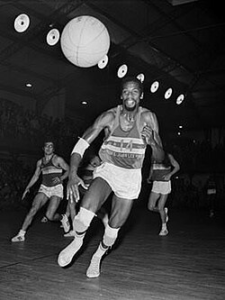
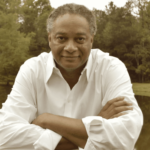
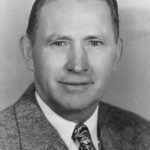
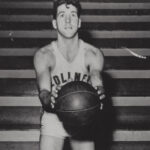
Henrey ‘Gentelmen’ Fields
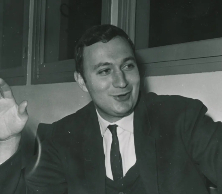
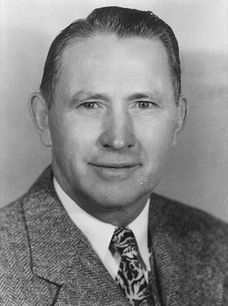
Henry ‘The Gentlemen’ Fields
- Background: Born in the US, Fields played at Elizabeth City State Teachers College and served in the Army, where he studied French to facilitate his coaching aspirations.
- Playing Career: He became a standout player in France, known for a “Bill Russell-type defense,” featuring effective blocking and rebounding.
- Championships & Awards: Won the French national championship twice (1963, 1970) and was named the French Championship Foreign Player of the Year in 1970.
- Coaching Career: Following his playing career, he coached various French teams, including AS Tarare Basket (1977-1978), US Ville d’Avray (1981-1986), and US Auterive Basket-Ball (1998-2024).
- Legacy: Known for his dedication and “gentlemanly” demeanor, he was profiled in The New York Times for his role in the development of basketball in France.
Henry Fields’ French Connection
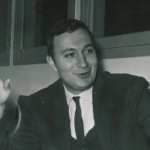
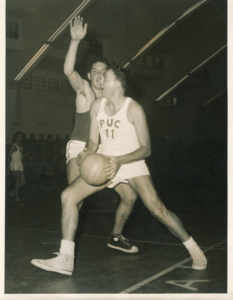
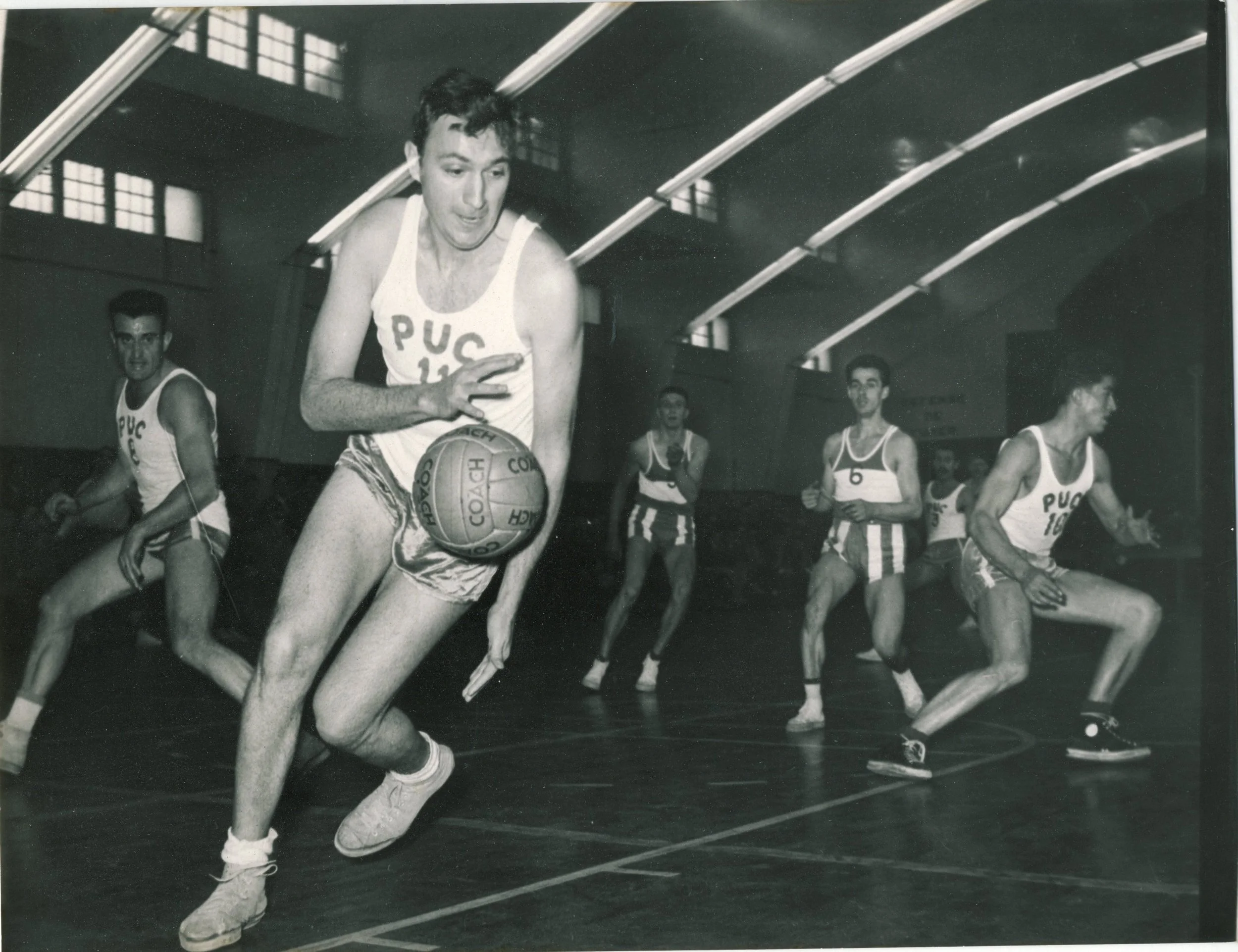
One strand of basketball diplomacy’s technical and cultural exchange that enriched the game in the 1960s came once again from elite French amateur side, Paris Université Club (PUC), and its American, Martin Feinberg. Given the club’s history of being open to outside influences, it wasn’t a surprise that they embraced Feinberg, who by the early 1960s coached the team, but other cosmopolitan forces, too. In 1962, Feinberg introduced his latest recruit, the American-born Henry “Gentleman” Fields, a power move with lasting repercussions.
For Fields, basketball was a way to see the world, just as for Feinberg and generations of players since. Born in New York in 1938 and raised in North Carolina, the six-foot-five Fields played basketball at the University of Elizabeth City (North Carolina) where he earned all-conference honors. While finishing his studies, Fields read the 1957 Sports Illustrated feature on Jean-Claude Lefebvre, then in his freshman year at Gonzaga, and was inspired. “[Lefebvre] spoke of French basketball,” Fields told La Depeche. “At the time, I had to do my military service. If you remained in the army for three years you were able to choose your assignment. So, I chose France.” [16]
Fields was posted to the US military base in Orleans in 1960, where he plied his game. He helped the US military team to the European and World Military Basketball Championship. But he also traveled to Germany to attend a basketball clinic run by Adolph Rupp, coach at the University of Kentucky. Despite Rupp’s record of racial exclusion, Fields admired his teaching abilities and considered him the father of modern basketball. “The first fifteen minutes [of that clinic], I learned more basketball than I had learned all my life,” Fields later recalled. “Everything Adolph Rupp taught was so simple.” [17]
His reputation on-court caught the attention of several clubs, but it was PUC that tweaked his interest, in part through Feinberg. PUC’s “American” saw Fields play at a Supreme Headquarters Allied Powers Europe (SHAPE) NATO tournament outside of Paris and approached with an offer to join the team, which Fields joined once his military service ended. Although the team was technically amateur, he received a subsidy of 450 francs a month and use of an apartment. [18]
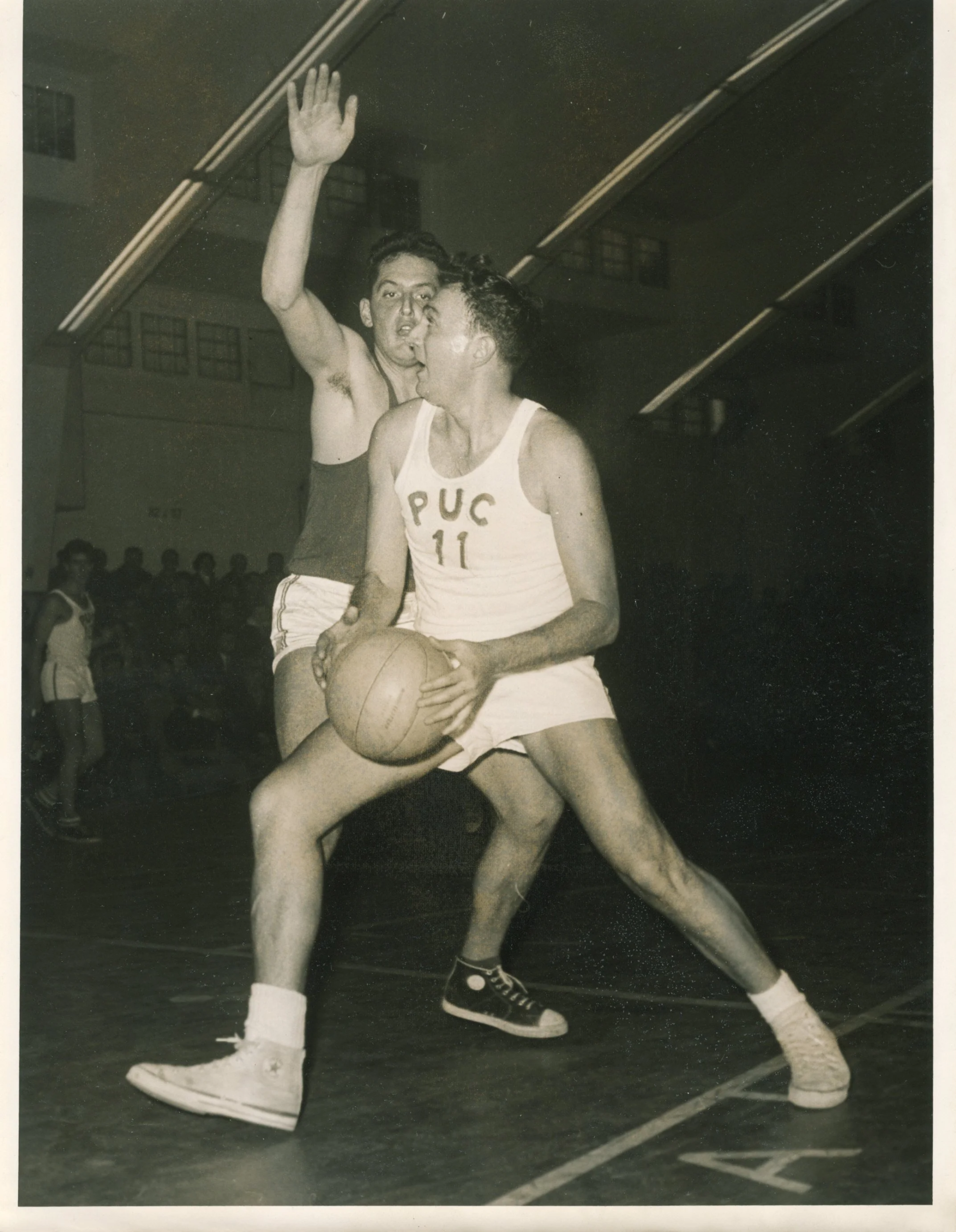
With PUC, Fields was an effective defender who blocked and rebounded shots with finesse rarely seen at the time. “My idol was Bill Russell,” Fields confessed.
I studied his movements, watched him when he played. I worked on that when I was in the Army, I worked all day on that, I worked eight, nine hours a day, a lot of the time by myself, just to work on different moves I see that the player does.
For Fields, the ultimate end-goal was to coach basketball, and the more time he spent in France, the more he wanted to remain in-country. It was a plan that had first percolated during his army service when he spent dedicated time in the language lab to learn and perfect his French so that he could coach.
Fields brought the same work ethic that he used to learn Russell-esque techniques to the hardcourt. “I played the Bill Russell-type defense,” he said of his idol.
When I went to PUC, all they said about American players was “oh, all Americans want to do is shoot.” And I said, “I’m going to impress them because I’m not going to shoot. I’m gonna pass. I’m gonna block shots and pass the ball and let the other guys shoot.” We had guys who could shoot. And people loved me because I passed the ball. That made [PUC] strong.
The aerodynamic and defensive style of play pioneered by Russell was, through Field’s transmission, a form of technical exchange that laid the groundwork for future French defenders.
During the 1962–3 season, Fields put this finesse into play when he teamed up with Bamako-born Roger Antoine for a title. “People didn’t talk about rebounding, blocking shots, defense, that wasn’t talked about,” he recalled of the team’s victory over Bagnolet, 66–57, for the league championship on May 3, 1963. But Fields put on a defensive masterclass each time he took to the court for, “with me, nobody came to the basket.”
It was just the second time that PUC was crowned Champion of France, a title their opponents had previously held. Bagnolet were known for their speed and improvisation, but the defensive techniques introduced and perfected by Fields defined the game. PUC brought an “impeccable defense, a superior athleticism, an organized attack, a tactical surety, and a grand bonhomme,” Robert Busnel wrote in Basket-Ball, with a note that Fields, Antoine, and teammate Michel Rat were among the game’s best players. [19]
The French tactician applauded PUC’s efforts and noted the impact of their two American sages. He credited Feinberg for the win, “well done Monsieur Feinberg!” Busnel also praised Fields:
The only foreigner operating in France who has been able to comply with the discipline of a team, instead of forcing the team to comply with his game. A model teammate who reminds me of someone . . . Let’s see, let’s see! Perfect positioning, vision of the game, model teammate, intelligence . . . But [Fields reminds me of] FEINBERG, naturally. [20]
Among the more than 5,300 spectators in the Stade Pierre de Coubertin stands that evening was a young man, Jean-Pierre Dusseaulx, who watched Fields orchestrate PUC’s victory. Dusseaulx was in the habit of attending PUC ’s matches for he lived near their home stadium, Stade Charlety; it was only later in the decade that he began to cover basketball for L’Équipe, the start of a decades-long career chronicling the sport’s evolution and revolution. “Of the players of that era,” he said, “Henry was perhaps the first real professional. He was a true pro.” [22]
Fields was embraced by the basketball establishment, such as it was, and helped impart his style of play through clinics and workshops. “He was a model,” former National Technical Director Gérard Bosc told La Croix. [23] He was eventually asked to work with French, Swiss, and German national teams and coaches to teach these defensive actions and help make players more technically sound. “They didn’t know this type of training existed,” Fields recalled. “I was giving them what I learned at the basketball clinic with Adolph Rupp. They thought I was a genius because they had never worked on those types of techniques [like faking and driving].”
He also introduced them to his basketball work ethic, putting on-court drills and preparation over leisure-time relaxation. At the time, French players trained once or twice a week, whereas Fields was used to the American-style workouts of two to two-and-a-half hours per day. The difference was stark and, in his mind, helped explain why France wasn’t better internationally.
I’ve said from the first time I came to France: France should be the second-best basketball country in the world, because they have a mixed culture, they have all these Black guys from the Antilles, they have the guys [of Polish heritage] in the northern part of France, they’ve got the Spanish; they can probably go back and forth, they’re running, they have everything. The only thing they were missing was coaching. The basic individual techniques.
The country’s cosmopolitanism and immigration heritage translated into a culture open to outside influences, a phenomenon that extended to basketball, and, notably PUC. The team was the first French one to visit the United States in December 1955 and January 1956 but was otherwise well versed in playing abroad. It often traveled internationally to play matches, especially in Eastern Europe, including Moscow [24], and Africa for tournaments in Senegal, Morocco, and elsewhere.
In December 1962, PUC again returned to the United States, a trip organized by Feinberg to further expose his players to US basketball culture and tactics. This informal sports diplomacy initiative helped a new generation of players to improve their game while at the same time learning first-hand about American culture and society, even its uglier facets. As Feinberg later confessed, “I loved the United States and wanted them to learn about basketball and Americans.” [26]
On December 15, members of PUC, which included Fields and Rat, flew to the United States. Three days later, the team tipped off a series of games through the mid-Atlantic with a 42–39 win against Gallaudet University in Baltimore. A 37–87 loss to Oglethorpe two days later and shortly thereafter to AAU team Brownston, 66–68, dampened spirits slightly, but the team focused on the overall experience, not the game outcomes.
Part of the exercise was to learn new game techniques and tactics. Rat recalled how once again the team was given copies of technical documents, which he translated, to take home and incorporate into their repertoire. During this trip PUC also learned the shuffle offense, a system to move the ball via all five players through a series of screens. This was just one example of people-to-people sports exchanges that helped to enrich French basketball’s technical know-how.
Another aspect was learning about US basketball cultural phenomena, such as sneakers. Although the French market began to feature basketball-specific kicks, such as the Busnel, according to Feinberg these models couldn’t compare with the lighter, nimbler Converse. Thus, he strategically booked the team to conduct a radio interview after which they would receive a pair of the iconic sneakers for free. “They were very generous, the Americans, wherever we asked for the tennis shoes [basketball sneakers], we got them,” he recalled. Such gestures were not lost on the visitors. As Rat later articulated, “everyone was crazy for Converses because they were American products.”
The team also was indoctrinated into the realities of Jim Crow racial segregation. The supposedly “separate but equal” division of public spaces between those who were white and Black, from restaurants and hotels to drinking fountains and public transportation seating, such as on buses, was known of in France. But it was different to directly experience it and have a teammate targeted. In 1962, with Fields in tow, the French had a first-hand crash course on American racial attitudes when they traveled to the South.
After PUC won against Gallaudet they took a bus to Atlanta to play Oglethorpe. It was a long ride and when the bus driver stopped to refuel, the team took the opportunity to get out, stretch, and search for food. The roadside restaurant looked promising but, when the team entered, they were stopped by the proprietor. “The lady [owner or server] said nicely, ‘I’m sorry we can serve you [referencing the white players] but we can’t serve him,’ ” Fields recalled of how he was singled out.
Henry Fields (May 3, 1938 – October 26, 2024) was an American basketball player and coach. Nicknamed “the Gentleman“,[1] he won the French national championship in 1963 and 1970 and was named the French championship Foreign Player of the Year in 1970.[2][3] Fields played college basketball at the Elizabeth City State Teachers College where he earned CIAA All-Conference honors.[1]
Following his graduation from college, Fields entered the United States Army. Due to a three-year commitment, he was able to choose his assignment and chose France. He stated later that his choice was influenced by a Sports Illustrated feature on Jean-Claude Lefebvre, a French basketball player who played for the Gonzaga University. In France, he was stationed in Orléans where he became a member of the United States military team who he helped win gold at the European and World Military Basketball Championships.[4][5]
Personal life and death
Following his basketball career, Fields settled in France with his Norwegian wife.[4]
In 2018, the sports arena in Auterive was named Halle Henry Fields in his honour.[6]
Fields died on October 26, 2024, at the age of 86
Key figures in France Basketball in the mid-20th century.
Henry Fields Is Introduced to France Basketball Martin Feinberg
Martin Feinberg
Coach Émile Frézot
Martin Feinberg France’s Introduction To The Modern Game of Baskettball. Martin Feinberg significantly influenced French…
France’s Introduction To The Modern Game of Baskettball.
Martin Feinberg, introduces French basketball to Henry Fields
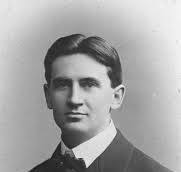
Born April 1926 in New York, Feinberg’s family moved to Cleveland when he was young, where he grew up playing basketball. He played the 1945-46 season at the University of Michigan, where the U.S. Navy sent him to attend officer’s school (he trained as a pilot), and after serving in the Korean War, went to Paris in 1954 to attend school thanks to his G.I. bill benefits.
Martin’s Story
Although Feinberg did not go to Paris to play basketball, the game quickly found him. Once settled in the Latin Quarter, he was persuaded to try out for Paris Université Club (PUC), one the country’s elite basketball teams at the time. Coach Émile Frézot was thrilled to have a six-foot-three American and invited the 28-year old to join the team.
Feinberg’s first game was an away match in which he scored 18 points. But the larger experience was a crash-course in the hexagone’s basketball and the culture around it. As Feinberg recalled of that introduction,
Whenever PUC played their inter-city rival, Racing Club de France in the Bois de Boulogne, the Bull’s Eye Orchestra played in the stands to gin up ambiance. “There was a lot going on when we played a game,” Feinberg said.
Feinberg engaged in people-to-people cultural, technical, and knowledge exchange with PUC, especially through the two U.S. trips he organized for the team–what today we would call informal sports diplomacy.
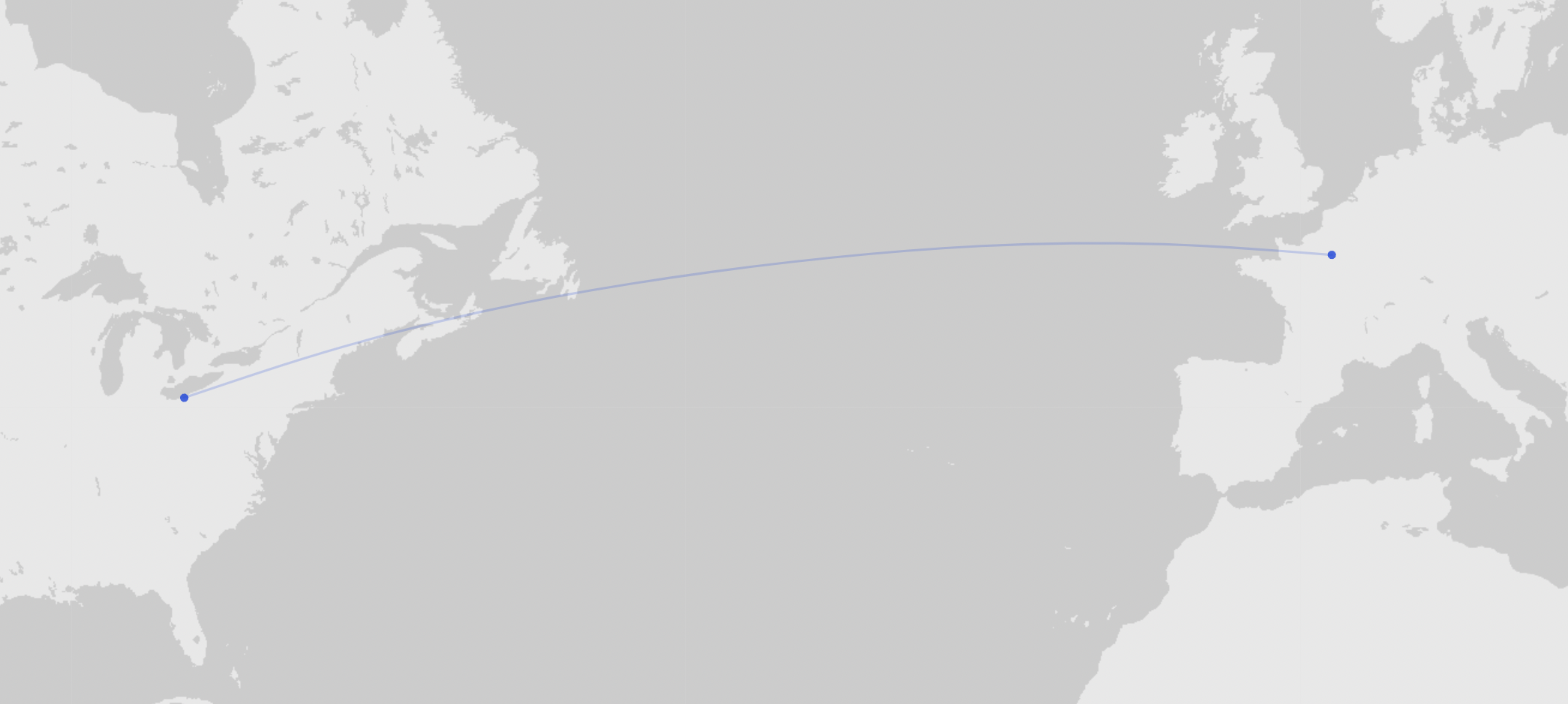
The team sailed from Le Havre for New York and arrived on U.S. soil on December 28, 1955 to experience basketball’s homeland and its hoops culture. For the following two weeks they played a series of AAU and NCAA games across the Midwest, including against Wheaton College, Lake Forrest College, Marquette University, and the University of Baltimore, among others.
Feinberg organized a return trip to the United States. Both times, his teammates soaked in basketball culture, styles, and sneakers. They also returned with technical manuals about techniques and tactics, which they studied and deployed. Alumni of these two trips, which included Roger Antoine, Jacques Huguet, Michel Rat, and Henry “Gentleman” Fields, went on to mark French basketball in numerous ways, just one example of how cultural exchange through sports can have a lasting impact.
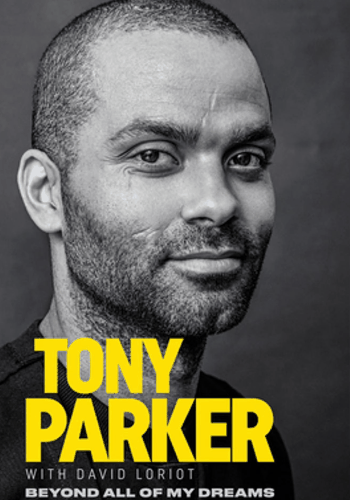
- Tony Parker: Widely considered the greatest French player, a 4-time NBA champion with the Spurs and 2007 NBA Finals MVP.
- Alain Gilles: Voted France’s best player of the 20th century, a dominant force for ASVEL and the national team (1966–1981).
- Boris Diaw: A versatile forward and long-time captain of the French national team, renowned for his high basketball IQ and 2014 NBA champion status.
- Rudy Gobert: A dominant defensive force, multiple-time NBA Defensive Player of the Year.
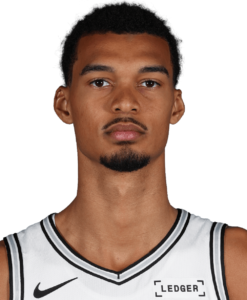
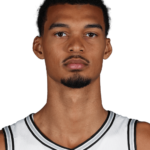
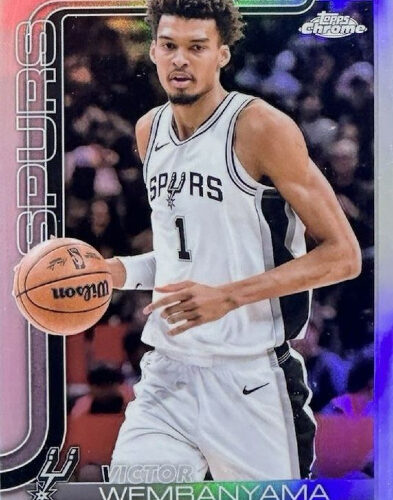
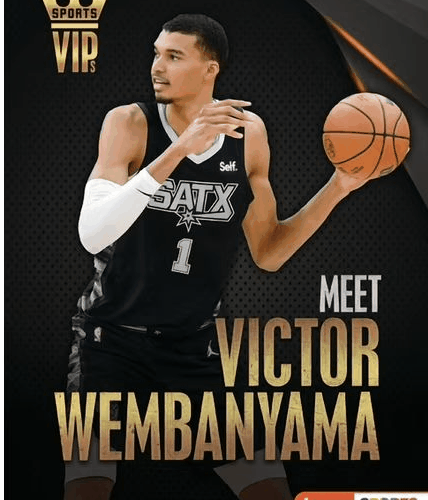
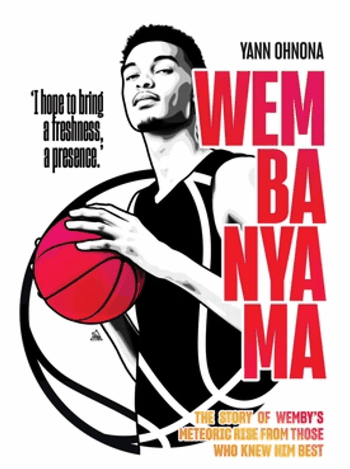
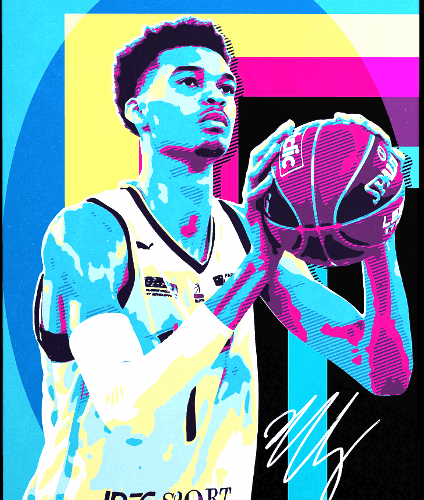
- Victor Wembanyama: A 7’2″ generational talent who has rapidly become one of the NBA’s premier players, leading in blocks and showcasing immense potential.
- Nicolas Batum: Known for his versatility and clutch performances, a stalwart of the national team’s success.
- Antoine Rigaudeau: Considered one of the best European guards of his era, nicknamed “Le Roi” (The King).
- Richard Dacoury: A dominant player in the 1980s and 90s, crucial to France’s international efforts during that era.
- Nando de Colo: A decorated EuroLeague legend and key guard for the national team.
- Evan Fournier: A consistent scorer for France in major international competitions.
- Ronny Turiaf: NBA champion and tenacious defender.
- Joakim Noah: Known for his high-energy play and defensive impact in the NBA.
Top French Women Basketball Players
Coach Émile Frézot
The Century of Basketball History That Built Wembanyama
The Beginning of Basketball In France THE BEGINNING OF BASKETBALL IN…
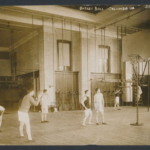
Melvin Rideout, one of Naismith’s students and original basketball disciple, went to Paris to help set-up the YMCA’s new center at 14, rue de Trévise in 1893. The 22-year old from Illinois introduced basketball to the group’s teachers in the building’s new gymnasium, today the world’s oldest original basketball court
The links between France and basketball go back to the game’s origins. Two years after the game’s 1891 invention in Springfield, Mass., 22-year-old YMCA educator Melvin Rideout arrived in Paris to transmit the game to French counterparts. The first basketball game on European soil was held Dec. 27, 1893, in the new Paris YMCA facility at 14, rue de Trévise, which today is the oldest original basketball court in the world.
The Alien: Victor Wembanyama
Honours in selection : 🥈 Olympic Games (2024)
Honours : No. 1 in the NBA Draft (2023), NBA Rookie of the Year (2024).
Victor Wembanyama is not yet an ‘All-Time’ player in terms of longevity or accumulated achievements, but he is already a legend in the making and a global phenomenon. His selection as the No. 1 pick in the 2023 NBA Draft is a historic event for French sport. His unique profile, combining height, mobility and skill, puts him on a potential trajectory to become, according to almost unanimous opinion, the best French player of all time, and even one of the best in the world. He represents the future and hope for French basketball, followed by a generation of talented players such as Zaccharie Risacher and Alexandre Sarr, who will be aiming for gold at the Olympics, and why not do so in front of our American friends in LA in 2028. Go Wemby.
French Basketball Stars
Alain Gilles : The Original Legend
National team honours : 177 caps for France (1966–1981)
Club honours : 8x French champion with ASVEL, 2x French Cup winner, voted France’s best player of the 20th century.
Alain Gilles is the leading figure in 20th-century French basketball. Nicknamed ‘Monsieur Basket’, he dominated the national championship for two decades with ASVEL. His club achievements are unrivalled, making him a Lyon legend.
More than his titles, it is the unanimous praise for his talent and commitment that sets him apart. Voted Best French Player of the 20th Century by a panel of journalists and coaches, he is a symbol of quality and longevity in the pre-NBA era. The trophy awarded to the best French player of the year now bears his name, an eternal tribute.
THE CROWNING MOMENT IN FRANCE’S BASKETBALL HISTORYTHE RESULT OF MANY INCLUDING MARTIN FEINBERG
The 1997 McDonald’s Championship took place at Palais Omnisports de Paris-Bercy in Paris, France. The Chicago Bulls won the tournament and Michael Jordan was named the tournament MVP.
The teams that took part in the 8th edition of the tournament were the Chicago Bulls (USA), Paris Basket Racing (France), Olympiacos Piraeus (Greece), Atenas de Cordoba (Argentina), Benetton Treviso (Italy) and FC Barcelona (Spain).[2]
Surprisingly, both the Italian and Spanish champions, traditional European powerhouses Benetton and FC Barcelona, lost their preliminary stage games and were forced to battle for 5th place. The Chicago Bulls instead led by Michael Jordan, and without Scottie Pippen managed to win their semifinal game against the hosts PSG Racing coached by Božidar Maljković, by 89–82. In the final game Chicago Bulls faced European champions Olympiacos Piraeus. The Greek side coached by legendary Serbian coach Dušan Ivković proved stronger than PSG Racing, but the Bulls pulled the best of their abilities and cruised to an easy 104–78 win.[3]
The tournament was noted for having more than 1,000 journalists from 54 countries covering it, more than the previous NBA finals.[4] It was mentioned in an early episode of the documentary miniseries, The Last Dance.
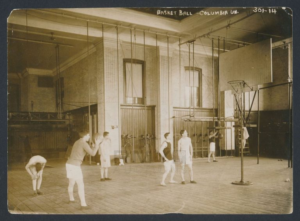
The Challenge: Luther Gulick, the school’s director, asked Naismith to invent a new indoor game to keep students active during cold New England winters.
The First Game: Played on December 21, 1891, using peach baskets nailed to the gym balcony and a soccer ball, with rules like no running with the ball
Dr. James Naismith Invents Basketball https://youtu.be/teAjKfdQSOg?si=darvEM1sJaHxCd-l Basketball was invented by Dr. James Naismith, a Canadian physical education…
Website Presentation Articles
Available Podcast
Website Menu & Pages
Available Product For Sale
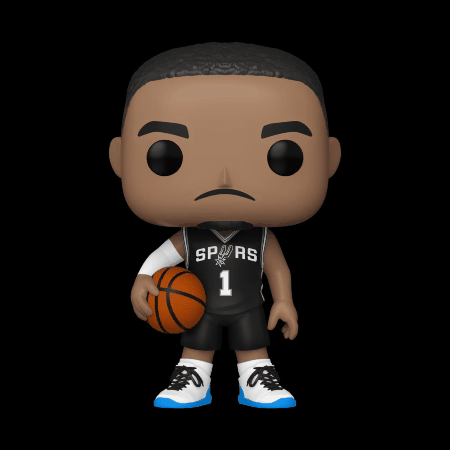
Victor Wembanyama Sport Memorabilia
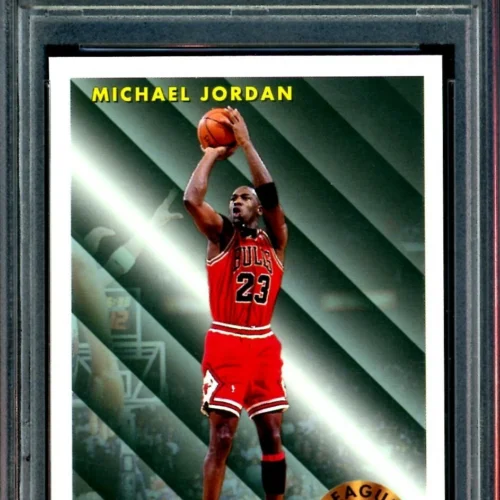
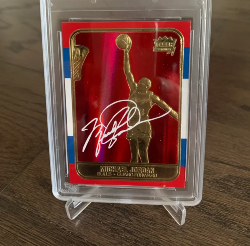
Mochael Jordan Sports Memorabilia
NBA Sports Memorabilia
-

Magic Johnson Poster Autographed 8×10 Glossy Los Angeles Lakers Yellow Uniform
-

Larry Bird Wall Display: Stretch Canvas 30×20 – NBA Boston Celtics
-

Shaquille O’Neal Lakers Autographed 12″ Replica Trophy – Three Time Champion
-

NBA Topps 2023-24 Chrome Basketball Trading Card BLASTER Box
-

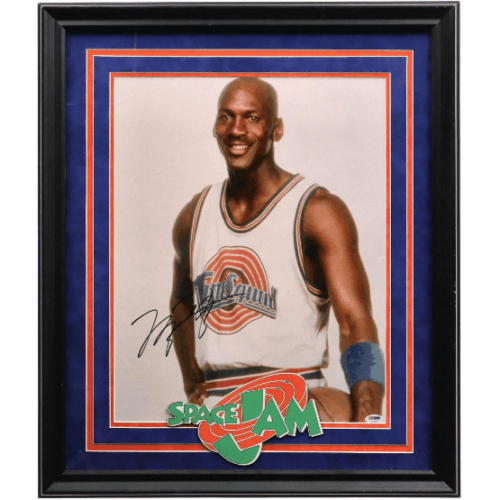
Michael Jordan Space Jam Photograph – Autographed Framed Poster
-

Shaquille O’Neal Autographed Poster
-

100 NBA Basketball Cards in Original Packs
-

NBA 2023-24 Panini NBA Donruss Optic Blaster Box
Cooper Flagg Sports Memorabilia
THE CRICKET CREW
The Crickets are in Paris having a good time listening to ‘FRENCH JAZZ’ music &… “avoir une conversation” … … JOIN THEM!